Close Menu
  • Latest News
    • Bitcoin
    • Ethereum
    • Altcoins
    • Meme Coins
  • Tech
    • Blockchain
    • Security and Privacy
  • Web 3
    • Gaming
  • Legal
    • Legal and Regulatory
    • Adoption
  • Analysis
  • Learn
    • Education
    • Wallets and Exchanges
  • Tools
    • Market Overview
    • Exchange Tool
What's Hot

Ceteris Introduces Tokenized Stocks via Crypto Neobanks

October 3, 2026

Fidelity exec’s new 60/20/20 portfolio makes room for crypto – Here’s why

October 3, 2026

Bitcoin ETFs record $102M inflows – Why $85K matters for BTC now

October 3, 2026
Facebook X (Twitter) Instagram
  • Contact
  • Privacy Policy
  • Terms & Conditions
  • Disclosure
Facebook X (Twitter) Instagram
Free.cc (Free Cryptocurrency)Free.cc (Free Cryptocurrency)
  • Latest News
    1. Bitcoin
    2. Ethereum
    3. Altcoins
    4. Meme Coins
    5. View All

    Bitcoin ETFs record $102M inflows – Why $85K matters for BTC now

    October 3, 2026

    Bitcoin Is Up, DeFi Is Recovering, So Why Doesn’t This Look Like a Bull Market Yet?

    October 3, 2026

    Bank group sues U.S. regulator over granting crypto trust charters

    October 3, 2026

    When The Banks Don’t Work, Bitcoin Does: Report

    October 3, 2026

    Ethereum: Why ETH faces October reversal risk after 70% Q3 rally

    October 3, 2026

    Why Did Blast Decide to Wind Down Its L2?

    October 2, 2026

    Bitcoin Q3 Strength Faces a Tougher Q4 Test

    October 1, 2026

    Ethereum beats Bitcoin by 42.71% in Q3 – Can ETH do it again?

    October 1, 2026

    Fidelity exec’s new 60/20/20 portfolio makes room for crypto – Here’s why

    October 3, 2026

    Can NEAR crypto rebound? THESE metrics could decide what’s next

    October 3, 2026

    Polymath And CineCity Explore Regulated Tokenized Film Investment Platform

    October 3, 2026

    XLM price prediction – Why Stellar’s $0.21 rebound could trigger a 9% rally

    October 2, 2026

    Thinking Cat Gains Momentum After CASHCAT’s Breakout

    August 12, 2026

    What Tokens Could He Target?

    July 30, 2026

    The Next Meme Coin Winner Could Be Determined by Incentives, Not Memes

    July 30, 2026

    Why Is BOME’s Price Up Today? Finally, Capital Rotating to the Meme Coins?

    July 28, 2026

    Ceteris Introduces Tokenized Stocks via Crypto Neobanks

    October 3, 2026

    Fidelity exec’s new 60/20/20 portfolio makes room for crypto – Here’s why

    October 3, 2026

    Bitcoin ETFs record $102M inflows – Why $85K matters for BTC now

    October 3, 2026

    583 Companies Go Public in 18 Months, Says SEC Chairman

    October 3, 2026
  • Tech
    1. Blockchain
    2. Security and Privacy
    3. View All

    Ceteris Introduces Tokenized Stocks via Crypto Neobanks

    October 3, 2026

    New SIMD-0675 Proposal Aims to Streamline Block Production

    October 3, 2026

    State Street Fund Goes Live on Stellar

    October 3, 2026

    Blockchains Unlock an Explosion of New Markets

    October 3, 2026

    Masked Robbers Threaten Pregnant Wife in UK Crypto Home Attack

    October 3, 2026

    Bitcoin Lightning Nodes Targeted as Core Lightning Sounds Alarm

    October 2, 2026

    The $459,000 Bot Hacker Was a Customer First, Researchers Say

    October 2, 2026

    Metamask Pulls Validators as Meager ETH Theft Sounds Big Alarm

    October 2, 2026

    Ceteris Introduces Tokenized Stocks via Crypto Neobanks

    October 3, 2026

    Fidelity exec’s new 60/20/20 portfolio makes room for crypto – Here’s why

    October 3, 2026

    Bitcoin ETFs record $102M inflows – Why $85K matters for BTC now

    October 3, 2026

    583 Companies Go Public in 18 Months, Says SEC Chairman

    October 3, 2026
  • Web 3
    1. Gaming
    2. View All

    Top 12 NFT games every player should know about in August 2026

    September 22, 2026

    GameShame Studios founder details Raijin Protocol’s roadmap in NeoPod’s sixth AMA

    September 22, 2026

    Proof of Play to shut down after blockchain gaming thesis falls short

    September 22, 2026

    How BC.GAME is turning players into stakeholders

    September 22, 2026

    Ceteris Introduces Tokenized Stocks via Crypto Neobanks

    October 3, 2026

    Fidelity exec’s new 60/20/20 portfolio makes room for crypto – Here’s why

    October 3, 2026

    Bitcoin ETFs record $102M inflows – Why $85K matters for BTC now

    October 3, 2026

    583 Companies Go Public in 18 Months, Says SEC Chairman

    October 3, 2026
  • Legal
    1. Legal and Regulatory
    2. Adoption
    3. View All

    583 Companies Go Public in 18 Months, Says SEC Chairman

    October 3, 2026

    New SEC crypto rules threaten small advisers, but big firms win

    October 3, 2026

    Daines Unveils Crypto Tax Bill Pairing Payment Relief With Wash-Sale Rules

    October 3, 2026

    Tax on Bitcoin Gains? Dutch Government to Introduce Capital Gains Tax From 2028

    October 3, 2026

    Stablecoin issuers have replaced 40% of China’s lost US Treasury demand

    October 3, 2026

    Bitcoin’s $113,000 case strengthens as US regulators push 9 crypto actions

    October 2, 2026

    Bitget restores $300M fund after absorbing $388M security breach

    October 2, 2026

    Ripple’s biggest institutional bet may now be Brazil

    October 1, 2026

    Ceteris Introduces Tokenized Stocks via Crypto Neobanks

    October 3, 2026

    Fidelity exec’s new 60/20/20 portfolio makes room for crypto – Here’s why

    October 3, 2026

    Bitcoin ETFs record $102M inflows – Why $85K matters for BTC now

    October 3, 2026

    583 Companies Go Public in 18 Months, Says SEC Chairman

    October 3, 2026
  • Analysis

    Ethereum Price Faces $2,800 Wall Again — Are Whales Selling or Accumulating ETH?

    October 3, 2026

    Bull Market Targets for BTC, ETH, SOL, and XRP

    October 3, 2026

    Ethereum Price Faces A Critical $0.040 ETH/BTC Test

    October 2, 2026

    AAVE Price Surges 8% as Whale Activity Spikes — Can AAVE Break $200?

    October 2, 2026

    PropAMMs lower Solana trade costs, and public pool returns crash

    October 2, 2026
  • Learn
    1. Education
    2. Wallets and Exchanges
    3. View All

    What Is Robinhood Chain? The Ethereum Layer-2 Network for Tokenized Stocks

    July 12, 2026

    What Is BChat? The Decentralized Messaging App Built for Privacy

    June 2, 2026

    What Is an AI Prompt Injection Attack? The Hidden Threat Hijacking Your Chatbots

    May 31, 2026

    What Is AI Jailbreaking? A Beginner’s Guide to the Cat-and-Mouse Game Behind Every Chatbot

    May 17, 2026

    Coinbase completes Deribit migration, ends INTX trading

    October 2, 2026

    Binance Funding Account ends direct crypto deposits

    October 1, 2026

    Coinbase just completed its US derivatives stack but its biggest bet still sits outside it

    September 30, 2026

    Bitget had 30 minutes to contain its hack before $290 million started moving

    September 30, 2026

    Ceteris Introduces Tokenized Stocks via Crypto Neobanks

    October 3, 2026

    Fidelity exec’s new 60/20/20 portfolio makes room for crypto – Here’s why

    October 3, 2026

    Bitcoin ETFs record $102M inflows – Why $85K matters for BTC now

    October 3, 2026

    583 Companies Go Public in 18 Months, Says SEC Chairman

    October 3, 2026
  • Tools
    • Market Overview
    • Exchange Tool
Free.cc (Free Cryptocurrency)Free.cc (Free Cryptocurrency)
Home»Legal and Regulatory»Why Trump believes ‘China is big into crypto’ despite ban
Solana
Legal and Regulatory

Why Trump believes ‘China is big into crypto’ despite ban

November 4, 2025No Comments7 Mins Read
Share
Facebook Twitter LinkedIn Pinterest Email

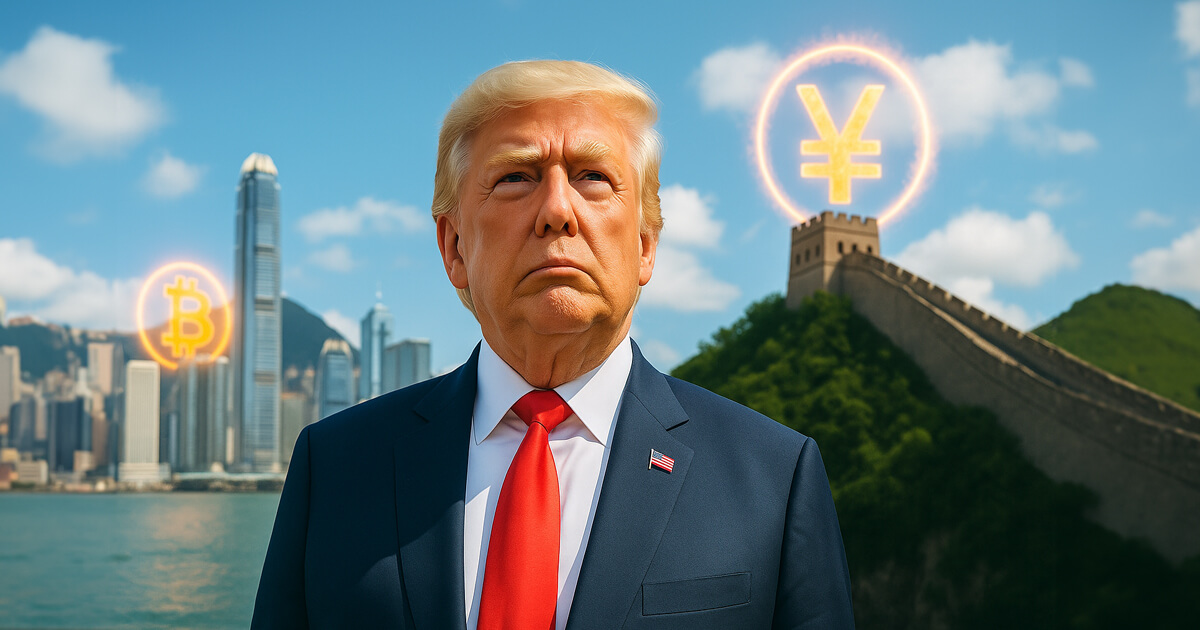
President Donald Trump told 60 Minutes on November 2 that China poses a competitive threat in crypto, warning that “China is getting into it very big right now.”

The claim surfaces a paradox. Beijing banned crypto trading and mining in 2021, yet Trump frames the country as America’s principal rival in digital assets.

The disconnect likely isn’t about secret intelligence or a policy reversal that went unnoticed, but rather about conflating Hong Kong’s licensed market, Beijing’s central bank digital currency ambitions, and gray market stablecoin flows into a single “China” narrative.

The timing matters because Hong Kong’s Securities and Futures Commission announced, during Hong Kong FinTech Week, that it will relax rules allowing licensed virtual asset platforms to tap into global order books and liquidity pools, one day later.

The move deepens Hong Kong’s integration with international crypto markets while the mainland maintains its prohibition.

Trump’s statement, whether intentional or not, captures a real dynamic: “China” operates across multiple crypto fronts simultaneously, just not the ones most people assume.

Mainland ban remains operational

The People’s Bank of China declared all cryptocurrency transactions illegal on September 24, 2021, targeting both peer-to-peer trading and mining operations.

The ban prohibits domestic exchanges, criminalizes facilitation services, and blocks foreign platforms from serving users on the mainland. No major outlet or legal tracker reports a reversal of that framework as of press time.

The ban achieved its immediate goals, which were to drive exchanges offshore, collapse domestic mining operations, and restrict retail access to speculative tokens.

What it didn’t eliminate were the reasons people wanted crypto in the first place: capital mobility, cross-border settlement speed, and distrust of intermediaries.

Those forces relocated to Hong Kong’s licensed regime, moved into over-the-counter stablecoin channels, or found expression in Beijing’s own digital currency project.

Hong Kong as the permissive carve-out

Hong Kong’s regulatory approach runs in the opposite direction. The SFC launched a licensing framework for virtual asset trading platforms in June 2023, granting retail access to approved tokens on compliant exchanges.

See also  Coinbase Seeks Chief of Staff to Strengthen Leadership Amid Crypto Competition

By April 2024, Hong Kong had approved spot Bitcoin and Ethereum ETFs, products previously unavailable on the mainland, providing institutional investors with a regulated on-ramp.

The November 3 announcement extends that permissive stance further. Licensed platforms can now link to global liquidity sources rather than operating isolated Hong Kong-only order books.

The change erases a structural disadvantage, namely that Hong Kong’s domestic market alone cannot generate the depth or spreads competitive with Binance or Coinbase.

Connecting to international liquidity transforms licensed Hong Kong platforms into viable alternatives for sophisticated traders seeking regulatory cover without compromising execution quality.

This is the mechanism that makes Trump’s framing coherent even if technically imprecise. When he says “China,” he’s likely bundling a Special Administrative Region with de facto policy autonomy into the same mental category as the mainland.

Hong Kong’s moves, retail access, ETFs, and now global liquidity, create the appearance of “China” advancing in crypto, while Beijing’s trading ban remains in place.

The CBDC layer: digital money, not crypto

Beijing’s e-CNY pilot represents the world’s largest central bank digital currency deployment by transaction volume.

Cumulative transactions exceeded ¥7 trillion by mid-2024, according to reports, spanning retail payments, government disbursements, and corporate settlements.

Hong Kong began accepting e-CNY at local merchants in May 2024, linking the mainland’s digital currency infrastructure to an international financial hub.

The e-CNY functions as programmable state money, centralized, surveilled, and designed to strengthen rather than challenge Beijing’s monetary control.

It shares no philosophical DNA with Bitcoin or decentralized finance. Yet its scale and cross-border extension into Hong Kong contribute to the perception that “China” operates at the frontier of digital assets.

Trump’s remarks conflate this state-issued digital money with permissionless crypto, but the confusion tracks a genuine reality. China commands the most advanced retail CBDC in production, giving it credibility when claiming leadership in digital finance even as it bans decentralized alternatives.

See also  Australia’s crypto licensing relief ends. What comes next?

Chinese regulators are studying offshore yuan-backed stablecoins issued through Hong Kong, aiming to capture cross-border settlement flows currently dominated by dollar-pegged tokens, according to reports from last year.

The proposal would let Beijing maintain capital controls on the mainland while offering exporters a compliant digital settlement tool abroad.

Gray market stablecoin adoption and hashrate

Enforcement gaps and economic incentives created a parallel system. Chinese exporters are increasingly accepting USDT for cross-border payments, thereby bypassing the slow process of bank transfers and capital controls.

The adoption isn’t centrally coordinated, but it’s widespread enough that Beijing can’t ignore it.

Stablecoin flows also increased in Russia-China trade channels as Western sanctions complicated traditional banking rails, making digital dollars a settlement layer for transactions that the formal financial system struggles to process.

This over-the-counter activity explains why the statement “China is big into crypto” feels true to traders and businesses, even when mainland retail trading remains banned.

The distinction between prohibited speculation and tolerated commercial usage creates space for stablecoins to function as infrastructure rather than investment assets.

Beijing hasn’t legalized this activity, but it hasn’t stamped it out either, creating a calculated ambiguity that allows cross-border commerce to continue. At the same time, the state studies how to channel those flows into manageable instruments.

Additionally, China’s hashrate didn’t fall to zero after the 2021 mining crackdown. Cambridge’s mining map indicates ongoing activity, likely stemming from operations that relocated to remote provinces or transferred hardware abroad while maintaining Chinese ownership.

More importantly, Chinese firms continue to manufacture the equipment that secures global cryptocurrency networks.

Bitmain, the dominant ASIC producer, operates out of Beijing and continues to expand its manufacturing capacity in Southeast Asia and North America.

Even if no Bitcoin mining were to occur in China, the country would remain deeply embedded in crypto infrastructure through its hardware supply chains.

See also  FBI Disrupts Russian Crypto Laundering Hub Enabling Cybercrime

Trump says ‘China is big into crypto’: what it likely means

Trump’s statement (probably) doesn’t reflect a mainland policy reversal or undisclosed intelligence. It reflects a strategic reality more complex than binary narratives allow.

The “China is big into crypto” remark collapses several distinct phenomena. Hong Kong’s licensed market is now linked to global liquidity, as Beijing’s over ¥7 trillion CBDC program extends into Hong Kong.

Exporters are settling trade in USDT despite capital controls, and Chinese hardware manufacturers are supplying global mining infrastructure.

The Hong Kong liquidity announcement is significant because it expands the channel through which Chinese capital can access crypto markets legally.

Licensed platforms connecting to Binance or Kraken order books provide mainland investors with offshore pathways that appear less like evasion and more like regulatory arbitrage.

The perception that “China” competes in crypto intensifies not because Beijing lifted its ban but because Hong Kong built a compliant alternative that achieves similar market access through a different legal architecture.

Trump campaigned on making America the crypto capital, framing the issue as a binary competition for primacy.

His remarks treat China as a unitary actor, when in reality, the country involves jurisdictional splits, state versus private initiatives, and retail bans coexisting with institutional access.

Yet the core concern holds: China maintains multiple positions in crypto despite its domestic prohibition.

The competitive landscape Trump describes exists, but it doesn’t take the form most assume.

The mainland ban remains intact. The threat originates from Hong Kong’s licensed alternative, Beijing’s CBDC infrastructure, and exporters utilizing stablecoins, rather than from a sudden Chinese adoption of decentralized finance.

What Trump called “getting into it very big” is less a policy shift than a recognition that China found ways to participate in crypto markets without legalizing the activity its regulators fear most, which is uncontrolled retail speculation in permissionless assets.

The post Why Trump believes ‘China is big into crypto’ despite ban appeared first on CryptoSlate.

ban Believes big China Crypto Trump
Share. Facebook Twitter Pinterest LinkedIn Tumblr Email

Related Posts

Ceteris Introduces Tokenized Stocks via Crypto Neobanks

October 3, 2026

Fidelity exec’s new 60/20/20 portfolio makes room for crypto – Here’s why

October 3, 2026

583 Companies Go Public in 18 Months, Says SEC Chairman

October 3, 2026

New SEC crypto rules threaten small advisers, but big firms win

October 3, 2026
Add A Comment
Leave A Reply Cancel Reply

Top Posts

CLARITY Act gets deadlock breakthrough that also opens the door to more Bitcoin demand

March 22, 2026

Why Bitcoin is Crashing?

February 4, 2026

Stay ahead with the latest crypto news, market updates, blockchain insights, and trends. Your trusted source for everything happening in the digital asset world.


We're social. Connect with us:

Facebook X (Twitter) Instagram Pinterest YouTube
Top Insights

Ceteris Introduces Tokenized Stocks via Crypto Neobanks

October 3, 2026

Fidelity exec’s new 60/20/20 portfolio makes room for crypto – Here’s why

October 3, 2026

Bitcoin ETFs record $102M inflows – Why $85K matters for BTC now

October 3, 2026
Get Informed

Subscribe to Updates

Get the latest creative news From Free.cc directly in your Inbox!

  • Contact
  • Privacy Policy
  • Terms & Conditions
  • Disclosure
© 2026 free.cc - All rights reserved.

Type above and press Enter to search. Press Esc to cancel.