Close Menu
  • Latest News
    • Bitcoin
    • Ethereum
    • Altcoins
    • Meme Coins
  • Tech
    • Blockchain
    • Security and Privacy
  • Web 3
    • Gaming
  • Legal
    • Legal and Regulatory
    • Adoption
  • Analysis
  • Learn
    • Education
    • Wallets and Exchanges
  • Tools
    • Market Overview
    • Exchange Tool
What's Hot

Bitcoin ETFs record $102M inflows – Why $85K matters for BTC now

October 3, 2026

583 Companies Go Public in 18 Months, Says SEC Chairman

October 3, 2026

Ethereum Price Faces $2,800 Wall Again — Are Whales Selling or Accumulating ETH?

October 3, 2026
Facebook X (Twitter) Instagram
  • Contact
  • Privacy Policy
  • Terms & Conditions
  • Disclosure
Facebook X (Twitter) Instagram
Free.cc (Free Cryptocurrency)Free.cc (Free Cryptocurrency)
  • Latest News
    1. Bitcoin
    2. Ethereum
    3. Altcoins
    4. Meme Coins
    5. View All

    Bitcoin ETFs record $102M inflows – Why $85K matters for BTC now

    October 3, 2026

    Bitcoin Is Up, DeFi Is Recovering, So Why Doesn’t This Look Like a Bull Market Yet?

    October 3, 2026

    Bank group sues U.S. regulator over granting crypto trust charters

    October 3, 2026

    When The Banks Don’t Work, Bitcoin Does: Report

    October 3, 2026

    Ethereum: Why ETH faces October reversal risk after 70% Q3 rally

    October 3, 2026

    Why Did Blast Decide to Wind Down Its L2?

    October 2, 2026

    Bitcoin Q3 Strength Faces a Tougher Q4 Test

    October 1, 2026

    Ethereum beats Bitcoin by 42.71% in Q3 – Can ETH do it again?

    October 1, 2026

    Can NEAR crypto rebound? THESE metrics could decide what’s next

    October 3, 2026

    Polymath And CineCity Explore Regulated Tokenized Film Investment Platform

    October 3, 2026

    XLM price prediction – Why Stellar’s $0.21 rebound could trigger a 9% rally

    October 2, 2026

    XRP’s $1.54 breakout test meets Ripple’s 1B token unlock – Can demand absorb supply?

    October 2, 2026

    Thinking Cat Gains Momentum After CASHCAT’s Breakout

    August 12, 2026

    What Tokens Could He Target?

    July 30, 2026

    The Next Meme Coin Winner Could Be Determined by Incentives, Not Memes

    July 30, 2026

    Why Is BOME’s Price Up Today? Finally, Capital Rotating to the Meme Coins?

    July 28, 2026

    Bitcoin ETFs record $102M inflows – Why $85K matters for BTC now

    October 3, 2026

    583 Companies Go Public in 18 Months, Says SEC Chairman

    October 3, 2026

    Ethereum Price Faces $2,800 Wall Again — Are Whales Selling or Accumulating ETH?

    October 3, 2026

    New SIMD-0675 Proposal Aims to Streamline Block Production

    October 3, 2026
  • Tech
    1. Blockchain
    2. Security and Privacy
    3. View All

    New SIMD-0675 Proposal Aims to Streamline Block Production

    October 3, 2026

    State Street Fund Goes Live on Stellar

    October 3, 2026

    Blockchains Unlock an Explosion of New Markets

    October 3, 2026

    Cloak Launches Payroll Feature for Private Onchain

    October 2, 2026

    Masked Robbers Threaten Pregnant Wife in UK Crypto Home Attack

    October 3, 2026

    Bitcoin Lightning Nodes Targeted as Core Lightning Sounds Alarm

    October 2, 2026

    The $459,000 Bot Hacker Was a Customer First, Researchers Say

    October 2, 2026

    Metamask Pulls Validators as Meager ETH Theft Sounds Big Alarm

    October 2, 2026

    Bitcoin ETFs record $102M inflows – Why $85K matters for BTC now

    October 3, 2026

    583 Companies Go Public in 18 Months, Says SEC Chairman

    October 3, 2026

    Ethereum Price Faces $2,800 Wall Again — Are Whales Selling or Accumulating ETH?

    October 3, 2026

    New SIMD-0675 Proposal Aims to Streamline Block Production

    October 3, 2026
  • Web 3
    1. Gaming
    2. View All

    Top 12 NFT games every player should know about in August 2026

    September 22, 2026

    GameShame Studios founder details Raijin Protocol’s roadmap in NeoPod’s sixth AMA

    September 22, 2026

    Proof of Play to shut down after blockchain gaming thesis falls short

    September 22, 2026

    How BC.GAME is turning players into stakeholders

    September 22, 2026

    Bitcoin ETFs record $102M inflows – Why $85K matters for BTC now

    October 3, 2026

    583 Companies Go Public in 18 Months, Says SEC Chairman

    October 3, 2026

    Ethereum Price Faces $2,800 Wall Again — Are Whales Selling or Accumulating ETH?

    October 3, 2026

    New SIMD-0675 Proposal Aims to Streamline Block Production

    October 3, 2026
  • Legal
    1. Legal and Regulatory
    2. Adoption
    3. View All

    583 Companies Go Public in 18 Months, Says SEC Chairman

    October 3, 2026

    New SEC crypto rules threaten small advisers, but big firms win

    October 3, 2026

    Daines Unveils Crypto Tax Bill Pairing Payment Relief With Wash-Sale Rules

    October 3, 2026

    Tax on Bitcoin Gains? Dutch Government to Introduce Capital Gains Tax From 2028

    October 3, 2026

    Stablecoin issuers have replaced 40% of China’s lost US Treasury demand

    October 3, 2026

    Bitcoin’s $113,000 case strengthens as US regulators push 9 crypto actions

    October 2, 2026

    Bitget restores $300M fund after absorbing $388M security breach

    October 2, 2026

    Ripple’s biggest institutional bet may now be Brazil

    October 1, 2026

    Bitcoin ETFs record $102M inflows – Why $85K matters for BTC now

    October 3, 2026

    583 Companies Go Public in 18 Months, Says SEC Chairman

    October 3, 2026

    Ethereum Price Faces $2,800 Wall Again — Are Whales Selling or Accumulating ETH?

    October 3, 2026

    New SIMD-0675 Proposal Aims to Streamline Block Production

    October 3, 2026
  • Analysis

    Ethereum Price Faces $2,800 Wall Again — Are Whales Selling or Accumulating ETH?

    October 3, 2026

    Bull Market Targets for BTC, ETH, SOL, and XRP

    October 3, 2026

    Ethereum Price Faces A Critical $0.040 ETH/BTC Test

    October 2, 2026

    AAVE Price Surges 8% as Whale Activity Spikes — Can AAVE Break $200?

    October 2, 2026

    PropAMMs lower Solana trade costs, and public pool returns crash

    October 2, 2026
  • Learn
    1. Education
    2. Wallets and Exchanges
    3. View All

    What Is Robinhood Chain? The Ethereum Layer-2 Network for Tokenized Stocks

    July 12, 2026

    What Is BChat? The Decentralized Messaging App Built for Privacy

    June 2, 2026

    What Is an AI Prompt Injection Attack? The Hidden Threat Hijacking Your Chatbots

    May 31, 2026

    What Is AI Jailbreaking? A Beginner’s Guide to the Cat-and-Mouse Game Behind Every Chatbot

    May 17, 2026

    Coinbase completes Deribit migration, ends INTX trading

    October 2, 2026

    Binance Funding Account ends direct crypto deposits

    October 1, 2026

    Coinbase just completed its US derivatives stack but its biggest bet still sits outside it

    September 30, 2026

    Bitget had 30 minutes to contain its hack before $290 million started moving

    September 30, 2026

    Bitcoin ETFs record $102M inflows – Why $85K matters for BTC now

    October 3, 2026

    583 Companies Go Public in 18 Months, Says SEC Chairman

    October 3, 2026

    Ethereum Price Faces $2,800 Wall Again — Are Whales Selling or Accumulating ETH?

    October 3, 2026

    New SIMD-0675 Proposal Aims to Streamline Block Production

    October 3, 2026
  • Tools
    • Market Overview
    • Exchange Tool
Free.cc (Free Cryptocurrency)Free.cc (Free Cryptocurrency)
Home»Legal and Regulatory»Crypto investors gain critical protection in bankruptcy, even as a “conservative” rule threatens liquidity
Bitcoin
Legal and Regulatory

Crypto investors gain critical protection in bankruptcy, even as a “conservative” rule threatens liquidity

December 16, 2025No Comments7 Mins Read
Share
Facebook Twitter LinkedIn Pinterest Email

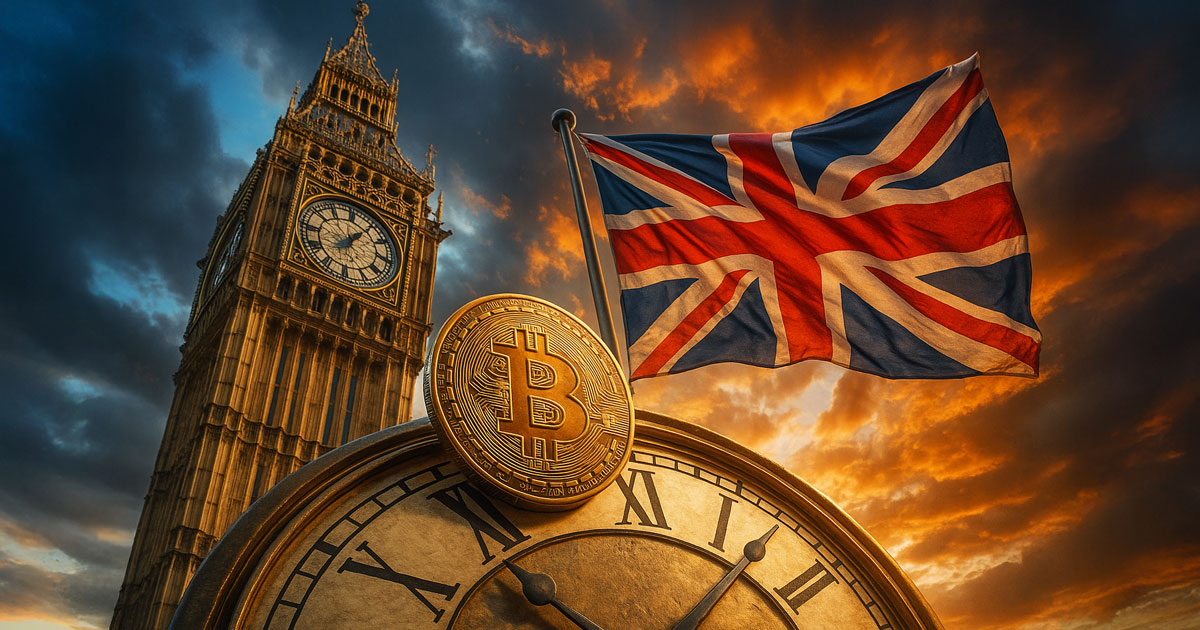
The UK Treasury has set October 2027 as the date its full cryptoasset regime comes into force.

For the first time, exchanges, custodians and other crypto intermediaries serving UK clients know they will need FCA authorisation under FSMA-style rules to keep doing business, rather than just a money-laundering registration and a risk warning.

The reaction to this move has been split across the industry.

Freddie New, chief policy officer at Bitcoin Policy UK, called the timeline “nothing short of farcical,” arguing that the UK “hasn’t just been left in the dust; it is barely even in the same race” compared with the EU’s already-live MiCA regime and a fast-moving US legislative agenda.

On the other side of the table, UK ministers sell the package as overdue housekeeping that brings crypto “inside the perimeter” and applies familiar standards around transparency and governance.

Lucy Rigby KC MP, the Economic Secretary to the Treasury, said:

“We want the UK to be at the top of the list for cryptoassets firms looking to grow and these new rules will give firms the clarity and consistency they need to plan for the long term.”

However, for UK’s crypto market, the signal is less about rhetoric and more about sequencing.

A dated perimeter, backed by an FCA consultation that starts to map specific crypto activities into the Handbook, tells firms this is no longer a thought experiment. It is a build-out project that has to be budgeted, prioritised and, in some cases, priced into spreads and product decisions.

Who falls inside the perimeter?

The most important change is not the date but who is caught by the perimeter and for what.

In its consultation, the FCA moves beyond the loose language of “exchanges and wallets” and spells out the activities it expects to supervise once the Treasury’s statutory instrument is live.

Those include issuing qualifying stablecoins, safeguarding qualifying cryptoassets and certain crypto-linked investments, and operating a cryptoasset trading platform (CATP). They also cover dealing as principal or agent, arranging deals in cryptoassets, and offering staking as a service.

See also  ‘Extraordinarily unusual’ for CFTC to reverse Gemini settlement deal: Ex-chair

That list matters because it maps onto how the industry is actually structured. A single firm might operate an order book, hold client assets in omnibus wallets, route flow to third-party venues, and offer staking on top.

Under the proposed regime those functions are no longer side-features of “being an exchange.” They are distinct regulated activities with their own systems-and-controls expectations and governance obligations.

Meanwhile, the perimeter also applies to activities carried on “by way of business in the UK,” which is straightforward for a domestic platform but far less so for offshore exchanges, brokerages or DeFi front ends with UK users but overseas entities.

That is where the hardest questions for market structure lives. The UK can regulate intermediation and trading platforms, but it cannot rewrite open-source code.

As New points out, no national law can directly regulate Bitcoin or Ethereum at the protocol layer; it can only target the bridges where people meet those protocols.

That leaves a DeFi edge that is still undefined.

If a UK-accessible web interface routes a user straight to a smart contract without running a centralized matching engine, is that “operating a trading platform,” “arranging deals,” or neither?

How the FCA answers that question will shape whether DeFi liquidity remains reachable for UK institutions through compliant channels, or is pushed behind geoblocks. It could also leave DeFi in a grey interzone where only offshore retail can participate.

So, the regulators have a promotions toolkit and perimeter tests they can already use at the edges, but there is no detailed line-drawing yet.

Property rights

While authorisation is two years away, the legal plumbing for institutional participation has already shifted.

The Property (Digital Assets etc) Act 2025 received Royal Assent earlier this month, implementing the Law Commission’s recommendation that certain digital assets be recognised as a distinct form of personal property.

In practice, that gives English courts clearer ground to treat crypto tokens as property that can be owned, transferred and enforced against. This applies even though they do not fit the traditional categories of tangible goods or “things in action.”

See also  What You Need to Know

For prime brokerage and custody, that matters.

One of the stickiest questions for institutional risk committees has been what happens in insolvency: if a UK custodian fails, are client coins clearly ring-fenced as property held on trust, or do they risk being swept into the general estate and shared with other creditors?

The Act does not magically guarantee bankruptcy remoteness in every structure. However, the utcomes will still depend on how custody is arranged, whether client assets are properly segregated, how records are kept, and what the contracts say about control and rehypothecation.

But the property-law uncertainty is reduced. Custodians and their lawyers can now write mandates, collateral schedules and security arrangements under English law with more confidence about how a court will treat the underlying asset class.

That creates a timing mismatch which is actually helpful for large allocators. The regulatory permission to operate as a crypto custodian or trading venue under FSMA will not exist until 2027, but the legal status of the underlying assets has been clarified already.

This gives the firms a window to start designing custody mandates, tri-party collateral agreements and margin frameworks today, knowing the property rights are on firmer footing, even if the supervisory perimeter is still being built.

Stablecoins

If the property reform is one leg of the institutional stool, stablecoin policy is another.

The Bank of England’s consultation on systemic stablecoins sketches a deliberately conservative model for sterling-pegged coins that become widely used in payments.

Under the proposals, issuers designated systemic would need to back at least 40% of their liabilities with unremunerated deposits at the Bank of England, with the remainder in short-dated UK government debt.

That structure is aimed at maximising redemption certainty and limiting run risk, but it also compresses the interest margin that has made USD-denominated stablecoins such lucrative businesses.

See also  Text of Clarity Act, Expected This Week, is Now Postponed

For a prospective “GBPC” issuer, parking a large slice of reserves at zero yield changes the economics materially. It does not guarantee that a sterling coin cannot work at scale, but it raises the bar for business models, especially if users still default to dollar pairs for trading and settlement.

As a result, the UK could end up with a small, very safe, tightly supervised domestic stablecoin sector while most liquidity continues to sit in offshore USD products that are outside its prudential reach.

Enforcement actions?

Overlaying all of this is the pre-enforcement question.

The October 2027 start date is not a two-year grace period. Enforcement pressure tends to arrive early, through supervisory “expectations,” financial promotions scrutiny and the risk appetite of banks and payment providers.

The FCA’s own language has previously shown that most cryptoassets remain high-risk and consumers should be prepared to lose all the money they invest.

That is a warning that authorisation, when it arrives, will be about systems and controls, not about endorsing any token’s merits.

Considering this, industry figures like venture capitalist Mike Dudas worry that the repeated “rules of the road” messaging is a prelude to a UK version of a “Gensler era.”

In that scenario, regulators would import the standards of traditional trading venues and apply them aggressively to crypto businesses, particularly around market-abuse surveillance and operational resilience in 24/7 markets.

However, another plausible path is reflected in the Treasury’s own rhetoric. It is a more calibrated regime that pairs high standards on custody, governance and disclosures with recognition that not every crypto firm can or should be treated as a full-fledged investment bank.

Nonethless, the reality of the situation will sit somewhere between those poles, and traders will feel it before 2027.

So, the build-out of surveillance tools, client-asset segregation, resilience testing and token-admission governance is likely to start well ahead of the statutory deadline.

The post Crypto investors gain critical protection in bankruptcy, even as a “conservative” rule threatens liquidity appeared first on CryptoSlate.

bankruptcy conservative Critical Crypto gain Investors Liquidity Protection rule threatens
Share. Facebook Twitter Pinterest LinkedIn Tumblr Email

Related Posts

583 Companies Go Public in 18 Months, Says SEC Chairman

October 3, 2026

New SEC crypto rules threaten small advisers, but big firms win

October 3, 2026

Daines Unveils Crypto Tax Bill Pairing Payment Relief With Wash-Sale Rules

October 3, 2026

Masked Robbers Threaten Pregnant Wife in UK Crypto Home Attack

October 3, 2026
Add A Comment
Leave A Reply Cancel Reply

Top Posts

SEC Officials Push US Crypto Ambitions in Debut Podcast Episode

April 19, 2026

Collably Network Partners with Cattoverse to Bridge Meme Culture and AI-Driven Crypto Intelligence

March 12, 2026

Stay ahead with the latest crypto news, market updates, blockchain insights, and trends. Your trusted source for everything happening in the digital asset world.


We're social. Connect with us:

Facebook X (Twitter) Instagram Pinterest YouTube
Top Insights

Bitcoin ETFs record $102M inflows – Why $85K matters for BTC now

October 3, 2026

583 Companies Go Public in 18 Months, Says SEC Chairman

October 3, 2026

Ethereum Price Faces $2,800 Wall Again — Are Whales Selling or Accumulating ETH?

October 3, 2026
Get Informed

Subscribe to Updates

Get the latest creative news From Free.cc directly in your Inbox!

  • Contact
  • Privacy Policy
  • Terms & Conditions
  • Disclosure
© 2026 free.cc - All rights reserved.

Type above and press Enter to search. Press Esc to cancel.