

Bitcoin’s Spot trading continues to show whales’ increased participation. However, whales’ larger transactions do not guarantee that they will continue to buy.
In addition, only 4.4% of Bitcoin that was moved and had been held for 6 to 12 months was sent to exchanges within the most recent thirty days. This is a decrease from 40.4% in June.
This dramatic decrease indicates that there were significantly fewer mid-term holders who were moving their coins for immediate sale. However, the share edged up from September’s 3.7%, indicating that selling pressure has not disappeared entirely.
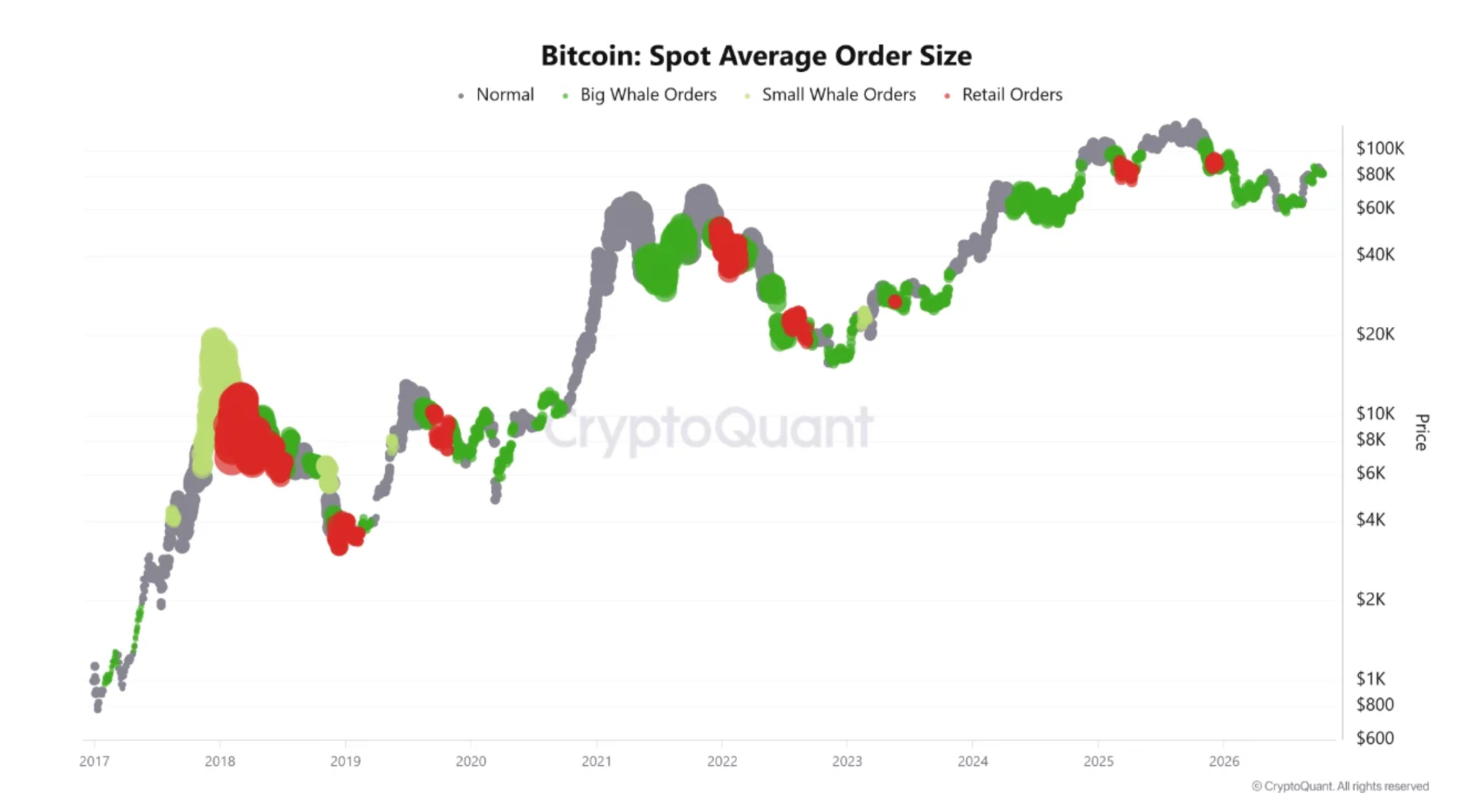
Bitcoin’s [BTC] recovery towards $100,000 during 2024-2025 occurred when whales exhibited greater strength than they had previously. However, since recent mixed orders near $80,000, there has been uncertainty in regard to demand.
Reduced exchange deposits may help maintain price stability. Still, for the recovery to take hold, there needs to be continued and sustained spot purchases.
Ultimately, stronger whale purchasing power may be able to absorb current selling pressure, thus providing better marketplace confidence and allowing additional gains.
Bitcoin loss selling eases
Realized profit-taking has cooled off since Bitcoin touched $87,000 in September, while panic-driven loss selling has also begun to ease. Earlier sharp loss spikes in early August coincided with prices near $62,000. Following these spikes, prices rallied toward $65,000.
A second loss spike in mid-August also precedes Bitcoin’s surge toward $80,000. Furthermore, losses were generated again in late September after Bitcoin dipped to $76,000, preceding a subsequent increase.
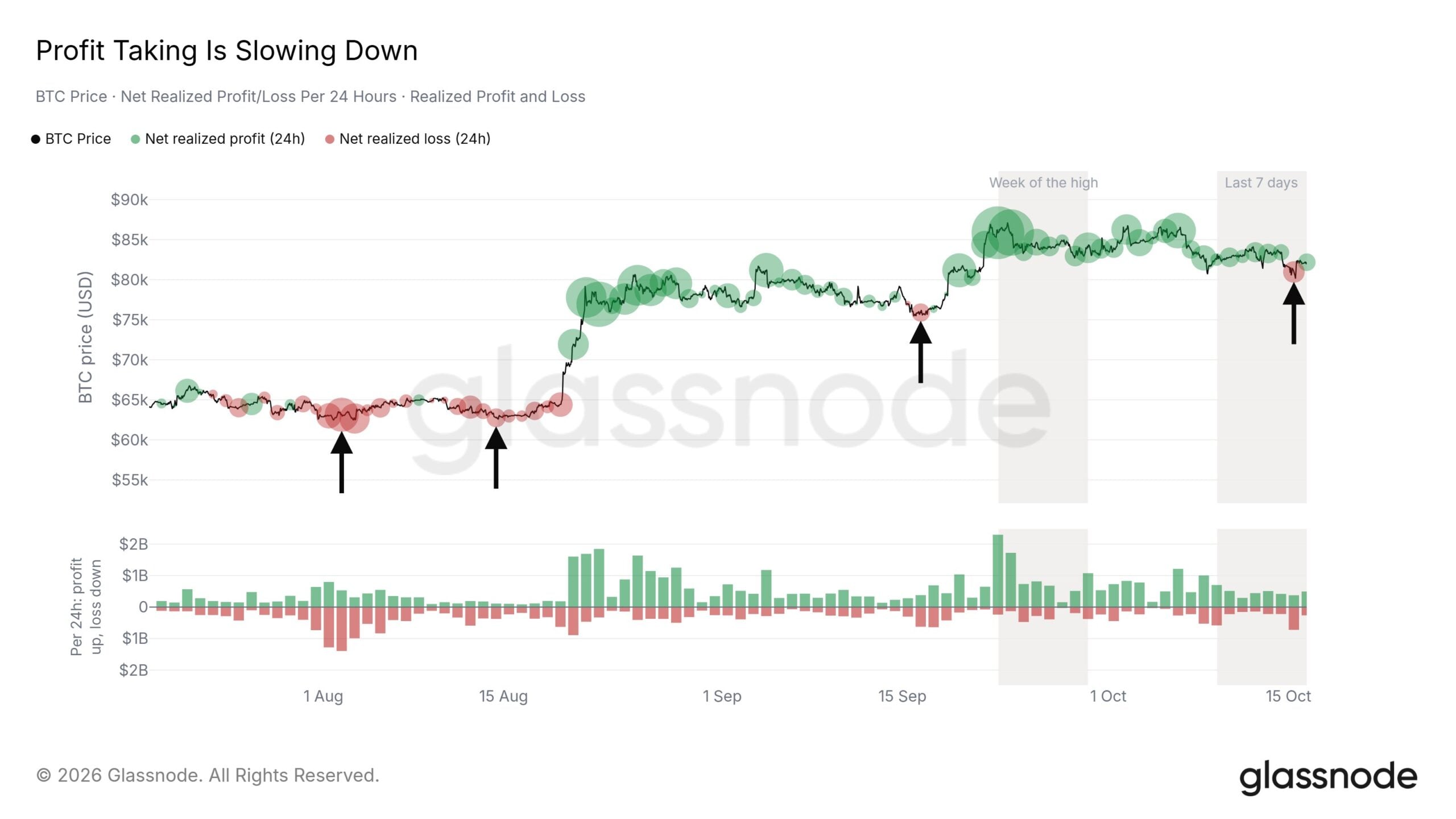
However, fresh losses have been experienced by the market as BTC dropped toward $81,000 in the most recent period.
Historically, loss selling tends to peak at or very near local bottoms, which allows prices to stabilize thereafter. However, sustaining a prolonged rally will require buyers to absorb existing losses and stimulate upward momentum.
Bitcoin’s overhead liquidity
As Bitcoin retreated toward $81,000, the focus shifted to overhead liquidity, which includes areas where numerous concentrated leveraged positions exist and can greatly magnify its next move. The largest area of liquidity exists just north of $84,500.
Another concentration of liquidity exists just north of $87,500. These levels are important because increases in price could trigger short sellers who hold positions to close those positions and generate additional buying pressure and accelerate the rally.
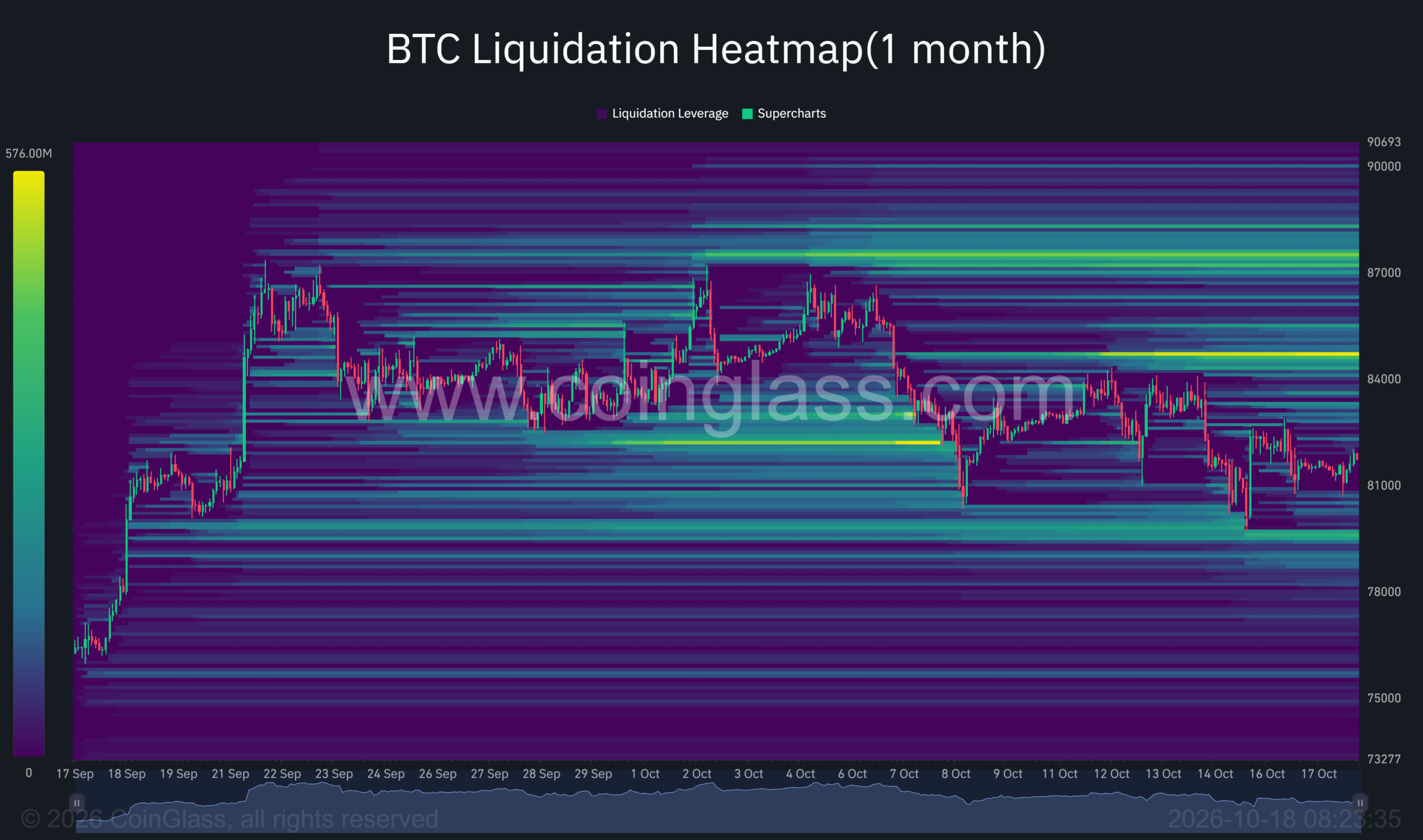
If such a breakout occurs, BTC could potentially reach $84,500 before reaching the higher cluster. Conversely, if BTC fails to reclaim weekly resistance at $83,000 and faces rejection, bullish sentiment will weaken, leaving both liquidity zones out of reach.
Until $83,000 is reclaimed on a weekly basis, these liquidation clusters represent potential targets rather than guaranteed destinations.
Final Summary
-
Bitcoin selling pressure eases as exchange-directed mid-term coins fall to 4.4%.
-
BTC targets $84.5K and $87.5K liquidity clusters if weekly resistance at $83K breaks.