
Asset tokenization—the process of putting real-world assets like company shares, real estate, and legal documents on the blockchain—is gaining quiet but consequential momentum. The promise is big: faster transfers, fewer intermediaries, and wider global access.
But while the tech races ahead, governments are still struggling to keep pace. In many developing countries, ownership is still recorded on paper, leaving administrators with systems that are slow, fragile, and ripe for disruption.
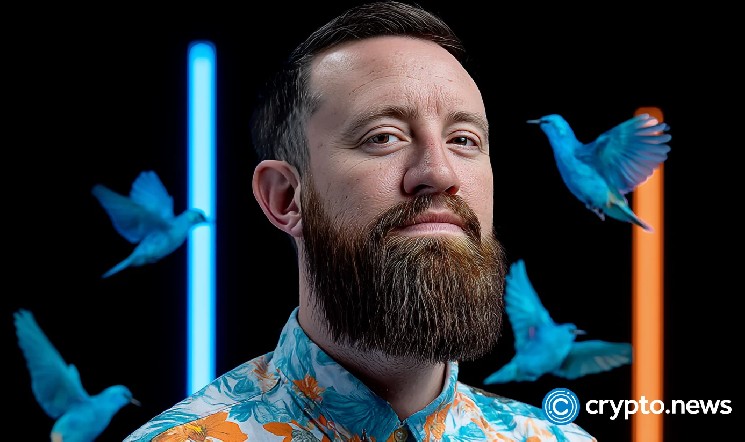
Corey Billington, CEO of the asset-tokenization firm Blubird, believes those very constraints could make emerging markets the first to leapfrog into a blockchain-based future. In an interview with crypto.news, he explains why nations still tied to manual record-keeping may be uniquely positioned to adopt a more efficient, digital approach—and what that shift could unlock.
Summary
- Developing nations are leaping over digitization straight into blockchain
- These systems require national wallets, potentially supercharging adoption
- Governments are much more open to tokenization than they reveal
Crypto.news: We’ve seen a major push toward asset tokenization lately—IPOs, equities, real-world assets moving on-chain. From your perspective, where are we right now with equity specifically, and what’s driving this momentum?
Corey Billington: So, equity on-chain specifically—we’re at a kind of crossroads. You’ve got a handful of nations that currently have supporting infrastructure—legal frameworks, classification systems; things like that. And then you’ve got developing nations—and quite a few first-world ones too—where that foundation is still missing.
The developing nations need this the most, especially if they want to grow faster and become first-world nations themselves. But what they’re often lacking is the legal infrastructure—how to handle tokenized assets, update registries, and reconcile on-chain events with off-chain governance.
And that’s the real issue. There’s a big disparity between what the software can do and what the legal systems actually support. You’ve got tokenization engines like Blubird, and others too, and we’re all doing great at the technical level. But the separation comes when the legal frameworks those tokens are meant to represent don’t keep up, like share registries that don’t automatically update when something changes on-chain.
Crypto.News: So the registries aren’t syncing with the on-chain events?
Billington: Exactly. For example, when we’re talking specifically about equity, that could mean the share registry isn’t updated as on-chain transactions occur. At the state or national level, many countries don’t recognize on-chain transfers unless their own records reflect the change. And this issue isn’t just limited to equity. It’s the same with real estate, or commodities—although commodities are treated a bit differently in some places.
To give you a real example: what we’re doing right now with one government is addressing this by tokenizing the land title registry itself. We’re not starting with houses or properties. We’re starting at the root: the registry layer. And that’s been pushed not just by the government, but also by some major companies who see how badly this is needed.
You might also like: Land registries should shift to blockchain technology | Opinion
Crypto.News: Can you say which country?
Billington: All I can say right now is it’s in the Caribbean. It’s a developing nation. The problems they’re seeing are massive—document forgeries, squatter issues, disputes over ownership. Proving who owns what in court is tough when the paperwork can’t be trusted.
So we’re solving that by putting the registry on-chain. That becomes the source of truth. But it’s not just about the registry itself. Once you go down this road, you need an entire digital infrastructure to support it.
You need a national wallet system for citizens—because if ownership is on-chain, they need wallets. Rental agreements will live in those wallets, too. You’re talking about using managed wallet solutions from players like Utillia or Fireblocks—solutions that have permissions, security, and are already being adopted by banks.
So you’re not just tokenizing land. You’re laying the groundwork for a full digital economy. And once that foundation exists, everything else becomes easier—rental agreements, contracts, warehouse invoicing. You’ve now got a national ecosystem to support it.
This country we’re working with is still very paper-based—seriously, they run a lot of critical systems on physical documents. But they’re getting wealthier, and they know they can’t afford to stay on paper. So they’re skipping the legacy “digital” phase and going straight into full digitalization on a DLT structure.
Crypto.News: Like leapfrogging landlines and going straight to mobile?
Billington: Exactly. They’re skipping steps. And interestingly, the first-world countries could do this too, but they’re not. Their systems are broken too, but they’re comfortable. There’s no real push for reform. I think they’re waiting. They want smaller nations to test it out, iron out the bugs, and then implement it later—once it’s proven and replicable. Something plug-and-play, like opening Microsoft Word, it looks and works the same every time. That’s what they’re waiting for.
Crypto.News: You mentioned that some major companies are actually pushing for these registry-level reforms. What’s motivating them? What do they see as the upside?
Billington: They’re running into the same problems—fraudulent documents, unreliable title systems, legal ambiguity. And they’re realizing there’s no advantage in copying first-world models that are already outdated. Why rebuild the same broken system?
What we’re seeing is that these companies are looking ahead—ten, twenty, thirty years out. They don’t want to pour money into infrastructure that will be obsolete in five or ten years. If they’re going to invest, they want to help create something future-proof.
Many of these companies have agreements with governments—part of their license to operate is investing in local infrastructure that benefits citizens. And in this case, that means helping build a modern digital foundation. For instance, one of these firms has already spent $3 billion and has earmarked an even greater sum for similar development projects in that region.
A national title registry on-chain requires digital wallets, a digital ID, and infrastructure to manage all that securely. And once you’ve got that, you can start layering on rental agreements, employment contracts, invoicing, and even credit systems.
You’re not just building a registry. You’re building a DLT-native national infrastructure. And from there, everything compounds—faster processes, lower costs, more transparency.
You might also like: Record-breaking crypto hacks push investors toward secure wallets: report
CN: Right—and what are the concrete benefits for governments, industries, and citizens?
CB: Speed and cost, first and foremost. Audits become fast because data trails are transparent and verifiable. You don’t need manual legal verification every step of the way—the data’s there, cryptographically locked, and the contract logic is already executed.
And cost, too—it cuts out intermediaries. You don’t need as many middlemen to validate, notarize, or process transactions. That alone saves time and money.
CN: Can you give a real-world example?
CB: Sure—say you want to buy a house. Normally, you’d need a notary to validate your ID, maybe a lawyer, a bunch of document checks. But if you have a government-issued wallet, tied to your digital ID, you can just sign the transaction. That signature proves who you are.
Your wallet becomes like a digital passport or social security number. It can’t be forged, it’s unique to you, and it proves identity instantly. You don’t need to go through a notary or spend hours gathering paperwork. That whole layer disappears.
And it’s not just notaries. Auditing firms, for example, will still be around, but their role changes. If the data is immutable, verifiable, and traceable on-chain, they don’t need to dig through records manually. The trust is built in.
So it’s not just that things move faster—it’s that entire categories of friction start to disappear.
CN: How do you approach the issue of privacy and security in these systems? I assume not everything on-chain is publicly viewable?
CB: Right, so you’ve got to strike a balance. The base chain is public, but you can use tools like ZK Pass or other privacy layers for anything sensitive. The public can see that a transaction happened, but they won’t necessarily see the details—those sit in the metadata. And even then, some metadata can be public, some private, depending on who’s accessing it.
So, for example, something like medical data—you’d need two keys to unlock it: one from the individual, one from the health provider. Same thing for financial records. Access is gated, and access requires consent or approval from both sides.
CB: There’s always going to be smart contract risk. It’s inevitable, whether that’s from bugs, exploits, or even the bigger stuff—quantum computing down the road. But in our use case, it’s more manageable. You’re not dealing with complex financial logic like staking or lending protocols. These are simple, locked-down contracts—registry updates, ID verifications, title transfers.
Where the real risk still lives is in social engineering. That’s always been the soft underbelly of tech systems. But here, everything runs on multi-sig or multi-key systems. Even if someone compromises one key, it’s not enough. You’d need multiple approvals to do anything meaningful.
So I wouldn’t compare this to Web2, where a single insider can just walk off with a database. It’s much harder. Not immune, but much more secure.
CN: That makes sense. One last thing—what are some trends you think are important, but not being talked about enough?
CB: Governments are way more open to this stuff than most people realize. There’s a lot happening behind closed doors. They’re not just dipping their toes in—they’re seriously exploring how to clean up corruption, cut down fraud, and improve transparency. Those are the drivers.
Some of these countries are actively fighting corruption. They’ve cracked down on gangs, they’re cleaning up politics, but they still face deep systemic issues—like forged documents, under-the-table deals, hidden registries. DLT removes the hiding places.
And then there’s the cost. A blockchain-based registry isn’t just better—it’s cheaper. And that matters to governments, especially ones trying to modernize fast.
So, transparency, anti-corruption, and cost savings. That’s what’s really pushing this forward.
You might also like: No foul play in Javier Milei’s Libra crypto promo, says anti-corruption office