

The $60,000 level wasn’t supposed to break this easily. Yet within a single minute, more than $470 million worth of sell orders slammed into Binance as BTC slipped below the psychological threshold for the third time since its latest all-time high. By the end of the hour, total selling activity on the exchange had already climbed past $1.2 Billion, and the numbers were still coming in. Markets don’t whisper when liquidity disappears; in fact, they scream.
Binance Order Books Face Heavy Pressure
The sheer scale of the move revealed just how many investors had stacked sell orders around the $60,000 region. Once that level cracked, execution accelerated rapidly as liquidity absorbed wave after wave of selling pressure.
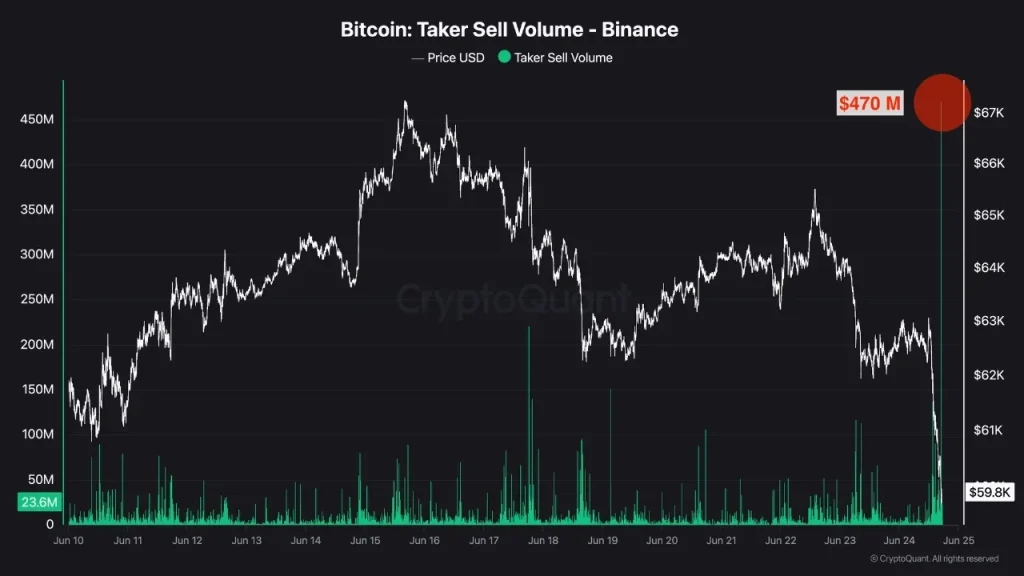
At the time of writing, BTC was trading near $59,458 on the daily chart, leaving traders debating whether this was capitulation or simply another stop on a longer correction.
What the move did confirm is Binance’s ability to process extraordinary trading flows during periods of market stress.

Macro Conditions Continue Tightening
The selloff wasn’t isolated to crypto markets. Gold fell 2.5% during the session while silver dropped 4.8%. Meanwhile, the U.S. Dollar Index reclaimed the 100 level as markets adjusted expectations for interest rate cuts in 2026 following developments surrounding the U.S.-Iran conflict.
For risk assets, that’s hardly ideal. A stronger dollar and tighter liquidity conditions have historically created headwinds for speculative markets, particularly derivatives where trading volumes have reportedly fallen back to levels last seen in October 2024.
BTC Price Levels Suddenly Matter Again
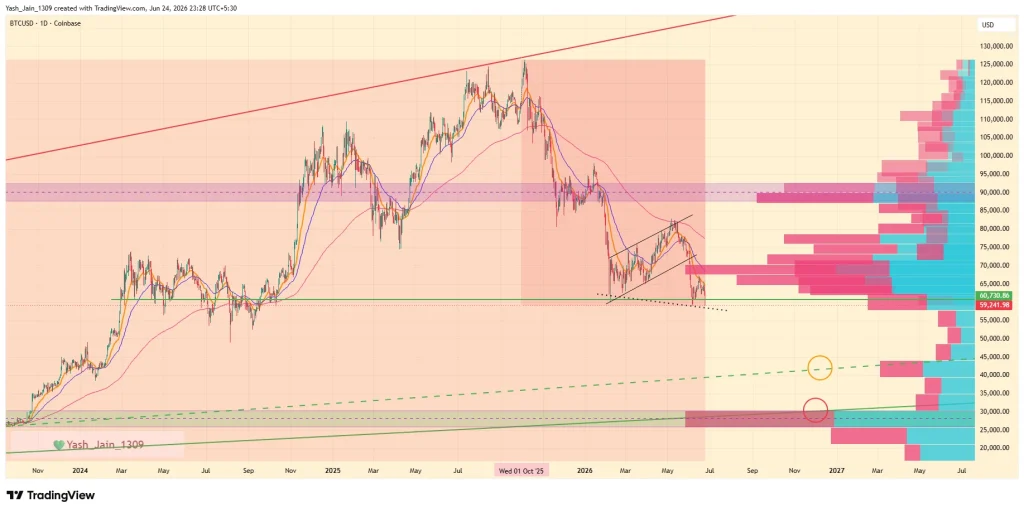
Technical traders are now closely watching what comes next. The $60,000 region had increasingly become a fragile support area, and with that level now broken, attention is shifting toward lower zones near $49,092. If bearish momentum persists, some market participants are also monitoring the $38,929 region as another major area of interest.
For now, BTC price remains at the center of the storm, and the market’s next move may depend less on headlines and more on whether liquidity decides to return.