Close Menu
  • Latest News
    • Bitcoin
    • Ethereum
    • Altcoins
    • Meme Coins
  • Tech
    • Blockchain
    • Security and Privacy
  • Web 3
    • Gaming
  • Legal
    • Legal and Regulatory
    • Adoption
  • Analysis
  • Learn
    • Education
    • Wallets and Exchanges
  • Tools
    • Market Overview
    • Exchange Tool
  • INFO@FREE.CC
What's Hot

XRP Gets Featured in Bitwise’s First-Ever $259 Million Tokenized Fund, CEO Speaks Out

June 3, 2026

Kalshi Goes Live With America’s First Regulated Bitcoin Perpetual Futures

June 3, 2026

Japan LDP Proposes Yen Stablecoin and Crypto ETF Framework

June 3, 2026
Facebook X (Twitter) Instagram
  • Contact
  • Privacy Policy
  • Terms & Conditions
  • Disclosure
Facebook X (Twitter) Instagram
Free.cc (Free Cryptocurrency)Free.cc (Free Cryptocurrency)
  • Latest News
    1. Bitcoin
    2. Ethereum
    3. Altcoins
    4. Meme Coins
    5. View All

    Kalshi Goes Live With America’s First Regulated Bitcoin Perpetual Futures

    June 3, 2026

    Bitcoin is now in the ‘Extreme Fear’ zone – Traders anticipate a fall to $50K

    June 3, 2026

    Why Did Bitcoin Price Crash To $66K Suddenly?

    June 3, 2026

    Michael Saylor’s Firm Strategy Announces First Bitcoin BTC Sale Since 2022

    June 3, 2026

    CoinShares Bull Case Sees Ethereum Hitting $14,135 By 2031

    June 3, 2026

    The Last Time Ethereum Did This Against Bitcoin, It Exploded Above $4,000

    June 3, 2026

    Why Tom Lee Remains Bullish For Bitcoin and Ethereum

    June 2, 2026

    $12.6 Million in Zama cUSDC Frozen Following Circle Blacklist Action

    May 30, 2026

    Pundit Says Dogecoin Is About To Do Something Insane, Here’s What

    June 3, 2026

    XRP Breaks Below Triangle—Will Drawdown Extend To $1.14?

    June 3, 2026

    Ethereum Price Gets Crushed To $1,840 Amid Relentless Selling Pressure

    June 3, 2026

    Senators Sanders, Warren Letter Warns $14 Trillion At Risk From DOL Proposal

    June 3, 2026

    Meme Coin Market Faces Imbalance as Supply Rises, Demand Falls

    April 4, 2026

    Crypto Interest Rising Toward Meme Coin Sector

    January 9, 2026

    Memes Market Cap Adds $10B in Days: Fresh Capital or Dead-Cat-Bounce?

    January 5, 2026

    Meme Coin Market Surges Past $45B as Shiba Inu, PEPE, BONK Stage 54% Price Pump

    January 4, 2026

    XRP Gets Featured in Bitwise’s First-Ever $259 Million Tokenized Fund, CEO Speaks Out

    June 3, 2026

    Kalshi Goes Live With America’s First Regulated Bitcoin Perpetual Futures

    June 3, 2026

    Japan LDP Proposes Yen Stablecoin and Crypto ETF Framework

    June 3, 2026

    Base’s state update system went down and nobody noticed

    June 3, 2026
  • Tech
    1. Blockchain
    2. Security and Privacy
    3. View All

    XRP Gets Featured in Bitwise’s First-Ever $259 Million Tokenized Fund, CEO Speaks Out

    June 3, 2026

    Base’s state update system went down and nobody noticed

    June 3, 2026

    Solayer Launches Margin Trade Testnet

    June 3, 2026

    XRP Reaches $400M in Tokenized RWAs Faster Than Ethereum

    June 3, 2026

    Infosecurity Europe: AI-Powered Cybercrime Tools Surge on Dark Web

    June 3, 2026

    Stake DAO Freezes Arbitrum vsdCRV Markets After Attacker Mints 5.4T Synthetic Tokens

    May 29, 2026

    Certik Unveils ‘Anti-Virus for AI Agents’ as Skill Marketplaces Face Hidden Threats

    May 29, 2026

    New Threat Actor Jinx-0164 Targets Crypto Developers on macOS

    May 28, 2026

    XRP Gets Featured in Bitwise’s First-Ever $259 Million Tokenized Fund, CEO Speaks Out

    June 3, 2026

    Kalshi Goes Live With America’s First Regulated Bitcoin Perpetual Futures

    June 3, 2026

    Japan LDP Proposes Yen Stablecoin and Crypto ETF Framework

    June 3, 2026

    Base’s state update system went down and nobody noticed

    June 3, 2026
  • Web 3
    1. Gaming
    2. View All

    Pi Network Expands Gaming Ecosystem as CiDi Games Launches Developer Center

    June 3, 2026

    GMATRIXS Taps GamePad to Boost Web3 Gaming and DeFi Infrastructure

    June 3, 2026

    Code as Constitution: How Crypto Governance Is Moving Into the Real World

    June 2, 2026

    Why Toncoin Is Rising as Telegram Pushes Past Tap-to-Earn

    June 2, 2026

    XRP Gets Featured in Bitwise’s First-Ever $259 Million Tokenized Fund, CEO Speaks Out

    June 3, 2026

    Kalshi Goes Live With America’s First Regulated Bitcoin Perpetual Futures

    June 3, 2026

    Japan LDP Proposes Yen Stablecoin and Crypto ETF Framework

    June 3, 2026

    Base’s state update system went down and nobody noticed

    June 3, 2026
  • Legal
    1. Legal and Regulatory
    2. Adoption
    3. View All

    Japan LDP Proposes Yen Stablecoin and Crypto ETF Framework

    June 3, 2026

    Clarity Act Will Decide Whether US Leads Next-Gen Finance or Falls Behind

    June 3, 2026

    Bitgo CEO Warns Europe’s MiCA Rules Could Trigger a Massive Stablecoin Crisis

    June 3, 2026

    South Korea opens reporting period for 2025 overseas financial accounts

    June 3, 2026

    Bank of England stablecoin caps may choke the UK’s pound-token market before launch

    June 3, 2026

    Cardano just canceled is 2026 Summit

    June 2, 2026

    Trader turns $2,480 into $12 million after holding Binance memecoin for 8 months

    June 1, 2026

    Crypto walked so banks could run

    May 30, 2026

    XRP Gets Featured in Bitwise’s First-Ever $259 Million Tokenized Fund, CEO Speaks Out

    June 3, 2026

    Kalshi Goes Live With America’s First Regulated Bitcoin Perpetual Futures

    June 3, 2026

    Japan LDP Proposes Yen Stablecoin and Crypto ETF Framework

    June 3, 2026

    Base’s state update system went down and nobody noticed

    June 3, 2026
  • Analysis

    Cardano Price Hits a 5-Year Low—Is ADA Dead or Poised for a Strong Recovery?

    June 3, 2026

    Bitcoin returns to the price that capped 2021, defined 2024, and now tests the rally again

    June 3, 2026

    Ed Yardeni Pushes Back on Fears That SpaceX, Anthropic and OpenAI Will ‘Suck the Oxygen Out’ of the Stock Market – Here’s Why

    June 3, 2026

    Why Bitcoin, Ethereum, XRP and Major Altcoins Are Falling

    June 3, 2026

    SUI Price Enters a Pivotal Support Zone Below $1—Will it Trigger a Rebound Back Within the Range?

    June 3, 2026
  • Learn
    1. Education
    2. Wallets and Exchanges
    3. View All

    What Is BChat? The Decentralized Messaging App Built for Privacy

    June 2, 2026

    What Is an AI Prompt Injection Attack? The Hidden Threat Hijacking Your Chatbots

    May 31, 2026

    What Is AI Jailbreaking? A Beginner’s Guide to the Cat-and-Mouse Game Behind Every Chatbot

    May 17, 2026

    What’s on the Ethereum Roadmap: Glamsterdam, Hegota and Beyond

    March 30, 2026

    XRP is sitting on a volatility trap as liquidity dries up and leverage builds

    May 27, 2026

    Kraken moves Bitcoin to Chainlink as bridge fears spread across DeFi

    May 16, 2026

    Coinbase went down for over 5 hours after missing earnings. Bulls still see a path to $300 billion by 2030

    May 8, 2026

    Coinbase cuts 14% of staff as Armstrong ties cost reset to AI and market volatility

    May 6, 2026

    XRP Gets Featured in Bitwise’s First-Ever $259 Million Tokenized Fund, CEO Speaks Out

    June 3, 2026

    Kalshi Goes Live With America’s First Regulated Bitcoin Perpetual Futures

    June 3, 2026

    Japan LDP Proposes Yen Stablecoin and Crypto ETF Framework

    June 3, 2026

    Base’s state update system went down and nobody noticed

    June 3, 2026
  • Tools
    • Market Overview
    • Exchange Tool
  • INFO@FREE.CC
Free.cc (Free Cryptocurrency)Free.cc (Free Cryptocurrency)
Home»Legal and Regulatory»White House study bolsters crypto’s stance in stablecoin yield fight against bankers
Legal and Regulatory

White House study bolsters crypto’s stance in stablecoin yield fight against bankers

April 10, 2026No Comments5 Mins Read
Share
Facebook Twitter LinkedIn Pinterest Email

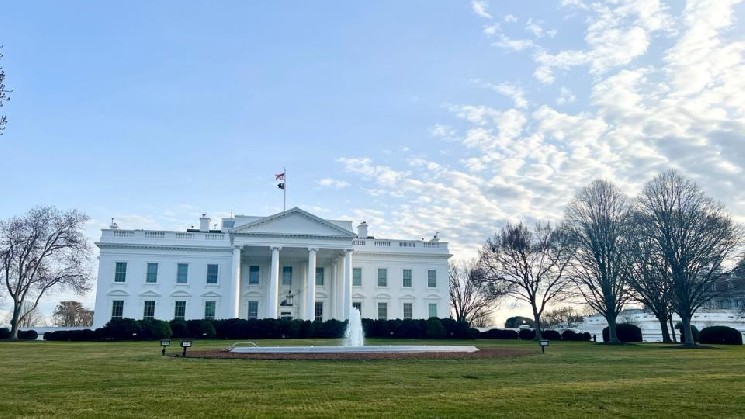
A White House report released Wednesday directly challenges the banking industry’s claims that stablecoin yields would drain deposits and weaken lending to households and small businesses.

Instead, banning those stablecoin rewards would have only a negligible impact on credit creation, the analysis, released by the Council of Economic Advisers (CEA), found.

The White House economists behind the 21-page report said their findings are based on a stylized economic model calibrated with Federal Reserve and FDIC data on deposits, lending and bank liquidity, as well as industry disclosures on stablecoin reserves and academic estimates of how consumers shift funds between assets.

The report, which specifically analyzes the GENIUS Act, signed in July 2025, also warns that proposed updates to the Digital Asset Market Clarity Act to further restrict “yield-like” rewards from intermediaries like Coinbase could be counterproductive.

“In short, a yield prohibition would do very little to protect bank lending, while forgoing the consumer benefits of competitive returns on stablecoin holdings,” the report emphasized. It added that “the conditions for finding a positive welfare effect from prohibiting yield are simply implausible.”

The report marks the latest development in the ongoing conflict between U.S. banks and the cryptocurrency industry that has stalled digital asset legislation in Congress, where senators are seeking a compromise to unlock the stalled Clarity Act. President Donald Trump and his advisers have been eager for negotiators — including the crypto industry, bankers and senators from both sides of the aisle — to strike a deal that advances the long-awaited bill, which is one of the administration’s legislative priorities.

See also  How the US Crypto Framework Stacks Up Against MiCA, MAS, and VARA

While the crypto firms and their legislative supporters argue they should be allowed to offer yield-like rewards on stablecoins, banks warn that would lead to funds being siphoned away from the traditional financial system. But Wednesday’s findings could undercut a core argument from banking groups: Even a full ban on stablecoin yield would increase lending only marginally.

Ban does little to protect lending

In other words, the report claimed, the prohibition would do little to protect lending while stripping consumers of competitive returns.

The American Bankers Association (ABA) insists that if stablecoins begin offering yields comparable to high-yield savings accounts, depositors will move money out of banks and into digital dollars, reducing the funds banks use to make loans. The banking lobbyists have argued that community bankers will be especially harmed — an argument that caught the ear of lawmakers such as Senators Thom Tillis, a Republican, and Angela Alsobrooks, a Democrat, who have been seeking a legislative compromise that won’t harm Main Street institutions.

However, the White House economists said that the bankers’ argument misunderstands how stablecoins interact with the broader financial system. In one example, the report describes how funds used to buy stablecoins are often reinvested in Treasury bills and ultimately redeposited into other banks, leaving overall deposit levels largely unchanged,

The report also addresses concerns that community banks could lose out as funds flow into Treasuries and large institutions, finding the impact on smaller lenders is limited. It estimates community banks would account for just 24% of any incremental lending under a yield ban or about $500 million, and notes that stablecoin activity is already concentrated among large financial institutions, suggesting the real-world effect on smaller banks may be even smaller.

See also  CFTC fires insider trading shot as JPMorgan, Paradigm mull prediction market ventures

“The answer lies not in the level of deposits, but in their composition,” the report explained. Under the current “ample reserves” regime, these shifts between banks do not force lenders to shrink their balance sheets.

Rather than disappearing from the banking sector, much of the money backing stablecoins is recycled through it. When issuers invest reserves in Treasury bills or similar instruments, those funds typically end up redeposited elsewhere in the banking system, preserving overall deposit levels even if individual banks see outflows.

Only a small share of stablecoin reserves, estimated at about 12% in the report’s baseline, is held in forms that could meaningfully restrict lending. Even then, the effect is heavily diluted by bank reserve requirements and liquidity buffers, which absorb much of the potential impact before it reaches borrowers.

The result is a multi-step dampening effect: tens of billions of dollars may move between stablecoins and deposits, but only a fraction ultimately translates into new loans.

That dynamic also weakens the argument that stablecoin yields pose a particular threat to community banks. According to the report, smaller lenders would see just $500 million in additional lending under a yield ban, an increase of roughly 0.026%.

In other words, the White House economists contend that the policy delivers minimal benefits to the very institutions it is often framed as protecting.

The report said generating large lending effects requires hypothetically stacking several extreme conditions at once: a stablecoin market many times larger than today’s, reserves fully locked away from lending and a shift in Federal Reserve policy away from its current ample-reserves framework. Absent those scenarios, the impact remains marginal, it said.

See also  A White House Tweet Exposed the Real Risk in the CLARITY Act

Costs fall on consumers

The report also reinforced the crypto industry’s arguments in consumer terms. By eliminating yield, policymakers would effectively reduce returns on a growing category of dollar-based assets that compete with traditional deposits.

The economists estimated that such a prohibition would carry a net welfare cost, as users give up yield without receiving meaningful improvements in credit availability in return. Rather than assuming stablecoin yields are destabilizing, the report suggested policymakers must demonstrate that restricting them would deliver tangible benefits to the real economy, particularly to small businesses and households that rely on bank lending.

So far, according to the administration’s own economists, that case remains unproven.

Bankers bolsters Cryptos fight House Stablecoin Stance Study White Yield
Share. Facebook Twitter Pinterest LinkedIn Tumblr Email

Related Posts

Japan LDP Proposes Yen Stablecoin and Crypto ETF Framework

June 3, 2026

Bank of England stablecoin caps may choke the UK’s pound-token market before launch

June 3, 2026

Clarity Act Will Decide Whether US Leads Next-Gen Finance or Falls Behind

June 3, 2026

Bitgo CEO Warns Europe’s MiCA Rules Could Trigger a Massive Stablecoin Crisis

June 3, 2026
Add A Comment
Leave A Reply Cancel Reply

Top Posts

US frees up billions for banks while quietly admitting SVB’s core failure never went away

April 4, 2026

AWS outage shows crypto’s weak spot

October 29, 2025

Stay ahead with the latest crypto news, market updates, blockchain insights, and trends. Your trusted source for everything happening in the digital asset world.


We're social. Connect with us:

Facebook X (Twitter) Instagram Pinterest YouTube
Top Insights

XRP Gets Featured in Bitwise’s First-Ever $259 Million Tokenized Fund, CEO Speaks Out

June 3, 2026

Kalshi Goes Live With America’s First Regulated Bitcoin Perpetual Futures

June 3, 2026

Japan LDP Proposes Yen Stablecoin and Crypto ETF Framework

June 3, 2026
Get Informed

Subscribe to Updates

Get the latest creative news From Free.cc directly in your Inbox!

  • Contact
  • Privacy Policy
  • Terms & Conditions
  • Disclosure
© 2026 free.cc - All rights reserved.

Type above and press Enter to search. Press Esc to cancel.