

The metaverse is an interconnected web of virtual environments where people interact as digital identities, working, socializing, building, and owning digital goods that can carry real-world value. What once sounded like science fiction has turned into a practical discussion about access, technology, ethics, and who controls the next phase of the internet.
Key Takeaways
-
The metaverse describes a persistent digital network of 3D spaces linked by identity, data, and value systems.
-
You can enter through VR, AR, desktop, or mobile; a headset isn’t always required.
-
Blockchain, AI, and cloud infrastructure make ownership, simulation, and personalization possible.
-
Companies, creators, and users are shaping virtual economies and social norms inside these environments.
-
Privacy, governance, and interoperability will determine whether the metaverse becomes open and empowering or fragmented and commercialized.
Definition and Core Concept
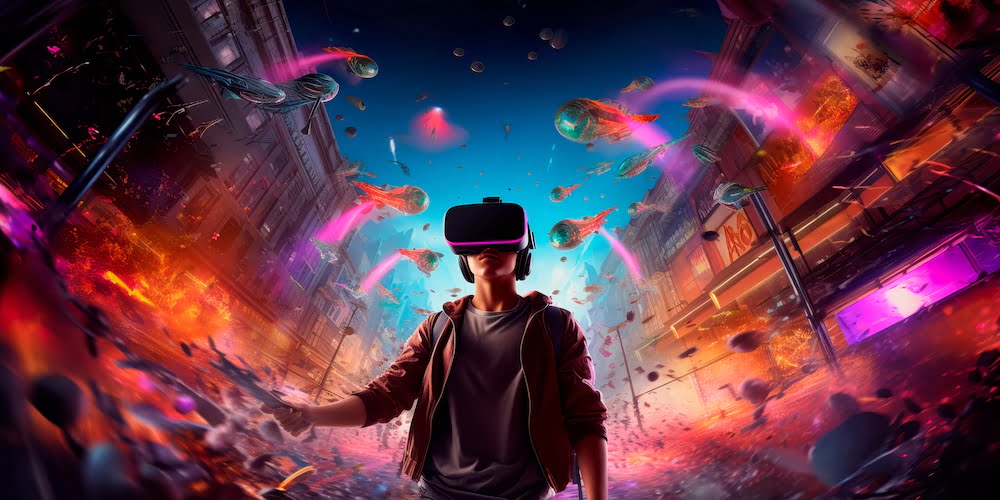
The metaverse is a shared digital environment that continues to exist even when you’re not online. It blends virtual reality (VR), augmented reality (AR), social interaction, and blockchain-based ownership into spaces where people can collaborate, play, and create.
Rather than being a single app or platform, it’s better understood as a network of interconnected 3D spaces. These worlds may be visually different, but they share key attributes: persistence, identity, social presence, and economic systems.
Core Characteristics
-
Identity and Presence
You appear as an avatar—an expressive digital version of yourself that interacts with others. Avatars store information like achievements, assets, and social networks, forming a consistent digital identity. -
Persistence
The metaverse doesn’t “reset.” It runs continuously. Events unfold in real time, properties appreciate or depreciate, and people can collaborate across time zones without interruption. -
Interoperability
A long-term goal is seamless movement between platforms—carrying your avatar, purchases, and reputation from one world to another. This open standard is still aspirational but crucial for scalability. -
Economic Layer
Virtual currencies, NFTs, and smart contracts allow users to own and exchange assets. Whether or not blockchain is involved, digital ownership defines participation in metaverse economies. -
Social Connection
Presence matters more than pixels. The metaverse simulates the feeling of “being with someone” through shared space, body language, and spatial sound, transforming how we meet and communicate online.
Background and Origins
Early Vision and Fiction
The term metaverse was coined by author Neal Stephenson in his 1992 novel Snow Crash, where users accessed a vast 3D virtual city through personal avatars. That fictional metaverse had laws, economics, and social hierarchies—concepts that would later inspire real developers and futurists.
From Games to Platforms
-
MUDs (Multi-User Dungeons) in the 1980s allowed text-based collaboration and exploration, laying the groundwork for shared online worlds.
-
Second Life (2003) turned the idea into a living digital society. Users bought land, hosted events, and even ran businesses using Linden Dollars, one of the first virtual currencies with real exchange value.
-
MMOs like World of Warcraft added scale and community, showing that millions could coexist in a persistent digital environment.
The Social Layer Arrives
As social media evolved, the idea of “digital identity” became mainstream. Platforms like Roblox and Fortniteblurred gaming with social networking—hosting concerts, brand events, and co-creation hubs that looked more like towns than games.
Why the 2021 Surge?
In 2021, Meta (formerly Facebook) rebranded itself around the metaverse concept, signaling industry-wide momentum. Simultaneously, Web3 projects began linking NFTs and blockchain to virtual assets, claiming to decentralize ownership. The convergence of AI, cloud computing, and XR (Extended Reality) made the concept technologically feasible for the first time.
How the Metaverse Works: The Technology Stack
1. Interface Layer
Access varies:
-
VR Headsets create immersion through stereoscopic displays, motion tracking, and haptic controllers. Devices like Meta Quest or Apple Vision Pro deliver embodied experiences where hand gestures and gaze drive interaction.
-
AR Devices (like Microsoft HoloLens or mobile AR) blend virtual content into real surroundings, useful for spatial computing and digital twin scenarios.
-
Desktop and Mobile Access remains crucial. Roblox and Fortnite show that millions prefer flat-screen participation, proving the metaverse isn’t confined to VR hardware.
2. Simulation and Rendering Layer
At its core are 3D engines like Unreal Engine and Unity, which handle lighting, physics, and world-building. Cloud streaming platforms such as NVIDIA Omniverse or Amazon Sumerian render scenes remotely, lowering hardware demands for users.
Spatial audio, volumetric capture, and photogrammetry make spaces feel alive. Imagine joining a meeting where voices echo realistically depending on where you stand.
3. Data and Identity Layer
Each participant has a digital identity that might include:
Projects like Decentralized Identifiers (DIDs) aim to give users portable, secure IDs across environments, just like you can carry an email address across devices.
4. Economy and Ownership Layer
Here’s where blockchain, smart contracts, and tokens come in. They define who owns what.
A parcel of land in The Sandbox, a skin in Fortnite, or a training certificate in Microsoft Mesh—each could theoretically exist as a verifiable digital asset.
Ownership brings accountability, but also speculation. In early experiments, some virtual land sold for millions, but real value depends on user engagement, not scarcity alone.
5. AI and Automation Layer
Artificial intelligence makes the metaverse scalable. It handles:
-
NPC behavior: AI-driven guides and shopkeepers react dynamically to user actions.
-
Procedural world generation: Entire landscapes can be generated from a text prompt.
-
Moderation: AI detects hate speech, harassment, and fraud faster than human teams.
-
Personalization: Systems adjust lighting, events, or recommendations to your preferences.
6. Network and Infrastructure
Fast, low-latency connections are essential. 5G and edge computing reduce lag, allowing realistic motion and real-time collaboration. The metaverse is bandwidth-heavy—streaming 3D data and spatial audio simultaneously.
How to Access and Explore the Metaverse
You don’t log into “the” metaverse; you choose an ecosystem. Each world offers different focuses—social connection, creativity, business, or play.
Social Worlds
-
Horizon Worlds (Meta) focuses on social events, comedy shows, and hangouts.
-
VRChat fosters user-built worlds, wild creativity, and community subcultures.
-
Rec Room blends casual gaming with creativity and classroom potential.
User-Created Universes
-
Roblox is more than a game—it’s a creation toolkit. Millions of young creators design experiences, making it a real-world case study for digital labor economies.
-
Fortnite Creative Mode allows concerts and brand experiences where millions join live.
Decentralized Environments
-
Decentraland and The Sandbox link assets to blockchain-based ownership. Users can buy parcels, open virtual stores, or host conferences with crypto integration.
-
These platforms aim for user governance through DAOs (Decentralized Autonomous Organizations), though true decentralization is still evolving.
Professional and Educational Use
-
Microsoft Mesh and NVIDIA Omniverse focus on industrial collaboration, remote training, and digital twin modeling.
-
Architects visualize buildings, surgeons practice procedures, and logistics teams simulate global supply chains.
Avatars, Identity, and Self-Expression
Avatars are cultural statements. From realistic photogrammetry to stylized cartoons, they communicate identity and creativity.
People experiment with appearance, gender, or body language that differs from their physical selves—an act of freedom, but also one that challenges safety and representation norms.

The Metaverse Economy: Digital Property, Currency, and Work
Digital economies are at the heart of the metaverse conversation. Ownership defines commitment; economies create motivation.
Virtual Land and Property
Owning “land” in virtual environments means controlling space others can visit. You might build:
Value depends on traffic, visibility, and utility. The Decentraland Fashion District became a hub for digital fashion brands because it attracted consistent attention—not because of intrinsic scarcity.
Virtual Goods and Services
Digital wearables, music rights, or access passes act as economic drivers. Gucci, Nike, and Balenciaga already sell digital fashion that exists only in virtual spaces.
What seems intangible becomes emotionally valuable because identity has shifted online. Your avatar’s jacket might say as much about you as your real one.
Work and Income Opportunities
The metaverse creates new types of work:
-
World builders: 3D environment designers for brands or social hubs.
-
Event managers: Plan virtual launches or conferences.
-
Community architects: Manage digital townships or governance.
-
Digital asset traders: Buy, design, and resell NFT wearables.
Developers, artists, and educators can now treat immersive platforms as markets for skills—similar to early YouTube creators who built full-time careers from user-generated content.
Payments and Regulation
Monetization runs through a mix of in-platform tokens, cryptocurrencies, and fiat gateways.
Governments are beginning to treat virtual assets as taxable property.
Anti-money-laundering regulations (AML) and know-your-customer (KYC) laws are extending into virtual spaces. These legal frameworks will shape how trustworthy virtual economies feel.
Cultural and Social Impact
Redefining Social Interaction
Digital presence changes emotional communication. Spatial audio and movement tracking mean your posture or laughter matters again online. Relationships formed in 3D spaces can feel more natural than chat threads because they use body language and proximity.
Education and Skill Development
The metaverse allows experiential learning:
-
Physics students can manipulate molecules or orbit simulations.
-
Historians can walk through ancient cities reconstructed from archaeological data.
-
Corporate teams conduct soft-skill training in immersive settings, improving retention rates.
These aren’t futuristic; companies like Accenture already onboard thousands of employees in virtual campuses.
Mental Health and Identity
Metaverse communities can reduce isolation by giving people social outlets independent of physical barriers. However, they can also create unhealthy dependencies, especially for those who struggle to separate digital and physical identity.
Clinical studies suggest VR therapy improves PTSD treatment and anxiety management by safely simulating triggers in controlled environments. But constant immersion without moderation may distort perception of self and time.
Art, Culture, and Creativity
Virtual galleries and performance spaces democratize art. Musicians like Travis Scott and Ariana Grande have hosted massive in-game concerts reaching audiences far beyond any stadium.
NFT-based royalties give artists direct compensation, bypassing traditional intermediaries.
At the same time, critics question sustainability—blockchain transactions consume energy—and accessibility, as premium VR devices remain expensive.
Who Is Building the Metaverse?
Tech Industry Leaders
-
Meta invests billions in hardware, avatars, and social platforms, hoping to own the entry point.
-
Microsoft integrates metaverse functions into workplace tools like Teams and Azure, emphasizing practical collaboration.
-
Epic Games pushes creative freedom through Unreal Engine and cross-platform social events.
-
NVIDIA uses Omniverse to model industrial digital twins—virtual factories, cities, and vehicles used for simulation and optimization.
Open Source and Decentralized Projects
Web3 developers advocate a user-owned metaverse, where code, assets, and governance belong to the community.
Projects like Decentraland DAO or The Sandbox experiment with collective voting on policy changes and creator incentives.
Challenges remain: coordination complexity, speculative bubbles, and technical fragmentation.
Government and Institutional Roles
Policymakers are exploring frameworks for:
-
Digital property rights
-
Taxation of virtual income
-
Data protection and biometric privacy
-
Child safety and accessibility standards
The European Union, South Korea, and the United Arab Emirates have all published early national strategies for metaverse development.
Challenges, Risks, and Criticism
Privacy and Data Collection
VR and AR systems gather unprecedented data: hand gestures, eye movements, room layouts. This biometric information can infer emotional states and cognitive patterns.
If mishandled, it becomes more invasive than traditional web tracking. Ethical design and local data storage are essential.
Interoperability and Standards
The current metaverse is a collection of isolated “walled gardens.”
Initiatives like the Metaverse Standards Forum and OpenXR attempt to unify protocols for avatars, assets, and motion tracking.
Without shared standards, the metaverse risks repeating the fragmentation of early social networks.
Safety and Moderation
Abuse, harassment, and misinformation can feel even more visceral in immersive spaces.
Effective solutions combine AI moderation, user empowerment tools (blocking, reporting), and human oversight.
Platforms are learning that emotional safety is as crucial as technical stability.
Economic Reality Check
Speculative hype in 2021 led to inflated valuations. By 2023, virtual real estate prices corrected dramatically.
The takeaway: the metaverse thrives not on scarcity but community engagement and creativity. Spaces with meaningful use cases retain value; empty land doesn’t.
Accessibility and Inclusion
VR devices remain costly and sometimes uncomfortable.
Developers are working on lighter, cheaper headsets and haptic gloves.
Language accessibility also matters: multilingual AI assistants and real-time translation can make the metaverse more global.
The Future of the Metaverse
Integration with AI
Generative AI will make world-building instant. Users will describe what they want—a café in Kyoto, a moon base, a collaborative classroom—and the system will generate it dynamically.
AI-driven avatars could become digital coworkers or companions, assisting with learning, scheduling, or emotional support.
Digital Twins and Industrial Metaverse
Enterprises are already using virtual replicas of real systems:
-
BMW uses digital twins of factories to optimize workflows before physical construction.
-
Siemens and NVIDIA simulate manufacturing environments for predictive maintenance.
These models save cost, reduce waste, and allow experimentation without risk.
Web3 and Interoperability
If blockchain standards mature, digital ownership could become portable across experiences. You could carry your verified art, reputation, or certification through multiple ecosystems.
This would mirror the way domain names or email addresses functioned during the web’s early growth.
Mixed Reality and Spatial Computing
The boundary between real and virtual will blur. With AR glasses, you might walk down a real street and see digital overlays—reviews, directions, or even art installations synchronized with your location.
Will the Metaverse Replace the Internet?
Unlikely in the short term. The metaverse won’t replace; it will extend.
Just as mobile apps didn’t erase websites, immersive environments will coexist with today’s 2D internet. The key difference will be presence—you won’t just read or watch; you’ll participate.
Related Concepts
-
Extended Reality (XR): The umbrella term for VR, AR, and mixed reality experiences.
-
Spatial Computing: Systems that understand and react to three-dimensional physical space.
-
Digital Twins: Virtual replicas of real-world assets for simulation or analysis.
-
Web3: A decentralized vision of the internet emphasizing user ownership and tokenized economies.
-
Virtual Economies: Marketplaces where virtual assets, skills, or experiences carry measurable value.
Frequently Asked Questions
Here are some frequently asked questions about this topic:
What exactly is the metaverse?
The metaverse is a connected network of virtual spaces where people use avatars to interact, work, and play in real time. It’s powered by technologies like VR, AR, AI, and blockchain, creating a sense of shared presence that extends beyond traditional social media or gaming.
Do I need VR goggles to enter the metaverse?
No, not always. Many metaverse environments—such as Roblox, Fortnite Creative, and Decentraland—can be accessed via a laptop or smartphone. VR simply deepens immersion but isn’t a requirement.
How does the metaverse differ from online gaming?
Games have fixed goals and rules, while the metaverse acts as an open digital ecosystem. You can attend a class, open a business, host a concert, or build social spaces—activities that mimic real-world life rather than structured gameplay.
Can people actually make money in the metaverse?
Yes. Users earn income by designing digital assets, selling NFTs, building virtual property, or hosting events. However, it’s still experimental—value depends on user activity, community engagement, and the platform’s stability.
What are the biggest challenges the metaverse faces?
Privacy, accessibility, and interoperability are major issues. Current platforms collect detailed biometric data, and not all systems talk to each other yet. Environmental impact and youth safety also remain under scrutiny.
Is the metaverse safe for children and teenagers?
Safety varies by platform. Parental controls, verified identity systems, and real-time moderation are improving, but supervision remains essential. The immersive nature of these spaces means emotional safety matters as much as technical protection.
Who is actually building the metaverse?
Tech giants like Meta, Microsoft, and Epic Games lead development, while decentralized communities on blockchain create user-owned worlds. Governments and academic institutions are also shaping regulations and educational applications.
What can people do inside the metaverse?
Users can attend concerts, socialize, work remotely, visit museums, explore 3D replicas of cities, or even conduct industrial simulations. The mix of creativity and utility makes it both a social and economic frontier.
What role does AI play in the metaverse?
Artificial intelligence drives dynamic avatars, automates moderation, and generates 3D environments from natural language prompts. It’s also used for translation, emotional recognition, and adaptive learning experiences.
Will the metaverse replace the internet?
No. It will sit alongside it—functioning as a spatial layer of the internet rather than a total replacement. You’ll still browse websites and use apps, but more experiences will happen in immersive, shared 3D environments.