Close Menu
  • Latest News
    • Bitcoin
    • Ethereum
    • Altcoins
    • Meme Coins
  • Tech
    • Blockchain
    • Security and Privacy
  • Web 3
    • Gaming
  • Legal
    • Legal and Regulatory
    • Adoption
  • Analysis
  • Learn
    • Education
    • Wallets and Exchanges
  • Tools
    • Market Overview
    • Exchange Tool
What's Hot

Uncalled US House races could send more crypto allies to Congress

November 14, 2026

Injective Bulls Target $10 as INJ Price Approaches a Critical Resistance Zone

November 14, 2026

Pumpfun Adds Sei Network Support With Built-In Crosschain Bridging for SEI Tokens

November 14, 2026
Facebook X (Twitter) Instagram
  • Contact
  • Privacy Policy
  • Terms & Conditions
  • Disclosure
Facebook X (Twitter) Instagram
Free.cc (Free Cryptocurrency)Free.cc (Free Cryptocurrency)
  • Latest News
    1. Bitcoin
    2. Ethereum
    3. Altcoins
    4. Meme Coins
    5. View All

    Bitcoin’s daily volume falls to 126K BTC, lowest in 10 years: Will BTC plummet to $60K?

    November 14, 2026

    Why is Bitcoin Falling? ETH And XRP Prices Crash As $60 Billion Leaves Crypto

    November 14, 2026

    Joe Carlasare On “Extreme Fear” In Bitcoin: “I’m A Buyer Here”

    November 14, 2026

    Bitcoin dips below $70K – Will $455M in liquidations derail BTC’s price recovery?

    November 14, 2026

    Sygnum ETH Fund Targets 8–10% Returns in Ether

    November 13, 2026

    Why Is Crypto Dropping? Bitcoin Tests $64K Support as Analysts Warn of Further Crash

    November 13, 2026

    Ethlabs Calls for Ethereum Quantum Protection in 2027

    November 13, 2026

    How Ethereum staking hit a record 36.3% despite ETH’s price drop

    November 13, 2026

    Here’s how PEPE is quietly beating every big memecoin this year!

    November 14, 2026

    Arthur Hayes pitches FLOP token as ‘food for your AI agent’ – Here’s how

    November 14, 2026

    Solo Brings Human Verification to Venmo Co-Founder’s JellyJelly App as AI Agents Beat CAPTCHA

    November 13, 2026

    SUI crypto’s 26% drop sparks bottom calls – Is a ‘short‑term bounce’ next?

    November 13, 2026

    Top 5 Memecoins to Watch in 2026: Hype, Utility, or Growth?

    October 14, 2026

    Did Jean Phil Go Viral First — or Was the Viral Persona Built to Launch a Memecoin?

    October 5, 2026

    Thinking Cat Gains Momentum After CASHCAT’s Breakout

    August 12, 2026

    What Tokens Could He Target?

    July 30, 2026

    Uncalled US House races could send more crypto allies to Congress

    November 14, 2026

    Injective Bulls Target $10 as INJ Price Approaches a Critical Resistance Zone

    November 14, 2026

    Pumpfun Adds Sei Network Support With Built-In Crosschain Bridging for SEI Tokens

    November 14, 2026

    Bitcoin’s daily volume falls to 126K BTC, lowest in 10 years: Will BTC plummet to $60K?

    November 14, 2026
  • Tech
    1. Blockchain
    2. Security and Privacy
    3. View All

    Pumpfun Adds Sei Network Support With Built-In Crosschain Bridging for SEI Tokens

    November 14, 2026

    LimeWire Launches MCP Connector Letting AI Agents Like Claude and ChatGPT Share Files

    November 14, 2026

    Ethereum upgrades pose testing challenges, says Sprinter co-founder

    November 14, 2026

    Suiet wallet to shut down in latest exit from Sui ecosystem

    November 14, 2026

    Crypto scam uses stolen faces to target friends, FBI warns

    November 14, 2026

    Safepal Hardware Wallet Users Receive Fake Security Alerts in the Mail

    November 13, 2026

    Police Arrest ‘Brazilian Unabomber’ Over Bitcoin Bomb Threats

    November 13, 2026

    Trezor Confirms Spy Implants in 3 Hardware Wallets, Cuts Resellers by 80%

    November 13, 2026

    Uncalled US House races could send more crypto allies to Congress

    November 14, 2026

    Injective Bulls Target $10 as INJ Price Approaches a Critical Resistance Zone

    November 14, 2026

    Pumpfun Adds Sei Network Support With Built-In Crosschain Bridging for SEI Tokens

    November 14, 2026

    Bitcoin’s daily volume falls to 126K BTC, lowest in 10 years: Will BTC plummet to $60K?

    November 14, 2026
  • Web 3
    1. Gaming
    2. View All

    The Five Most-Discussed Cryptocurrencies Revealed—Only One Is Being Discussed Positively

    November 14, 2026

    FLOKI Ships Valhalla 1.13.2 ‘Special Delivery’ to Players on Mainnet

    October 27, 2026

    Top 12 NFT games every player should know about in August 2026

    September 22, 2026

    GameShame Studios founder details Raijin Protocol’s roadmap in NeoPod’s sixth AMA

    September 22, 2026

    Uncalled US House races could send more crypto allies to Congress

    November 14, 2026

    Injective Bulls Target $10 as INJ Price Approaches a Critical Resistance Zone

    November 14, 2026

    Pumpfun Adds Sei Network Support With Built-In Crosschain Bridging for SEI Tokens

    November 14, 2026

    Bitcoin’s daily volume falls to 126K BTC, lowest in 10 years: Will BTC plummet to $60K?

    November 14, 2026
  • Legal
    1. Legal and Regulatory
    2. Adoption
    3. View All

    Uncalled US House races could send more crypto allies to Congress

    November 14, 2026

    From Prison Cell to $2.7M Crypto Heist, Scottish Criminal Gets 8 More Years

    November 14, 2026

    Kalshi Could Be in Serious Trouble as CFTC Threatens Possible Enforcement Action

    November 14, 2026

    The CLARITY Act Is Effectively Tabled Until January, After A 49-50 Senate Defeat And A Democratic Midterm Sweep

    November 14, 2026

    Millions watched Kalshi’s election odds without betting a dollar

    November 7, 2026

    Why Ripple’s $16 trillion payment volume isn’t boosting XRP

    October 31, 2026

    Ripple is heading for its best year ever while XRP faces its worst since 2022

    October 29, 2026

    BNY offers XRP custody, but only 1 rollout type exists

    October 28, 2026

    Uncalled US House races could send more crypto allies to Congress

    November 14, 2026

    Injective Bulls Target $10 as INJ Price Approaches a Critical Resistance Zone

    November 14, 2026

    Pumpfun Adds Sei Network Support With Built-In Crosschain Bridging for SEI Tokens

    November 14, 2026

    Bitcoin’s daily volume falls to 126K BTC, lowest in 10 years: Will BTC plummet to $60K?

    November 14, 2026
  • Analysis

    Injective Bulls Target $10 as INJ Price Approaches a Critical Resistance Zone

    November 14, 2026

    Coinbase AI trading tool pauses bots, but leaves orders open

    November 14, 2026

    Bitcoin hedge cost more than doubled in a day

    November 13, 2026

    Solana Price Struggles at $80 as Declining Open Interest Raises Fresh Concerns—What’s Next?

    November 13, 2026

    Chiliz Price Tests Critical Channel Support as Bulls Eye $0.95

    November 13, 2026
  • Learn
    1. Education
    2. Wallets and Exchanges
    3. View All

    What Is Robinhood Chain? The Ethereum Layer-2 Network for Tokenized Stocks

    July 12, 2026

    What Is BChat? The Decentralized Messaging App Built for Privacy

    June 2, 2026

    What Is an AI Prompt Injection Attack? The Hidden Threat Hijacking Your Chatbots

    May 31, 2026

    What Is AI Jailbreaking? A Beginner’s Guide to the Cat-and-Mouse Game Behind Every Chatbot

    May 17, 2026

    US courts target $1.2B in stolen Binance funds, yet victims face a new hurdle

    November 14, 2026

    locked funds and uncertain allocations

    November 13, 2026

    Binance CFO leaves the company to tokenize real assets

    November 11, 2026

    NYSE brings stocks to Avalanche, but bans direct wallets

    November 11, 2026

    Uncalled US House races could send more crypto allies to Congress

    November 14, 2026

    Injective Bulls Target $10 as INJ Price Approaches a Critical Resistance Zone

    November 14, 2026

    Pumpfun Adds Sei Network Support With Built-In Crosschain Bridging for SEI Tokens

    November 14, 2026

    Bitcoin’s daily volume falls to 126K BTC, lowest in 10 years: Will BTC plummet to $60K?

    November 14, 2026
  • Tools
    • Market Overview
    • Exchange Tool
Free.cc (Free Cryptocurrency)Free.cc (Free Cryptocurrency)
Home»Legal and Regulatory»New Treasury rules could change how stablecoin issuers get your dollars back
New Treasury rules could change how stablecoin issuers get your dollars back
Legal and Regulatory

New Treasury rules could change how stablecoin issuers get your dollars back

October 5, 2026No Comments8 Mins Read
Share
Facebook Twitter LinkedIn Pinterest Email

US government debt is one of the easiest assets in the world to borrow against, which lets financial companies get cash without giving up their investments for good.

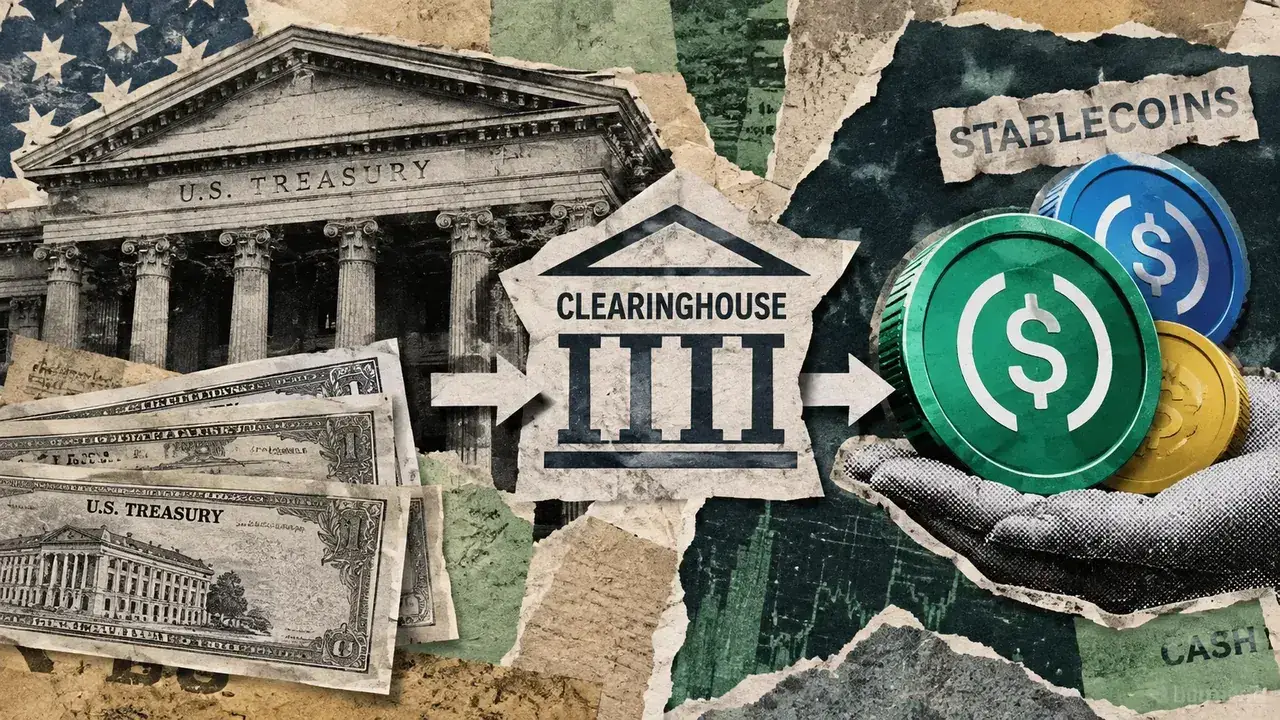
Washington is rewriting the rules for that borrowing, and the result will reach crypto through the companies that keep Treasury securities behind their dollar tokens.

The SEC wants more Treasury transactions to pass through a central clearinghouse, an institution that becomes the buyer to each seller and the seller to each buyer.

If one trading company fails, the other side can look to the clearinghouse to complete the covered trade, under its rules, instead of trying to recover everything from the failed company itself.

Providing that kind of protection takes a lot of money, so the new system will also affect what companies pay to trade and borrow. Stablecoin issuers depend on those services when they need to convert reserve assets into dollars for customers, so the cost and availability of Treasury trading affect how well their tokens work.

The SEC’s deadlines are Dec. 31 for eligible outright purchases and sales of Treasuries, followed by June 30, 2027, for eligible repurchase agreements, known as repos. Commissioner Mark Uyeda said on Sept. 22 that the agency didn’t currently intend to extend them.

These requirements cover specified trades involving clearing members, rather than every purchase of a Treasury by anyone who owns one.

Owning the Treasury bond is only half the transaction

Suppose an investment fund owns Treasury securities but needs dollars today, before the government is due to repay it. The fund could sell some of those securities, or it could use a repo: sell them now with an agreement to buy them back on a set date, often the next day, for a slightly higher price.

Economically speaking, the fund has borrowed cash, with the Treasuries protecting the lender and the price difference paying for the loan. The borrower gets money it can spend while keeping a road back to its securities, and the lender earns a return on cash it wasn’t using.

Dealers, usually banks or securities firms, connect much of this business. The New York Fed’s explanation of the repo market follows cash from lenders such as money-market funds through dealers to borrowers such as hedge funds.

Dealers can borrow in one part of the market and lend in another, earning money for arranging and financing the transactions.

See also  FATF Calls for Rapid Global Crypto Standards Rollout as Cross-Border Enforcement Gaps Raise Systemic Risks

The scale is enormous: activity used to calculate the Secured Overnight Financing Rate, or SOFR, went from about $1 trillion in early 2022 to roughly $3 trillion, according to the Fed research.

SOFR measures the cost of overnight borrowing against Treasuries, and those volumes cover the transactions feeding that benchmark, rather than the whole repo market.

But even with that much money moving around, an individual customer can struggle to borrow on good terms. Dealers have limits on how much business they can carry, partly because their trades use capital and count toward regulatory constraints.

Plenty of available cash elsewhere in the market doesn’t help much if the firm connecting you to it has reached its limit.

Central clearing can reduce some of that burden through netting, which means recognizing offsetting amounts. In a simplified example, a dealer owes $100 and is due to receive $95 on the same settlement date.

If both obligations qualify for netting through the same clearinghouse, the cash payment can be reduced to $5.

Real Treasury trades also involve securities deliveries, and the legal agreements determine which obligations can be combined. But the basic benefit is straightforward: companies can need less money to complete offsetting trades, and qualifying netting can also reduce the balance-sheet resources those trades consume.

That could let a dealer serve more customers with the resources it already has. Whether customers get cheaper borrowing depends on how much the dealer saves and how much of that saving it passes on, after accounting for clearing costs.

Someone still has to bring the collateral

The clearinghouse can promise to complete trades because it collects financial resources and has procedures for dealing with a member that can’t pay. International standards for clearinghouses require them to manage the exposures they take on and hold resources they can use during stress.

One part of that protection is margin, meaning cash or eligible securities posted against a position. If a company defaults and its trades cost money to close, that collateral helps cover the bill.

Until then, the company must keep it available, even if it would prefer to put the money to work elsewhere.

This is where a safer transaction can become a more demanding one for its participants. Being able to afford a trade over its full life doesn’t mean a company has the right collateral ready when it’s due, especially when several obligations need funding at once.

See also  Banks Issue Panicked Statements Following Major Progress on the Clarity Act Today
The Catalyst

What’s moving crypto. Why it matters.

Get CryptoSlate’s essential stories and what to watch next.

Published on Substack

Seven days a week. Unsubscribe anytime.

Whoops, looks like there was a problem. Please try again.

Check your inbox.

Your signup request was sent. If confirmation is required, follow the email from Substack.

Look in spam or promotions if you don’t see it.

Many customers also need another company to get them into the system. The Fixed Income Clearing Corporation, or FICC, operates a Sponsored Service in which an approved sponsoring member handles operational duties and guarantees specified obligations for its customers.

That sponsor takes on work and risk, which can affect the terms it offers.

FICC’s Collateral-in-Lieu service for eligible cash lenders uses protections involving the Treasury collateral in the transaction so those lenders don’t have to post initial margin under that model. The arrangement shows why being required to use a clearinghouse doesn’t automatically mean every participant must find the same amount of extra cash.

Customers still need to compare the full price of access, including the fee they pay a provider and the cost of keeping collateral available.

Savings from netting can make one part of the transaction cheaper while the new service adds expenses elsewhere, so the final bill depends on the arrangement the customer can obtain.

DTCC’s July survey of FICC members gives us plenty of good reasons to watch that choice of providers. While 79% of responding netting members already had the necessary account setups, only about a third expected to offer Treasury cash clearing to their clients.

Those numbers just describe the survey respondents, and they don’t prove customers will be shut out. But they do show why a dealer being ready to comply isn’t the same as that dealer being willing to take on your business.

If customers have few providers to choose from, providers have less reason to compete away the savings that clearing can produce.

Digital dollars inherit the operating hours

Issuers of dollar-linked stablecoins can keep part of their backing in short-term Treasuries because those securities earn income and have a large resale market. But when an eligible customer redeems tokens, the issuer owes dollars, so it needs cash on hand or a reliable way to obtain it from its reserves.

See also  SOL Strategies CEO discusses Solana treasury companies' role in driving institutional blockchain adoption

That’s a different arrangement from a bank putting an existing deposit on a blockchain. Tokenized deposits and the money behind bank lending explain how those products preserve the customer’s claim on the bank.

With a Treasury-backed stablecoin, the issuer’s reserve management and banking relationships determine whether it can meet the redemption terms it offers.

The connection to clearing runs through those relationships, whether the issuer trades directly or uses a fund manager and other intermediaries.

If its providers can sell or finance Treasuries more efficiently, managing redemptions could become easier or cheaper. If access becomes more expensive, the issuer may face higher reserve-management costs, although that doesn’t automatically mean customers pay a new fee.

Nor does central clearing make the reserve market operate around the clock. You can send a token on Sunday while the issuer’s banks and securities providers work on different hours, and sending that token to another person is different from asking the issuer to pay dollars into a bank account.

The issuer has to plan for that gap through its cash holdings and the redemption terms it promises.

Keeping more cash readily available can help meet withdrawals, but it may earn less than other permitted reserve investments. Relying more heavily on selling or financing securities can preserve flexibility elsewhere, but it makes dependable access to those services more important.

Each issuer has to choose an arrangement it can actually operate when customers want their money back.

The overhaul could improve that access by making dealers’ resources go further and giving trading partners a common process when a firm fails. It could also leave some customers dependent on a small number of providers, especially if opening a replacement account takes time.

Both outcomes can exist in the same market, with larger customers getting better terms than smaller ones.

That makes the price of access and the ability to switch providers worth watching as the deadlines approach.

Treasury-backed tokens depend on people who can turn securities into a payment, and the benefit of Washington’s new rules will reach their holders only if that job becomes more dependable at a cost the issuer can support.

Change Dollars issuers Rules Stablecoin treasury
Share. Facebook Twitter Pinterest LinkedIn Tumblr Email

Related Posts

Uncalled US House races could send more crypto allies to Congress

November 14, 2026

From Prison Cell to $2.7M Crypto Heist, Scottish Criminal Gets 8 More Years

November 14, 2026

Kalshi Could Be in Serious Trouble as CFTC Threatens Possible Enforcement Action

November 14, 2026

The CLARITY Act Is Effectively Tabled Until January, After A 49-50 Senate Defeat And A Democratic Midterm Sweep

November 14, 2026
Add A Comment
Leave A Reply Cancel Reply

Top Posts

Injective partners with BDACS on won-backed stablecoin – Is $10 next for INJ?

October 21, 2026

Coinbase Board and CEO Brian Armstrong Face Shareholder Lawsuit

March 6, 2026

Stay ahead with the latest crypto news, market updates, blockchain insights, and trends. Your trusted source for everything happening in the digital asset world.


We're social. Connect with us:

Facebook X (Twitter) Instagram Pinterest YouTube
Top Insights

Uncalled US House races could send more crypto allies to Congress

November 14, 2026

Injective Bulls Target $10 as INJ Price Approaches a Critical Resistance Zone

November 14, 2026

Pumpfun Adds Sei Network Support With Built-In Crosschain Bridging for SEI Tokens

November 14, 2026
Get Informed

Subscribe to Updates

Get the latest creative news From Free.cc directly in your Inbox!

  • Contact
  • Privacy Policy
  • Terms & Conditions
  • Disclosure
© 2026 free.cc - All rights reserved.

Type above and press Enter to search. Press Esc to cancel.