Close Menu
  • Latest News
    • Bitcoin
    • Ethereum
    • Altcoins
    • Meme Coins
  • Tech
    • Blockchain
    • Security and Privacy
  • Web 3
    • Gaming
  • Legal
    • Legal and Regulatory
    • Adoption
  • Analysis
  • Learn
    • Education
    • Wallets and Exchanges
  • Tools
    • Market Overview
    • Exchange Tool
What's Hot

NEAR Governance Vote To Scrap Gas Rebates Puts Developer Incentives Under Review

July 15, 2026

China’s Prosecutors Move To Treat Crypto Mixers As Evidence Of Money Laundering

July 15, 2026

Inside U.S. Government’s $20.6B crypto wallet stash and what comes next

July 15, 2026
Facebook X (Twitter) Instagram
  • Contact
  • Privacy Policy
  • Terms & Conditions
  • Disclosure
Facebook X (Twitter) Instagram
Free.cc (Free Cryptocurrency)Free.cc (Free Cryptocurrency)
  • Latest News
    1. Bitcoin
    2. Ethereum
    3. Altcoins
    4. Meme Coins
    5. View All

    China’s Prosecutors Move To Treat Crypto Mixers As Evidence Of Money Laundering

    July 15, 2026

    Inside U.S. Government’s $20.6B crypto wallet stash and what comes next

    July 15, 2026

    Bitcoin Price Crash to $48K? Analyst Warns 200-Week EMA Breakdown Could Trigger Deeper Selloff

    July 15, 2026

    JPMorgan sees Hyperliquid partnership weighing on Circle, Coinbase

    July 14, 2026

    Ethereum falls to $1.7K – Will a $153 mln whale push help ETH bounce back?

    July 14, 2026

    Ethereum Bullish Signals Strengthen as Whale Accumulation, Lean Ethereum Roadmap Fuel Optimism

    July 13, 2026

    Which way is Ethereum headed? What to expect as bulls and bears fight for ETH

    July 13, 2026

    Ethereum Foundation Deploys AI Agents to Hunt Bugs in Protocol Code

    July 13, 2026

    NEAR Governance Vote To Scrap Gas Rebates Puts Developer Incentives Under Review

    July 15, 2026

    Derive [DRV] gains 40% on Upbit news – THIS zone marks next major hurdle

    July 15, 2026

    LAB token sinks 99% from ATH: 3 reasons behind the collapse

    July 14, 2026

    Coinbase Smart Wallet Verification Upgrade Targets The Multi-Chain UX Problem

    July 14, 2026

    $1.2 Billion Exits Memecoins: Binance Data Signals Heavy Sell-Off

    July 14, 2026

    CASHCAT Soars 1,600% Amid Robinhood Memecoin Frenzy

    July 8, 2026

    Crypto Market Sectors Retreat as Meme Tokens Lead Daily Declines

    July 7, 2026

    Why Memecoins May Never Return to Their All-Time Highs

    July 4, 2026

    NEAR Governance Vote To Scrap Gas Rebates Puts Developer Incentives Under Review

    July 15, 2026

    China’s Prosecutors Move To Treat Crypto Mixers As Evidence Of Money Laundering

    July 15, 2026

    Inside U.S. Government’s $20.6B crypto wallet stash and what comes next

    July 15, 2026

    Bitcoin pushes toward $65,000 on US inflation relief that may already be fading

    July 15, 2026
  • Tech
    1. Blockchain
    2. Security and Privacy
    3. View All

    Merck and Hashgraph Group launch Hedera-based product passport for EU compliance

    June 12, 2026

    COTI and Midnight Foundation Partner to Advance the Global Privacy Ecosystem

    June 11, 2026

    Cardano Gets Exposure From Olympics Committee

    June 11, 2026

    How Privacy and Composability Trade-Offs Differ

    June 11, 2026

    Robinhood Chain tokens are reportedly vanishing from wallets causing buyers to lose funds

    July 14, 2026

    One crypto wallet tied to a 20-year-old fraudster processed over $122M before Interpol closed in

    July 13, 2026

    Convicted scammer’s “seized” crypto moves to unknown wallets while in prison as DOJ failed to secure funds

    July 13, 2026

    Relay Protocol Warns of Robinhood Chain Honeypot Coins

    July 10, 2026

    NEAR Governance Vote To Scrap Gas Rebates Puts Developer Incentives Under Review

    July 15, 2026

    China’s Prosecutors Move To Treat Crypto Mixers As Evidence Of Money Laundering

    July 15, 2026

    Inside U.S. Government’s $20.6B crypto wallet stash and what comes next

    July 15, 2026

    Bitcoin pushes toward $65,000 on US inflation relief that may already be fading

    July 15, 2026
  • Web 3
    1. Gaming
    2. View All

    Yield Guild Games Sunsets YGG Play Publishing Unit, Cuts 35 Jobs

    July 7, 2026

    GO1 and Xiaohai Set up Potential Rematch at EWC 2026 Fatal Fury Bracket in Paris

    July 6, 2026

    CoinIQ Crypto Analysis: The Anti-FOMO Crypto App That Grades Coins Before You Buy

    July 3, 2026

    Hur Blockchain och NFT-teknologi Förändrar Kasinobranschen för Alltid

    June 29, 2026

    NEAR Governance Vote To Scrap Gas Rebates Puts Developer Incentives Under Review

    July 15, 2026

    China’s Prosecutors Move To Treat Crypto Mixers As Evidence Of Money Laundering

    July 15, 2026

    Inside U.S. Government’s $20.6B crypto wallet stash and what comes next

    July 15, 2026

    Bitcoin pushes toward $65,000 on US inflation relief that may already be fading

    July 15, 2026
  • Legal
    1. Legal and Regulatory
    2. Adoption
    3. View All

    North Carolina Enacts Strict Rules for Crypto ATMs to Combat Fraud

    July 15, 2026

    The next currency crisis could turn $300 billion in stablecoins into national currencies

    July 14, 2026

    Trump Pushes Senators To Pass Clarity Act in Wake of Lindsey Graham’s Death As Crypto Bill’s Polymarket Odds Dwindle

    July 14, 2026

    After MiCA deadline, majority of Binance users sent funds to self-custody not other compliant exchanges

    July 13, 2026

    Banks are building the rails to profit from 13.9 million BTC they do not own

    July 14, 2026

    Crypto exchanges are becoming the new distribution channel for Wall Street assets

    July 14, 2026

    Tether’s $20 billion mountain of gold – equal to a national reserve

    July 13, 2026

    A $407 million Treasury fund reveals how Wall Street is building crypto’s missing collateral layer

    July 12, 2026

    NEAR Governance Vote To Scrap Gas Rebates Puts Developer Incentives Under Review

    July 15, 2026

    China’s Prosecutors Move To Treat Crypto Mixers As Evidence Of Money Laundering

    July 15, 2026

    Inside U.S. Government’s $20.6B crypto wallet stash and what comes next

    July 15, 2026

    Bitcoin pushes toward $65,000 on US inflation relief that may already be fading

    July 15, 2026
  • Analysis

    Bitcoin pushes toward $65,000 on US inflation relief that may already be fading

    July 15, 2026

    DRV Price Soars 70% After Upbit Listing as Derive Sees Rising Network Activity

    July 15, 2026

    Is a Bitcoin whale from 2018 about to cash in after awakening to transfer $188 million?

    July 14, 2026

    Uniswap Price Rallies After Fee Switch Proposal—Can UNI Hit $5 Next?

    July 14, 2026

    Trump puts Senate on a 24-day clock to find 60 votes for America’s crypto CLARITY Act rulebook

    July 14, 2026
  • Learn
    1. Education
    2. Wallets and Exchanges
    3. View All

    What Is Robinhood Chain? The Ethereum Layer-2 Network for Tokenized Stocks

    July 12, 2026

    What Is BChat? The Decentralized Messaging App Built for Privacy

    June 2, 2026

    What Is an AI Prompt Injection Attack? The Hidden Threat Hijacking Your Chatbots

    May 31, 2026

    What Is AI Jailbreaking? A Beginner’s Guide to the Cat-and-Mouse Game Behind Every Chatbot

    May 17, 2026

    Hong Kong gives crypto platforms one year to ditch one-time passwords or cover user losses

    July 11, 2026

    Coinbase World Cup error shows prediction markets still have a proof problem

    July 7, 2026

    Coinbase helped build USDC – Why is it now backing the stablecoin trying to replace it, Open USD?

    July 3, 2026

    Robinhood’s expanding crypto bet meets a faster-moving prediction market boom

    July 2, 2026

    NEAR Governance Vote To Scrap Gas Rebates Puts Developer Incentives Under Review

    July 15, 2026

    China’s Prosecutors Move To Treat Crypto Mixers As Evidence Of Money Laundering

    July 15, 2026

    Inside U.S. Government’s $20.6B crypto wallet stash and what comes next

    July 15, 2026

    Bitcoin pushes toward $65,000 on US inflation relief that may already be fading

    July 15, 2026
  • Tools
    • Market Overview
    • Exchange Tool
Free.cc (Free Cryptocurrency)Free.cc (Free Cryptocurrency)
Home»Adoption»Brazil cuts Bitcoin miner import duty to zero and companies may plug them into stranded solar next
Adoption

Brazil cuts Bitcoin miner import duty to zero and companies may plug them into stranded solar next

February 24, 2026No Comments8 Mins Read
Share
Facebook Twitter LinkedIn Pinterest Email

On Feb. 20, Brazil’s foreign trade council published a technical resolution reducing import duties to zero for a narrow class of hardware: SHA256 Bitcoin miners exceeding 200 terahashes per second with energy efficiency below 20 joules per terahash.

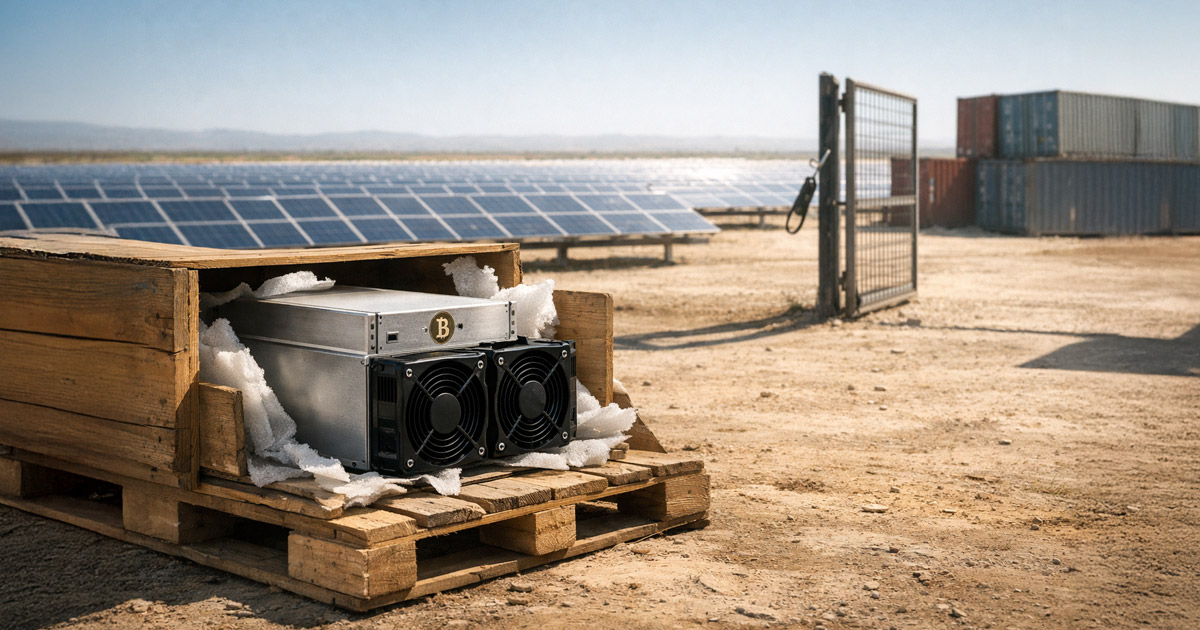
Three days later, French state-owned energy giant Engie told Reuters it was considering installing Bitcoin miners at its 895-megawatt Assu Sol plant in northeast Brazil, the company’s largest solar facility globally, to monetize curtailed electricity and improve profitability.

The two developments landed within 72 hours of each other, and together they sketch a thesis most observers missed: Brazil is building a pressure valve for stranded renewable energy, and Bitcoin mining is the release mechanism.

This isn’t a story about Brazil “legalizing” mining or launching a national strategy. It’s about the quiet convergence of three forces: chronic curtailment, falling hardware cost barriers, and generator economics breaking.

Together, they create the conditions for incremental hashrate to flow toward a market nobody was watching.

Brazil curtailment to mining
Brazil’s zero-percent import duty for high-efficiency mining hardware runs from February 2026 through January 2028, with Engie announcing mining consideration three days after policy launch.

The curtailment problem that Bitcoin miners can solve

Brazil’s wind industry curtailed roughly 32 terawatt-hours between October 2021 and September 2025, amounting to about 6 billion reais (roughly $1.2 billion) in lost revenue for wind farms.

Curtailment occurs when the grid can’t absorb the electricity being produced due to the wrong place, the wrong time, or insufficient transmission capacity. For renewable generators, curtailed megawatt-hours are destroyed value.

Wind and solar generated 24% of Brazil’s electricity in 2024, and in August 2025, that share hit 34% for the first time.

Grid operator ONS describes curtailment as a structural feature of systems with high shares of variable renewables, not a temporary friction.

As the renewables mix rises and transmission buildout lags, the mismatch grows. Generators need local, dispatchable demand that can absorb otherwise-wasted electrons and turn on or off quickly. Bitcoin mining fits that profile precisely.

Engie’s Assu Sol plant is located in Brazil’s northeast, a region with strong solar irradiance but transmission constraints.

The company told Reuters that mining or storage could make the facility more profitable by monetizing energy that would otherwise be curtailed, but emphasized this would take years to implement.

The signal matters because it’s coming from a state-owned European utility with no prior crypto exposure, framing mining purely as an industrial demand response tool.

What the tax change actually does to Bitcoin miners

Resolução GECEX 861, published Feb. 20, amends Brazil’s consolidated ex-tariff list to reduce import duty to zero for specific information technology goods.

See also  Bitcoin to $130K? - Why KEY data hints at BTC's bullish reversal

Annex I adds a new line covering servers dedicated to cryptocurrency mining using the SHA256 algorithm with energy efficiency measured at 35 degrees Celsius, below 20 joules per terahash, and processing capacity above 200 terahashes per second.

The zero-percent duty remains in effect through Jan. 31, 2028.

This is not a blanket exemption for all mining hardware. The thresholds filter for top-tier ASICs. Older or less efficient models don’t qualify. The policy targets the hardware class that can actually compete at scale in a professional mining environment.

Brazil’s import tax structure is notoriously layered. Import duty is one component of the total landed cost, along with IPI, PIS/COFINS-Import, ICMS, and various fees. Trade logistics guides commonly cite total import burdens in the 40%-100% range.

Cutting import duty to zero removes one federal lever but doesn’t eliminate the full stack.

Nevertheless, Brazil reduced a key cost barrier for high-efficiency mining hardware, lowering payback periods, even though other taxes remain.

The break-even power price that makes this work

Mining profitability depends on three variables: hash price (revenue per terahash per second per day), hardware efficiency, and electricity cost.

As of Feb. 16, Hashrate Index reported a hash price of around $34.05 per petahash per second per day. Bitcoin traded near $64,000 on Feb. 23.

For a minimum-qualifying rig under Ex 040, with 200 terahashes per second at 20 joules per terahash, daily revenue equals roughly $6.81. Power consumption is 4.0 kilowatts. Daily energy use is 96 kilowatt-hours.

The break-even electricity price, ignoring capital expenditure and operating overhead, is about $0.071 per kilowatt-hour.

Converting to reais using the Feb. 23 exchange rate of roughly 5.17 reais per dollar, break-even sits around 370 reais per megawatt-hour. Retail business electricity prices in Brazil averaged 0.657 reais per kilowatt-hour in June 2025, which is far too high for mining.

However, wholesale spot prices often trade in the 250-450 reais per megawatt-hour range, and curtailed energy, by definition, has no better buyer.

If a generator can sell otherwise-lost megawatt-hours to a miner at or below its break-even cost, the generator recovers revenue that would otherwise be zero.

This is the mechanism: curtailment creates stranded value, mining converts stranded value into computation, and the ex-tariff drops hardware cost enough to tighten the arbitrage window.

See also  Tokenized stocks as DeFi collateral arrive before the borrowing risk is settled
Break-even potential of a mining plant in Brazil
Bitcoin mining break-even electricity price sits at R$370/MWh, below Brazil’s wholesale spot band and far below retail rates, creating profitability window for curtailment-based operations.

What happens if the thesis plays out

If Brazil’s curtailment persists or grows, driven by continued renewables buildout outpacing transmission capacity, generators will face mounting revenue pressure.

Mining offers a bilateral PPA structure that requires no new transmission and can ramp within days of hardware delivery. The ex-tariff remains in effect through January 2028, creating a 24-month window for miners to lock in hardware cost certainty while testing curtailment economics.

Engie’s pilot framing suggests other utilities and independent power producers will evaluate similar options. If several large renewable projects announce colocation deals over the next 12 months, Brazil becomes a meaningful incremental hashrate destination.

CryptoSlate Daily Brief

Daily signals, zero noise.

Market-moving headlines and context delivered every morning in one tight read.

5-minute digest 100k+ readers

Free. No spam. Unsubscribe any time.

Whoops, looks like there was a problem. Please try again.

You’re subscribed. Welcome aboard.

This happens not because of national strategy, but because project-level economics align.

The country already has regulatory clarity around Bitcoin, established banking infrastructure for crypto firms, and no capital controls that would trap mining revenue onshore.

Yet, the thesis can also fail. If transmission upgrades accelerate and reduce curtailment, the stranded energy pool shrinks, and power prices rise.

If Bitcoin’s difficulty spikes, compressing the hash rate below the $30-per-petahash range, break-even power costs drop below what most curtailment contracts can deliver.

If local permitting or grid interconnection processes create friction for data center builds, the hardware cost advantage becomes irrelevant.

And if the ex-tariff expires in January 2028 without renewal, the import cost barrier returns.

Bucket Metric Value Why it matters
Curtailment scale Wind curtailment (Oct 2021–Sep 2025) 32 TWh Defines the “stranded value” pool mining targets
Curtailment impact Wind revenue lost (same period) R$6B (~$1.2B) Shows curtailment is an economics problem, not a rounding error
Renewables penetration Wind+solar share of generation (2024) 24% Higher VRE share tends to raise congestion/curtailment pressure
Renewables penetration Wind+solar share (Aug 2025) 34% “First time” milestone that signals structural shift
Policy filter Eligible hardware SHA256, >200 TH/s, Targets top-tier ASIC class; excludes older rigs
Policy window 0% import duty valid through Jan 31, 2028 Time-bounded “option window” for miners to move
Utility signal Engie Assu Sol plant size 895 MWp Big enough to matter; shows serious generator interest
Mining revenue Hashprice (Feb 16) $34.05 / PH/s/day Anchors profitability math
Rig economics Min qualifying rig daily revenue ~$6.81/day Ties revenue to a specific machine class
Rig economics Power draw 4.0 kW Converts efficiency → electricity cost sensitivity
Rig economics Daily energy 96 kWh/day Makes break-even intuitive
Break-even power Electricity break-even $0.071/kWh (~R$370/MWh) The number that decides “hub or not”
Price reality check Retail business electricity (June 2025) R$0.657/kWh (R$657/MWh) Shows why miners need wholesale/curtailment pricing
Price reality check Wholesale spot band (often) R$250–450/MWh Shows feasibility zone exists sometimes

The Bitcoin miner constraint no one talks about

Zero-percent import duty matters, but it doesn’t fix the financing gap.

See also  $4.85B short bets meet Bitcoin upside: Is MSTR primed to squeeze?

Mining hardware has a useful life measured in difficulty epochs, not decades. Brazil’s cost of capital is higher than in the US or Europe, and local banks have limited appetite for crypto-native credit.

Miners scaling in Brazil will need either offshore financing denominated in dollars or equity structures that can absorb illiquidity.

The other constraint is operational. Mining at renewable plants works when curtailment is predictable or when contract structures allow interruptible load.

However, if curtailment becomes sporadic or grid dynamics shift hour to hour, uptime suffers, and effective hash price declines.

Engie’s “years to implement” comment suggests the company understands that bolt-on mining infrastructure requires engineering, not just a PPA signature.

What Brazil is actually betting on

Brazil didn’t wake up and decide to become a mining hub. It created a targeted cost reduction for hardware that can monetize a structural grid problem, and a state-owned utility publicly tested the narrative on the same day.

The bet is narrower than it looks: can miners absorb enough curtailed energy to improve generator economics without destabilizing the grid or creating new political risk?

If the answer is yes, Brazil captures incremental hashrate without subsidizing it directly: miners pay for power, generators recover lost revenue, and the ex-tariff removes friction.

If the answer is no, the resolution expires in January 2028, and the experiment ends. Either way, the policy is time-bound, the economics are transparent, and the commitment is reversible.

But options have value when the underlying conditions align, and Brazil’s conditions are aligning.

Curtailment is growing, hardware costs just dropped, and a major generator is publicly pricing the trade-off.

The window is open through January 2028. What happens next depends on whether enough miners recognize the opening before it closes.

Bitcoin Brazil Companies Cuts duty Import Miner Plug solar stranded
Share. Facebook Twitter Pinterest LinkedIn Tumblr Email

Related Posts

Bitcoin pushes toward $65,000 on US inflation relief that may already be fading

July 15, 2026

Bitcoin Price Crash to $48K? Analyst Warns 200-Week EMA Breakdown Could Trigger Deeper Selloff

July 15, 2026

Is a Bitcoin whale from 2018 about to cash in after awakening to transfer $188 million?

July 14, 2026

Banks are building the rails to profit from 13.9 million BTC they do not own

July 14, 2026
Add A Comment
Leave A Reply Cancel Reply

Top Posts

Thiel Capital Warns Hundreds of Billions of Dollars Will ‘Literally Be Incinerated’ As AI Bubble Pops – Here’s When

October 12, 2025

Bitcoin options traders just piled $1.5 billion into $80,000 calls

April 11, 2026

Stay ahead with the latest crypto news, market updates, blockchain insights, and trends. Your trusted source for everything happening in the digital asset world.


We're social. Connect with us:

Facebook X (Twitter) Instagram Pinterest YouTube
Top Insights

NEAR Governance Vote To Scrap Gas Rebates Puts Developer Incentives Under Review

July 15, 2026

China’s Prosecutors Move To Treat Crypto Mixers As Evidence Of Money Laundering

July 15, 2026

Inside U.S. Government’s $20.6B crypto wallet stash and what comes next

July 15, 2026
Get Informed

Subscribe to Updates

Get the latest creative news From Free.cc directly in your Inbox!

  • Contact
  • Privacy Policy
  • Terms & Conditions
  • Disclosure
© 2026 free.cc - All rights reserved.

Type above and press Enter to search. Press Esc to cancel.