
On-chain metrics from reputated dashboards like CryptoQuant, CoinGlass, and even TradingView reveal a clear divergence in Bitcoin holder behavior during the November 2026 market correction.
Following a failed late-September rally to $87,153, Bitcoin dropped to the $65,800–$66,083 support zone. While short-term traders and spot ETFs are actively liquidating positions, long-term investors are absorbing the downturn with minimal panic selling.
Quick Glance of On-Chain Signals
Current Bitcoin holder behavior shows structural resilience among experienced investors despite immediate spot price weakness.
- Long-Term Holders (LTH): Supply sits near multi-year highs at 16.24 million BTC, while LTH-SOPR has dipped to 0.90, indicating minor loss realization rather than aggressive profit-taking.
- Short-Term Holders (STH): STH-SOPR stands at 0.96, confirming that recent buyers are capitulating below their cost basis.
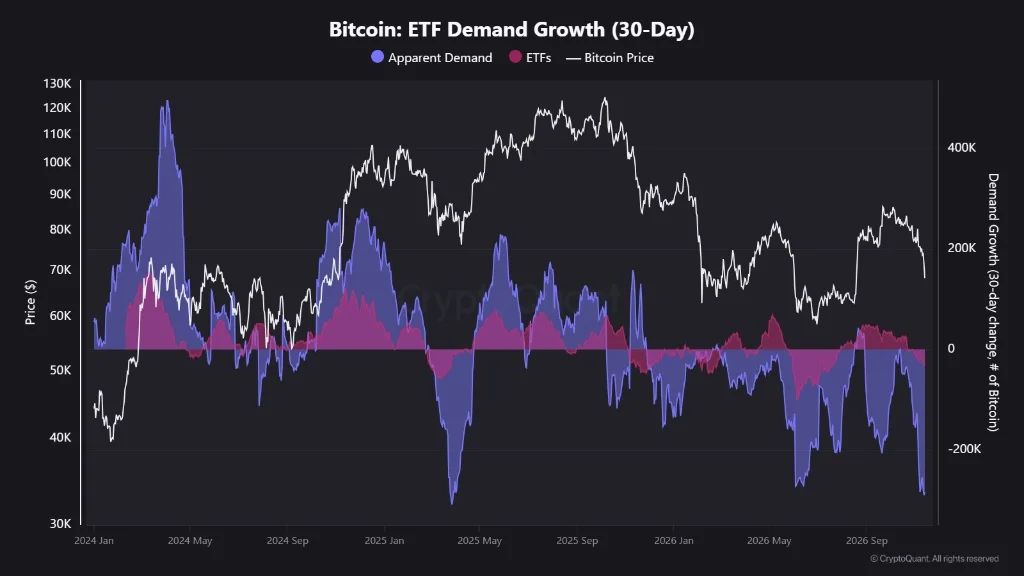
- Institutional & Market Demand: Rolling 30-day ETF demand growth and apparent demand have turned sharply negative, creating a liquidity vacuum that explains the drop toward $65,670.
Long-Term Holder Supply and Profitability Dynamics
Long-Term Holder Supply Expansion
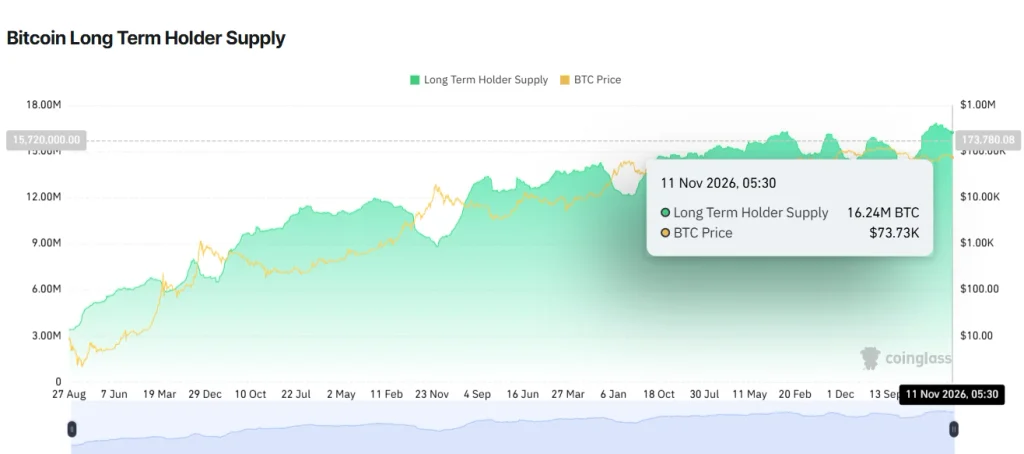
Tracking Bitcoin holder behavior requires examining total supply held by wallets inactive for over 155 days.

According to CoinGlass data as of November 11, 2026, Long-Term Holder Supply holds steady at 16.24 million BTC.
Rather than distributing into the late-September bounce to $87,153, older cohorts retained their coins, allowing mid-2026 purchases to mature into the long-term bracket.
LTH-SOPR and Spent Coin Dormancy
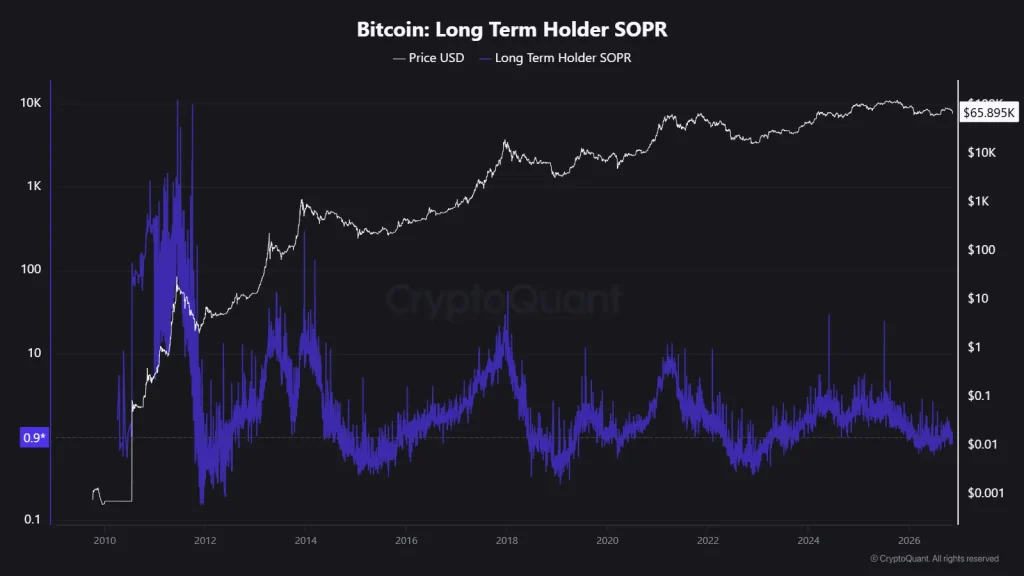
The Long-Term Holder Spent Output Profit Ratio (LTH-SOPR) currently reads 0.90. Readings below 1.0 confirm that the small fraction of older coins moving on-chain are doing so at a slight loss.
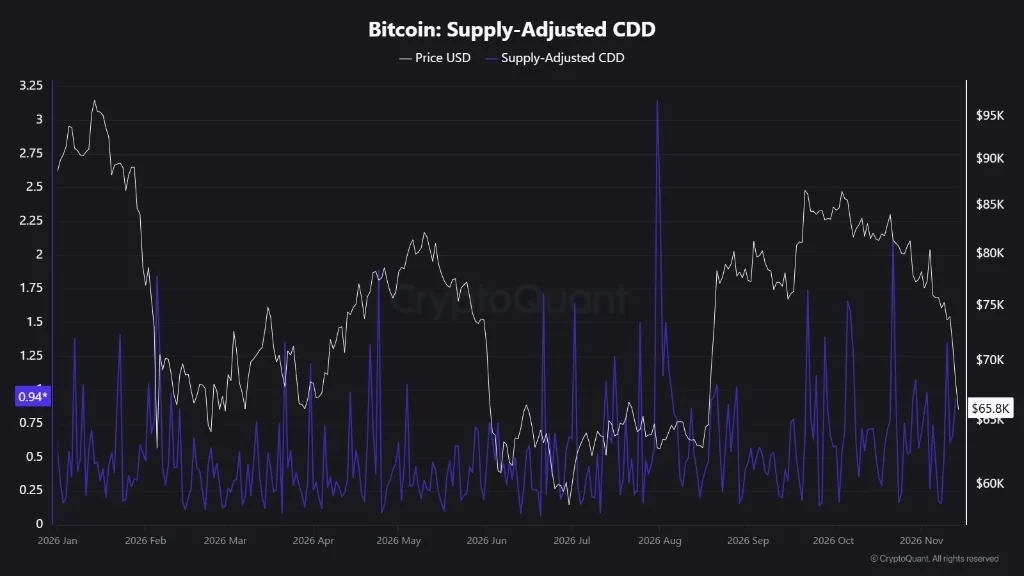
Simultaneously, Supply-Adjusted Coin Days Destroyed (CDD) sits at a subdued 0.94, well below the August 2026 spike above 3.0. Older coins remain largely dormant, proving that conviction holders are not driving the November sell-off.
Short-Term Capitulation and Overall Market Profitability
Short-Term Holder SOPR Breakdown
Recent market entrants display reactive Bitcoin holder behavior during price drawdowns. The Short-Term Holder SOPR (STH-SOPR) dropped from above 1.02 in October to 0.96 in mid-November.
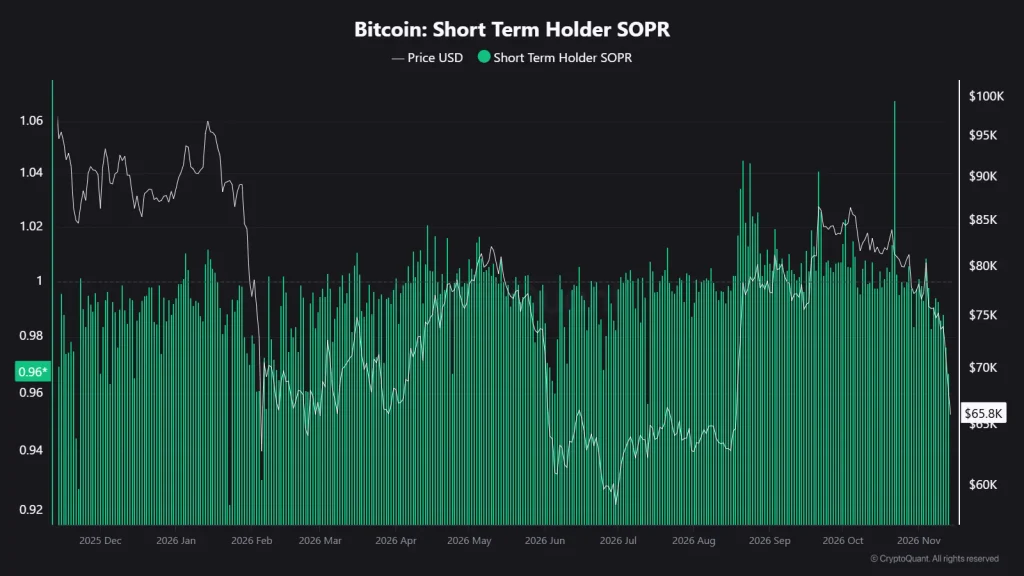
When STH-SOPR fails to hold 1.0 as support, it signals that traders who bought between 1 hour and 155 days ago are exiting at a loss, adding direct downward momentum to spot markets.
Net Unrealized Profit/Loss (NUPL) Compression
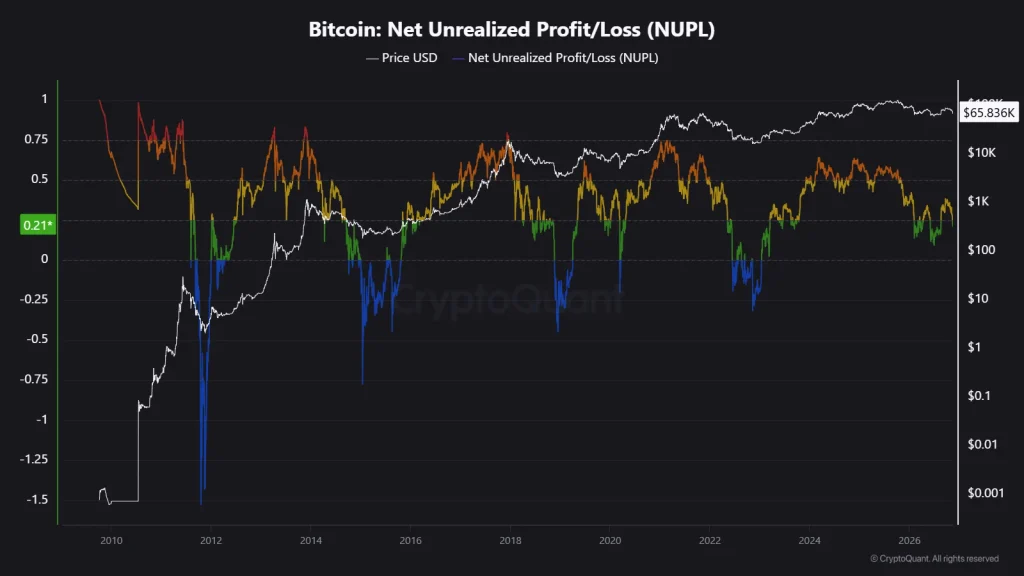
The broader market’s Net Unrealized Profit/Loss (NUPL) has compressed to 0.21, placing the network in the lower hope/fear zone.
Historically, NUPL readings near 0.21 indicate that most excess speculative profit has been wiped out. Because aggregate unrealized gains are low, long-term investors have little financial incentive to distribute coins at $65,836.
Exchange Flows and Institutional Demand Absorption
Spot Exchange Inflows vs. Outflows
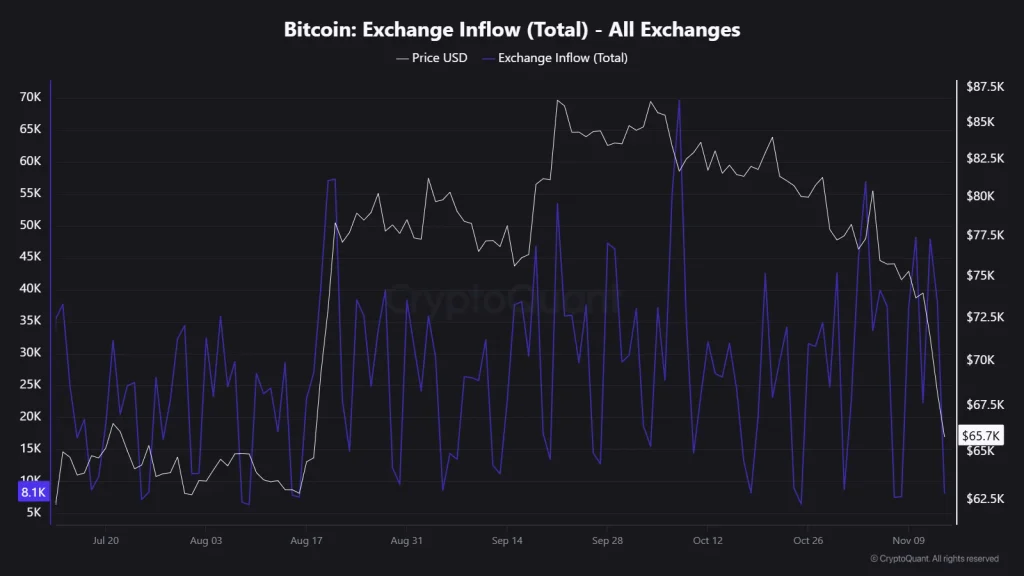
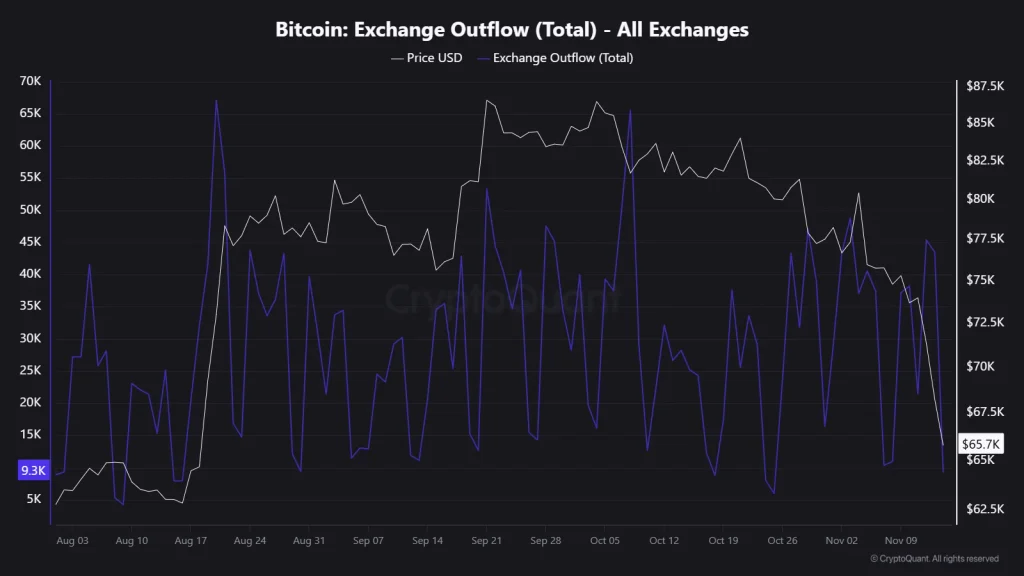
Exchange flow data confirms that spot selling pressure is stabilizing rather than accelerating. Total Exchange Inflow dropped to 8.1K BTC, while Total Exchange Outflow sits slightly higher at 9.3K BTC.
Net outflows during a price drop indicate that buyers are withdrawing coins to cold storage rather than depositing them onto trading platforms for liquidation.
ETF Demand Growth Deficit
Analyzing Bitcoin holder behavior alongside institutional flows highlights the primary cause of the November crash.
The 30-day ETF Demand Growth and Apparent Demand metrics have plunged deep into negative territory, reaching roughly -200K BTC in combined apparent demand contraction.
Without institutional ETF inflows to absorb routine selling, even modest retail capitulation pushed price down through moving average supports toward the $65,670–$66,083 horizontal zone.
Bullish vs. Bearish Evidence Table
| Market Factor | Bullish Evidence (Accumulation) | Bearish Evidence (Distribution/Weakness) |
| LTH Supply | Near all-time highs at 16.24M BTC. | Minor recent flattening after peak growth. |
| LTH-SOPR & CDD | LTH-SOPR at 0.90 and CDD at 0.94 show dormant older coins. | Coins that do move are realizing slight losses. |
| STH-SOPR | Readings at 0.96 often mark local seller exhaustion. | Sustained trading below 1.0 confirms active retail capitulation. |
| Exchange Flows | Outflows (9.3K BTC) exceed inflows (8.1K BTC). | Periodic inflow spikes occurred during the drop from $80K. |
| ETF Demand | Historical negative extremes often precede mean reversion. | Severe 30-day contraction in ETF and apparent demand. |
Note on How to Read This Table: On-chain metrics often reflect two different timeframes at once. The Bearish column shows what is hurting Bitcoin’s price right now (active selling and weak demand), while the Bullish column shows why those exact conditions historically help form a long-term price bottom.
Final Verdict on Bitcoin Holder Behavior
So to keep it simple, the current Bitcoin holder behavior reflects long-term accumulation paired with short-term institutional and retail distribution. Long-term holders are not distributing at $65,800; they hold 16.24 million BTC and keep older coins dormant.
Instead, the drop from $87,153 stems from negative 30-day ETF demand growth and short-term holders selling at a loss. If Bitcoin holds the $65,670–$66,083 support level while exchange outflows continue exceeding inflows, current conditions align with structural bottom formation rather than cycle-top distribution.
Was this writing helpful?
Story Ends Here
Trust with CoinPedia:
CoinPedia has been delivering accurate and timely cryptocurrency and blockchain updates since 2017. All content is created by our expert panel of analysts and journalists, following strict Editorial Guidelines based on E-E-A-T (Experience, Expertise, Authoritativeness, Trustworthiness). Every article is fact-checked against reputable sources to ensure accuracy, transparency, and reliability. Our review policy guarantees unbiased evaluations when recommending exchanges, platforms, or tools. We strive to provide timely updates about everything crypto & blockchain, right from startups to industry majors.
Investment Disclaimer:
All opinions and insights shared represent the author’s own views on current market conditions. Please do your own research before making investment decisions. Neither the writer nor the publication assumes responsibility for your financial choices.
Sponsored and Advertisements:
Sponsored content and affiliate links may appear on our site. Advertisements are marked clearly, and our editorial content remains entirely independent from our ad partners.
Read the Next News