

The Binance hack has reignited discussions about Bitcoin’s [BTC] ability to recover from major security incidents and financial crises. While the latest breach triggered significant selling pressure, historical data suggests that Bitcoin has often demonstrated resilience following similar events.
According to an infographic shared by Rand Group, Bitcoin has historically recorded substantial gains in the 12 months following major crypto-related disasters. For instance, following the Mt. Gox hack in November 2011, BTC gained approximately 500% over the next year.
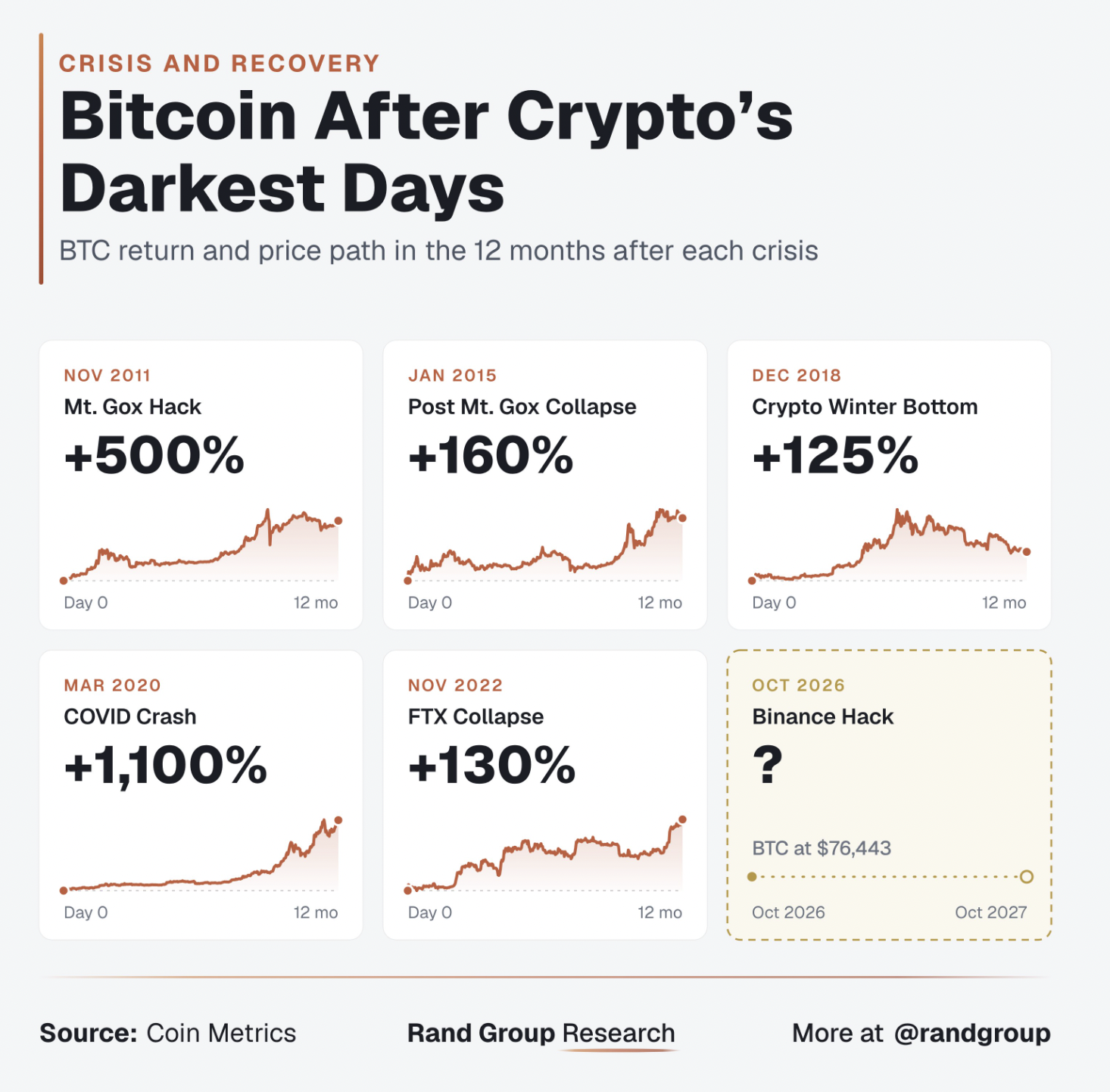
Similarly, Bitcoin rallied 160% after the January 2015 post-Mt. Gox collapse and 125% following the December 2018 crypto winter bottom.
The recovery was even stronger after the March 2020 COVID-19 market crash, with BTC gaining approximately 1,100% over the subsequent 12 months. Meanwhile, Bitcoin advanced 130% in the year following the November 2022 FTX collapse.
Execs weigh in on the same
David Lawant, head of research for Anchorage, also echoed the same when he said,
Historically, bitcoin has treated hacks and solvency events very differently: thefts tend to be absorbed within hours, while insolvencies are not.
According to his analysis, cryptocurrency thefts are often absorbed by the market within hours, whereas exchange failures and insolvencies tend to create more prolonged uncertainty.
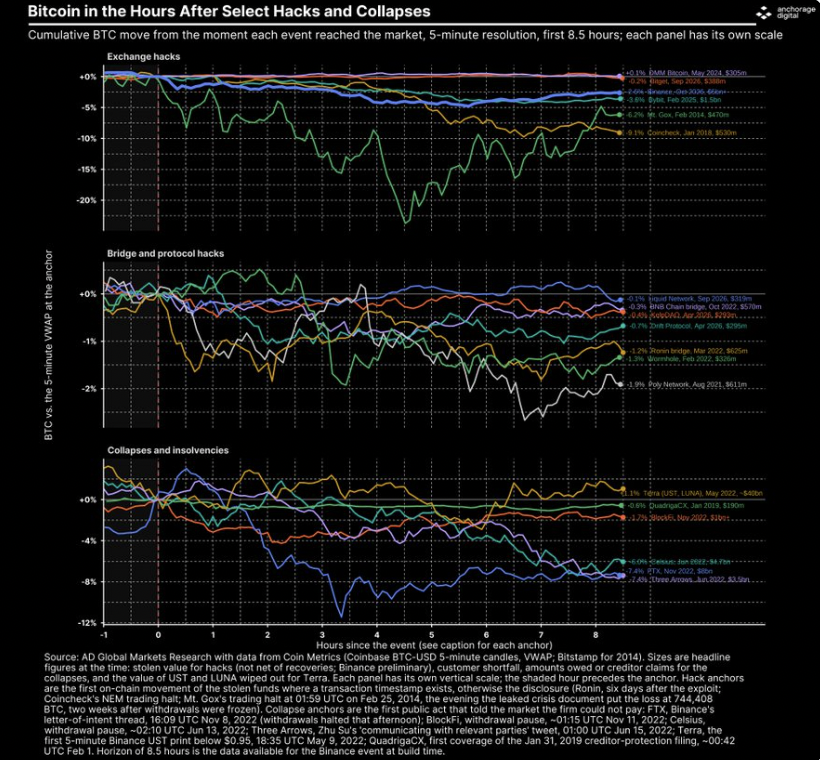
His data examines Bitcoin’s price movements during the first 8.5 hours following selected incidents, separating exchange hacks, bridge and protocol exploits, and financial collapses. Lawant also argued that such incidents have limited predictive value for Bitcoin’s longer-term direction, which depends more heavily on the broader market cycle.
Not everyone shares the same sentimnet
However, opposing the above observations, Adam Livingston, Vice President, Investments at Strive, noted that Bitcoin experienced a 6.9% decline between the 29th and 30th of October, following the Binance-related panic.
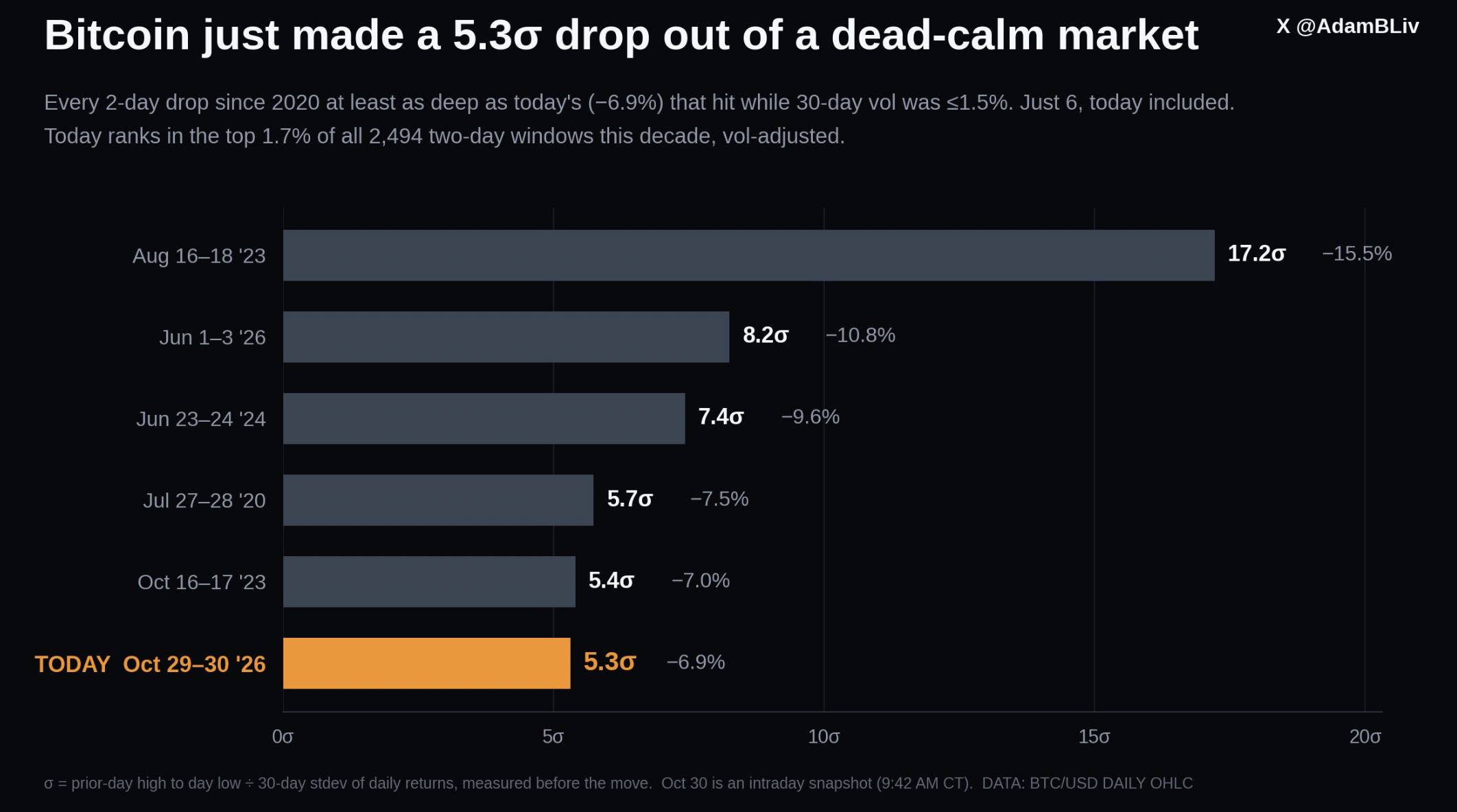
Against its relatively low 30-day volatility of 1.3%, this represented a 5.3-standard-deviation move. It ranked among the most extreme two-day declines since 2020.
He added,
A drop this deep out of a market this quiet has happened only 5 other times this decade.
Final Summary
- Bitcoin has historically recorded substantial gains in the 12 months following major crypto-related disasters.
- An exec also argued that such incidents have limited predictive value for Bitcoin’s longer-term direction.