

Coinbase wants the post-quantum migration for Bitcoin to start now in a phased approach to allow adaptation without full network upgrades.
According to the firm, which controls about 5% of Bitcoin supply via its custody arm, the migration will take years; hence, taking early steps now is crucial. In its latest blog post, the exchange wrote,
We believe it is important to begin preparing well ahead of any CRQC announcement. Bitcoin consensus changes and ecosystem migrations can take years, so it is important that we begin this work now.
CRQC refers to a stable and functional quantum computer that can crack current cryptography, such as elliptic curve cryptography (ECC) or ECDSA that secures networks like Bitcoin.
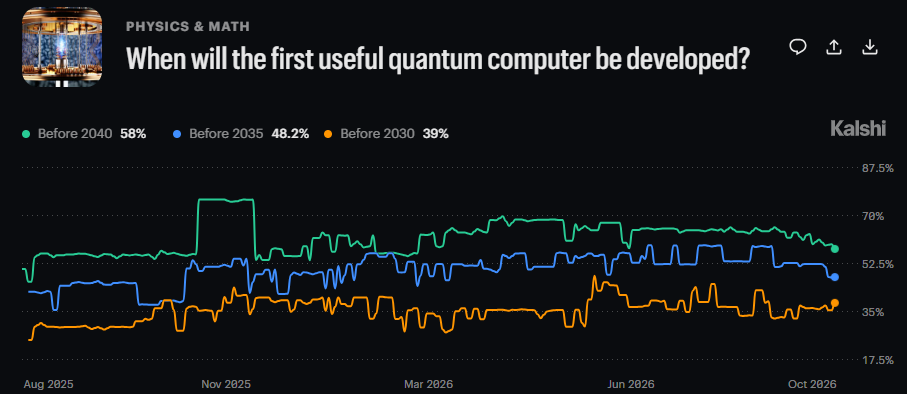
Google researchers believe such a quantum computer could be feasible by 2029, while the U.S. government wants all tech systems to be quantum-proof by 2035. In other words, the Q-Day could be in 2-9 years, based on these projections, and blockchains should be ready before then.
Coinbase post-quantum proposals for Bitcoin
Bitcoin transactions can only be approved by a private key (through signatures such as ECC or ECDSA).
But because Bitcoin transfers include public keys when one spends, powerful computers (quantum or AI models) can reverse-engineer them to generate related private keys. As such, attackers with these powerful machines can siphon funds using reverse-engineered private keys.
Coinbase proposed allowing one or more PQ signature systems via proposed P2MR (Pay-to-Mast-Root) or P2TRv2 address systems.
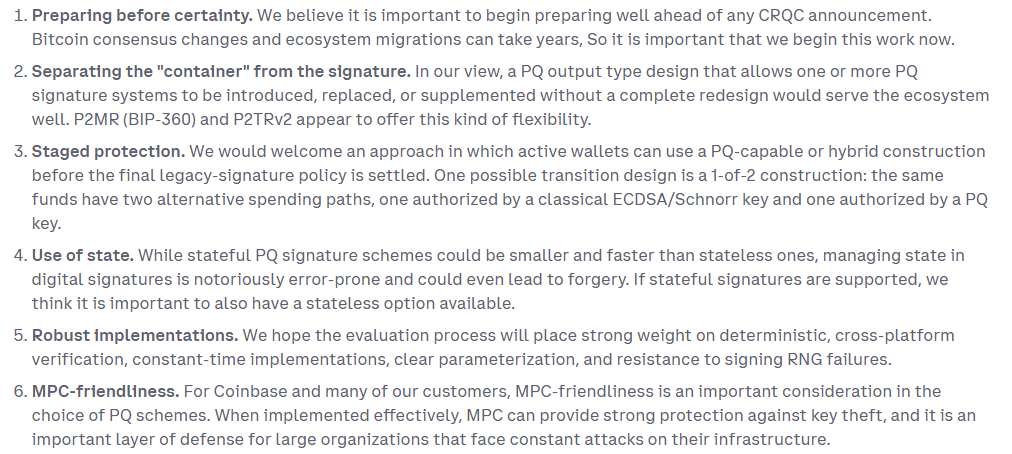
Additionally, the exchange proposed a hybrid configuration that allows one to spend using classical keys or PQ keys for a smooth migration. To further prevent forgery risks, Coinbase recommended the so-called stateless PQ signatures.
However, the exchange said dormant, “lost Bitcoin,” or late transition should be addressed separately to avoid taking too much time and delaying the entire migration process.
In our view, that discussion can proceed alongside, and independently of, the technical work to add PQ signature support, so it need not delay progress on that work.
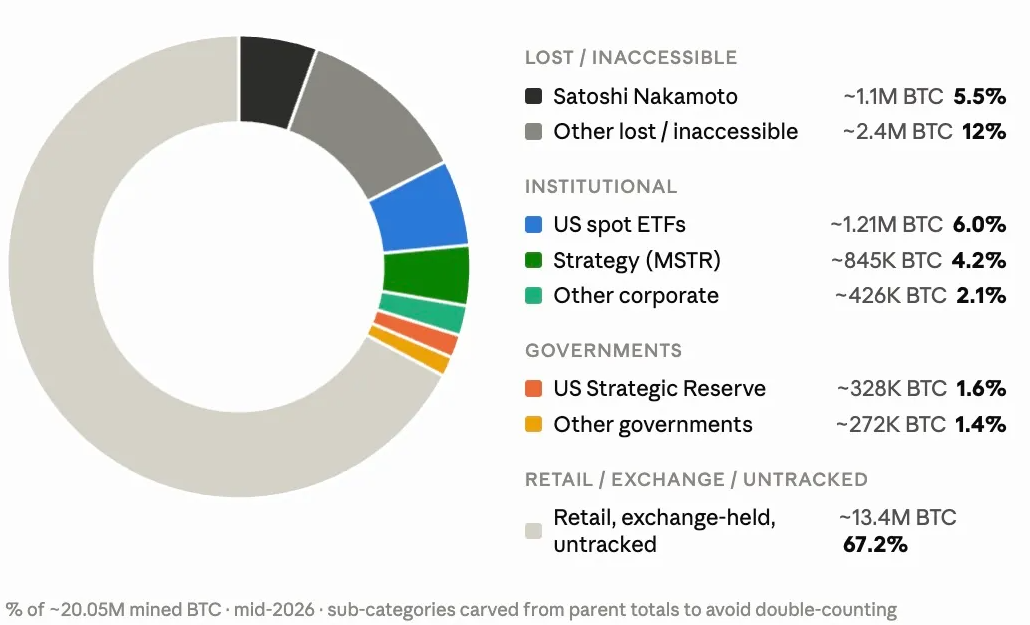
About 3.5M BTC or 17% of the supply, including Satoshi’s holdings, are inaccessible or believed to be lost.
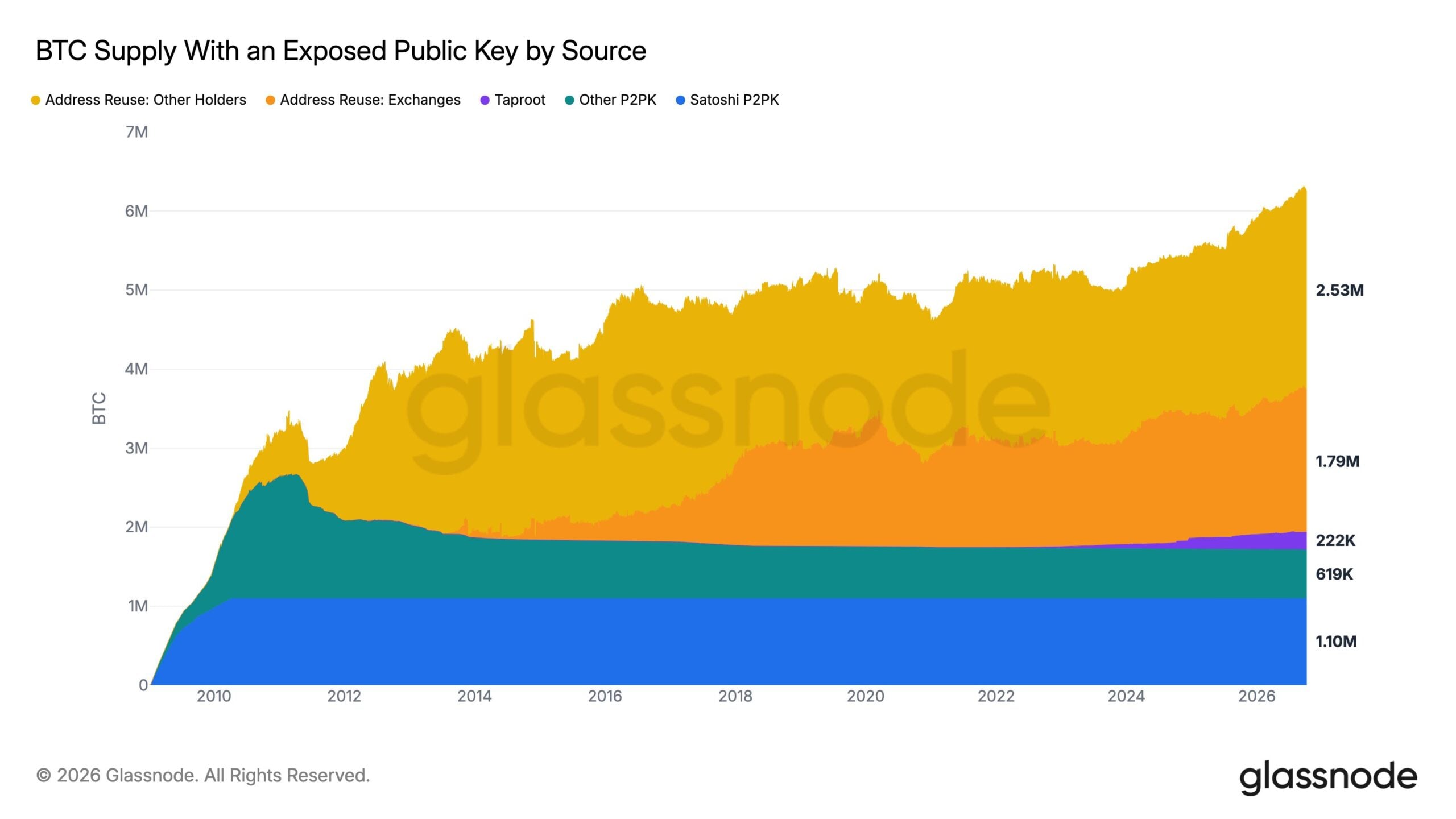
Besides, Glassnode estimates that 21.5% of the BTC supply (3.8M to 4.3M BTC) is exposed to address reuse (exposed public keys) and quantum risk.
Coinbase is already pushing for a quantum-safe custody system, PQ-CoreKMS, by next year and plans to support various PQ signatures.
Interestingly, other players such as Project Eleven are also advancing a similar custody platform that can offer a dedicated operational layer despite the evolving and different PQ systems for various blockchains.
Final Summary
- Coinbase wants the community to start Bitcoin’s phased post-quantum migration
- Glassnode estimates that 21% of BTC supply is at quantum risk due to address reuse