

Bitcoin could have Zcash-style private transfers without making any changes to the network’s consensus layer.
According to researchers led by Clara Shikheman, the private transfers can be achieved by leveraging the mixer logic used by Tornado Cash.
In other words, the proposal could allow one to plug BTC into a private encrypted note. It can then be transferred around using ZK (zero-knowledge) proofs, which shield the sender, receiver, and the amount being moved. At the exit point, you’re assigned a new address.
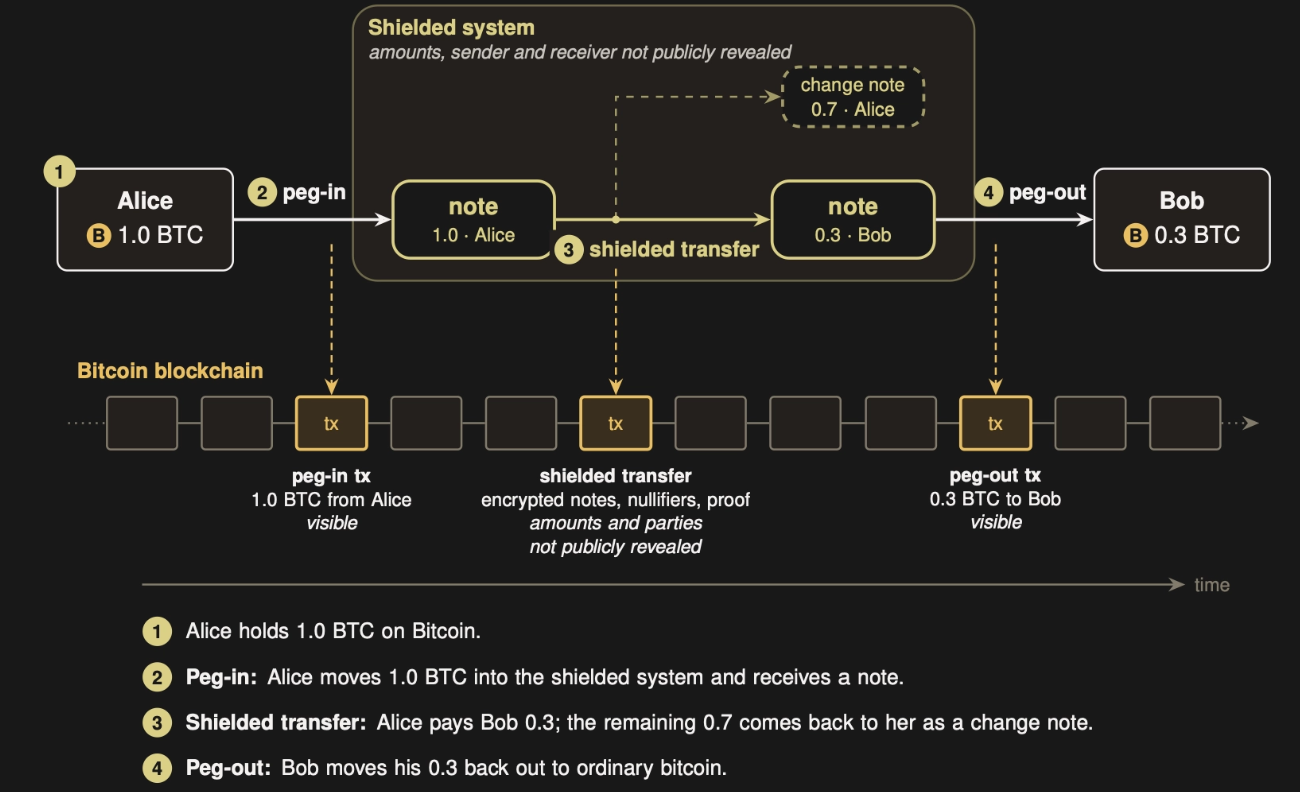
Commenting on the update, Clara Shikheman, head of Bitcoin-focused research firm Alloc Init, said,
No soft forks, no bridges, no operators, just Bitcoin. We’ve put a lot of work into thinking carefully about the security of Shielded Bitcoin and about what information the protocol reveals. And this is just the beginning!
For his part, Eli Ben-Sasson, founder of Starknet and one of the pioneers of ZK proofs, hailed the move. He noted,
I love this direction; our original intent with Zerocash paper (the whitepaper preceding Zcash) was to bring privacy to Bitcoin. I would love to see our vision of privacy and scalability via ZK materialize on Bitcoin L1.
Will it resolve Bitcoin’s privacy problem?
For the unfamiliar, public blockchains, to some extent, only offer an illusion of privacy. By design, they are open ledgers. As such, anyone with an Internet connection can track every transaction and fund balance in on-chain wallets.
To some, this is a deal-breaker. This is why some Bitcoin OGs jumped to Zcash because it had shielded pools. Of course, some criminal elements would opt for such private features. However, it’s not all about bad guys or fraudsters.
Imagine paying for a $3 coffee, swiping your debit card, and the shop attendant instantly gets your card and bank details, fund balances, and historical transactions. This can elevate on-chain and physical security threats.
In fact, kidnappings and wrench attacks against crypto investors have spiked because of data breaches. The lack of privacy features across public blockchains can exacerbate these risks. So, private Bitcoin transfers can be a game changer.
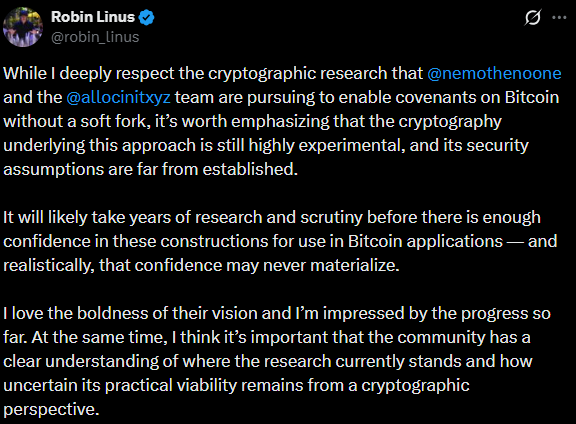
According to researcher Robin Linus though, the approach this proposal uses is still far from being verified and battle-tested.
It’s worth emphasizing that the cryptography underlying this approach is still highly experimental, and its security assumptions are far from established.
Additionally, some argue that the approach is not quantum-secure. Overall, it’s great to see the push to make Bitcoin transfers private despite the fact that it may take a little while for it to become a reality.
Final Summary
- Researchers propose Zcash-style Bitcoin private transfers that do not require changing the consensus layer.
- However, critics warn that the approach is not verified and may come with additional risks.