Close Menu
  • Latest News
    • Bitcoin
    • Ethereum
    • Altcoins
    • Meme Coins
  • Tech
    • Blockchain
    • Security and Privacy
  • Web 3
    • Gaming
  • Legal
    • Legal and Regulatory
    • Adoption
  • Analysis
  • Learn
    • Education
    • Wallets and Exchanges
  • Tools
    • Market Overview
    • Exchange Tool
  • INFO@FREE.CC
What's Hot

ZachXBT Names Teen Behind $19 Million Crypto Theft Who Flaunted It On Instagram

May 14, 2026

Consensys Urges SEC to Exempt Self-Custody Wallets, Citing Regulatory Gap for 99% of Tokens

May 14, 2026

UBOX Taps ClawWorks to Accelerate Independent AI Agent Economics

May 14, 2026
Facebook X (Twitter) Instagram
  • Contact
  • Privacy Policy
  • Terms & Conditions
  • Disclosure
Facebook X (Twitter) Instagram
Free.cc (Free Cryptocurrency)Free.cc (Free Cryptocurrency)
  • Latest News
    1. Bitcoin
    2. Ethereum
    3. Altcoins
    4. Meme Coins
    5. View All

    ZachXBT Names Teen Behind $19 Million Crypto Theft Who Flaunted It On Instagram

    May 14, 2026

    Analyst Says No Reason for Bitcoin Reversal, Sees BTC Approaching Next Resistance Levels – Here Are His Targets

    May 14, 2026

    70% of long-term holders are in profit as the bitcoin floor hardens

    May 13, 2026

    What’s Really At Stake In The Market Structure Debate: The BRCA

    May 13, 2026

    Bitcoin, Ethereum and XRP Price Analysis: What’s Coming Next?

    May 13, 2026

    Wells Fargo Boosts Ethereum ETF Holdings in Q1

    May 13, 2026

    Why Market Experts Are Still Predicting A Rise Above $10,000

    May 13, 2026

    Bitmine ETH Holdings Cross 5.2 Million—CEO Announces New Phase For Crypto Markets

    May 12, 2026

    Bitcoin Just Entered A Deceptive Territory, Here’s What You Should Know

    May 14, 2026

    XRP Ledger Hits Record High In 10K+ Wallets: Santiment

    May 13, 2026

    Mysterious Bitcoin Whale Transfers $40B After Years Of Silence

    May 13, 2026

    First Hyperliquid ETF Launch: Day One Volume Hits $1.8M–Key Details

    May 13, 2026

    Meme Coin Market Faces Imbalance as Supply Rises, Demand Falls

    April 4, 2026

    Crypto Interest Rising Toward Meme Coin Sector

    January 9, 2026

    Memes Market Cap Adds $10B in Days: Fresh Capital or Dead-Cat-Bounce?

    January 5, 2026

    Meme Coin Market Surges Past $45B as Shiba Inu, PEPE, BONK Stage 54% Price Pump

    January 4, 2026

    ZachXBT Names Teen Behind $19 Million Crypto Theft Who Flaunted It On Instagram

    May 14, 2026

    Consensys Urges SEC to Exempt Self-Custody Wallets, Citing Regulatory Gap for 99% of Tokens

    May 14, 2026

    UBOX Taps ClawWorks to Accelerate Independent AI Agent Economics

    May 14, 2026

    Analyst Says No Reason for Bitcoin Reversal, Sees BTC Approaching Next Resistance Levels – Here Are His Targets

    May 14, 2026
  • Tech
    1. Blockchain
    2. Security and Privacy
    3. View All

    UBOX Taps ClawWorks to Accelerate Independent AI Agent Economics

    May 14, 2026

    UXLINK And Origins Network Partner To Power Scalable AI-Driven Web3 Applications Using Decentralized Computing

    May 13, 2026

    WheelX.fi Expands Cross-Chain Liquidity Access Through KiteAI Integration

    May 13, 2026

    TopNod Integrates Hyperliquid – The Future of Seamless On-Chain Perpetual Trading

    May 13, 2026

    Ripple Shares DPRK Threat Data on Fraud Domains, Wallets, Campaigns

    May 5, 2026

    Digital Asset Security Moves Beyond Keys as Bitgo Adds 5-Layer Checks

    May 1, 2026

    Defillama Confirms April 2026 as Crypto’s Most-Hacked Month With 30 Incidents

    May 1, 2026

    Malicious npm Dependency Linked to AI Assisted Commit Targets Crypto W

    April 29, 2026

    ZachXBT Names Teen Behind $19 Million Crypto Theft Who Flaunted It On Instagram

    May 14, 2026

    Consensys Urges SEC to Exempt Self-Custody Wallets, Citing Regulatory Gap for 99% of Tokens

    May 14, 2026

    UBOX Taps ClawWorks to Accelerate Independent AI Agent Economics

    May 14, 2026

    Analyst Says No Reason for Bitcoin Reversal, Sees BTC Approaching Next Resistance Levels – Here Are His Targets

    May 14, 2026
  • Web 3
    1. Gaming
    2. View All

    NUMINE Joins Outer Ring MMO for the Expansion of Web3 Gaming Experiences

    May 13, 2026

    GMatrixs And MiniverseCore Join Forces To Unlock Web3 Gaming Experience With Cross-Chain DApp, DeFi Applications

    May 11, 2026

    The Identity Crisis of 2026: NFTs, AI Agents and Trust on the Agentic Web

    May 11, 2026

    DTCC’s May 2026 Tokenization Announcement Explained: What It Means for U.S. Securities and Real-World Assets

    May 11, 2026

    ZachXBT Names Teen Behind $19 Million Crypto Theft Who Flaunted It On Instagram

    May 14, 2026

    Consensys Urges SEC to Exempt Self-Custody Wallets, Citing Regulatory Gap for 99% of Tokens

    May 14, 2026

    UBOX Taps ClawWorks to Accelerate Independent AI Agent Economics

    May 14, 2026

    Analyst Says No Reason for Bitcoin Reversal, Sees BTC Approaching Next Resistance Levels – Here Are His Targets

    May 14, 2026
  • Legal
    1. Legal and Regulatory
    2. Adoption
    3. View All

    Consensys Urges SEC to Exempt Self-Custody Wallets, Citing Regulatory Gap for 99% of Tokens

    May 14, 2026

    Three men charged in US over crypto wrench attack spree

    May 13, 2026

    CLARITY Act faces 100+ amendments as bankers send 8,000 demand letters against stablecoin rewards

    May 13, 2026

    Bhutan’s GMC offers quick licenses, bank accounts to lure crypto firms

    May 13, 2026

    Tether launches decentralized local AI using Isaac Asimov’s Psychohistory straight out of Foundation

    May 11, 2026

    Has Donald Trump been a net positive for Bitcoin or created an unbreakable partisan divide?

    May 10, 2026

    BlackRock looks to sidestep Clarity yield issues, filing for two new tokenized money market funds

    May 10, 2026

    Cardano’s Charles Hoskinson says the future of crypto wallets will be inside iPhones and Androids

    May 8, 2026

    ZachXBT Names Teen Behind $19 Million Crypto Theft Who Flaunted It On Instagram

    May 14, 2026

    Consensys Urges SEC to Exempt Self-Custody Wallets, Citing Regulatory Gap for 99% of Tokens

    May 14, 2026

    UBOX Taps ClawWorks to Accelerate Independent AI Agent Economics

    May 14, 2026

    Analyst Says No Reason for Bitcoin Reversal, Sees BTC Approaching Next Resistance Levels – Here Are His Targets

    May 14, 2026
  • Analysis

    Wall Street is buying XRP while Binance traders keep betting against it

    May 13, 2026

    Is a Drop Below $1 Coming Next?

    May 13, 2026

    UB Price Breakout Enters Discovery Phase

    May 13, 2026

    Injective (INJ) Price Explodes 13% After Bullish Breakout—Is a Rally to $6 Next?

    May 13, 2026

    Bitcoin (BTC) Price Holds Strong Above $80K Despite Hot CPI Data—Is Retail Accumulation Returning?

    May 13, 2026
  • Learn
    1. Education
    2. Wallets and Exchanges
    3. View All

    What’s on the Ethereum Roadmap: Glamsterdam, Hegota and Beyond

    March 30, 2026

    What Is Bluesky? The Decentralized Social Media Rival to Elon Musk’s X

    March 27, 2026

    What Is Strategy (MSTR)? The Bitcoin Treasury Company

    February 21, 2026

    What Are Prediction Markets? How Polymarket, Kalshi and Myriad Work

    February 13, 2026

    Coinbase went down for over 5 hours after missing earnings. Bulls still see a path to $300 billion by 2030

    May 8, 2026

    Coinbase cuts 14% of staff as Armstrong ties cost reset to AI and market volatility

    May 6, 2026

    Bitcoin is still in charge

    May 3, 2026

    CLARITY Act stablecoin fight shifts from yield to who captures digital-dollar economics

    April 29, 2026

    ZachXBT Names Teen Behind $19 Million Crypto Theft Who Flaunted It On Instagram

    May 14, 2026

    Consensys Urges SEC to Exempt Self-Custody Wallets, Citing Regulatory Gap for 99% of Tokens

    May 14, 2026

    UBOX Taps ClawWorks to Accelerate Independent AI Agent Economics

    May 14, 2026

    Analyst Says No Reason for Bitcoin Reversal, Sees BTC Approaching Next Resistance Levels – Here Are His Targets

    May 14, 2026
  • Tools
    • Market Overview
    • Exchange Tool
  • INFO@FREE.CC
Free.cc (Free Cryptocurrency)Free.cc (Free Cryptocurrency)
Home»Legal and Regulatory»Everyone Celebrated The GENIUS Act. Nobody Read The Compliance Section.
Legal and Regulatory

Everyone Celebrated The GENIUS Act. Nobody Read The Compliance Section.

April 21, 2026No Comments8 Mins Read
Share
Facebook Twitter LinkedIn Pinterest Email

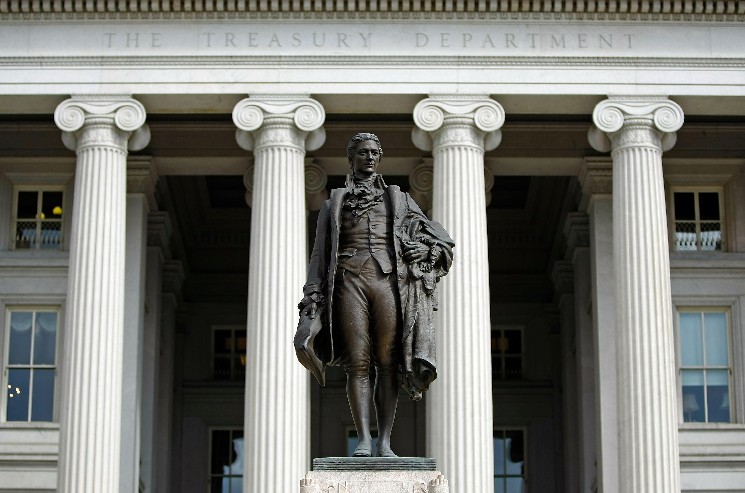
Treasury’s new compliance rules for stablecoin issuers carry the same obligations as a bank charter. Most issuers can’t afford that. Which is the point.

On April 8, Treasury’s Financial Crimes Enforcement Network and the Office of Foreign Assets Control published a joint proposed rule that most of the crypto industry either missed or misread. The rule implements the $GENIUS Act’s requirement that permitted payment stablecoin issuers — PPSIs, in the new regulatory shorthand — be treated as financial institutions under the Bank Secrecy Act. Full AML/CFT programs. Suspicious activity reports filed with FinCEN. Customer due diligence at bank-grade standards. Technical capability to block, freeze, and reject on-chain transactions. OFAC sanctions compliance programs. Comments are due June 9. Final regulations by July 18. Enforcement begins no later than January 2027.

When the $GENIUS Act passed in July 2025, the reaction across digital assets was almost uniformly positive. Regulatory clarity, at last. A framework. Legitimacy. What received less attention was the specific mechanism by which that clarity arrives: stablecoin issuers are now, for compliance purposes, banks. Not bank-like. Not subject to “similar” standards. Banks. And the cost of being a bank is something most stablecoin issuers have never had to think about.

What being a bank actually costs

To understand what’s coming, look at what BSA compliance costs the institutions already subject to it. Community banks — the smallest players in traditional finance — spend between 11% and 15.5% of their total payroll on compliance tasks, according to a decade of data from the Conference of State Bank Supervisors. Data processing costs for compliance eat 16% to 22% of small banks’ budgets. Across US financial institutions, compliance expenses have risen by roughly $50 billion annually since 2008. These are not optional line items. They represent the standing cost of being allowed to operate within the US financial system.

Now map those obligations onto a stablecoin issuer. The FinCEN/OFAC proposed rule requires PPSIs to build and maintain a risk-based AML/CFT program — not a policy document, but an operational infrastructure. Trained compliance officers. Transaction monitoring systems calibrated to crypto-native payment flows. SAR filing procedures. Enhanced due diligence for high-risk customers. Ongoing regulatory examination. And a new requirement with no real parallel in traditional banking: the technical capability to block, freeze, and reject specific transactions on a blockchain. That last one alone demands engineering investment that most issuers haven’t scoped.

See also  Crypto Taxes Are Next After CLARITY Act, Says Patrick Wilson

The $GENIUS Act also specifies what PPSIs must hold in reserve: physical US currency, demand deposits at insured institutions, Treasury bills with maturities under 93 days, repos backed by those same Treasuries, money market funds invested in those assets, or central bank reserve deposits. Nothing exotic. The reserve requirements aren’t the expensive part as most serious issuers already hold comparable assets. But the Act mandates monthly attestations of reserve composition, with CEO and CFO certifications on each report. That’s audit infrastructure. That’s personal liability. That’s the kind of obligation that requires in-house counsel and dedicated finance staff, not a quarterly report from an offshore accounting firm.

The secondary-market trap

The proposed rule draws a distinction between primary-market activity — where the issuer mints or redeems stablecoins directly with a customer — and secondary-market activity, where tokens change hands on exchanges or in DeFi protocols. SAR filing and customer due diligence apply to primary-market transactions. Secondary-market transfers through smart contracts don’t trigger the same issuer-level reporting obligations.

The rule still requires PPSIs to maintain the technical ability to block and freeze transactions across their network — including secondary-market activity. If OFAC designates a wallet address, the issuer needs to be able to prevent that address from transacting with its stablecoin. In practice, this means issuers need on-chain compliance infrastructure that monitors activity they have no direct commercial relationship with. The boundary between “you don’t have to file SARs on secondary transactions” and “you do have to be able to freeze them” is where the real compliance cost lives.

Regulation as consolidation

Here’s the argument the industry hasn’t absorbed yet: the $GENIUS Act doesn’t ban small stablecoin issuers. It prices them out.

The compliance infrastructure Treasury is requiring: AML teams, monitoring technology, legal counsel, audit functions, sanctions programs, on-chain transaction controls, costs millions per year to build and operate. For Tether, with roughly $187 billion in circulation, or Circle, with $75 billion, that cost is fractional. For an issuer with $500 million in stablecoins outstanding, it can be existential. The math is simple: compliance costs are largely fixed, and they don’t scale with issuance. A $500 million issuer bears roughly the same compliance burden as a $50 billion one, on a fraction of the revenue.

See also  ‘I Met Eric Trump Once, That’s It,’ Says CZ

The Act does offer a carve-out: issuers with less than $10 billion in outstanding stablecoins can opt for state-level regulation, provided the state regime is “substantially similar” to the federal framework. States must recertify annually. But “substantially similar” is doing a lot of work in that sentence. The state regimes still need to meet BSA standards. The compliance cost floor doesn’t drop meaningfully just because the regulator’s office is in Sacramento instead of Washington. What the state option really provides is a different supervisory relationship which isn’t necessarily a cheaper one.

This pattern has a precedent. The United States had more than 14,000 banks in the early 1980s. Today there are around 4,000. Successive waves of regulation, post-S&L crisis, post-Dodd-Frank, post-2008, raised the cost floor for operating a bank. Institutions that couldn’t absorb those costs merged or closed. The compliance burden didn’t merely affect small banks; it structurally selected against them. The stablecoin market, currently fragmented across dozens of issuers, is about to go through the same compression. Treasury knows this. The proposed rule reads less like consumer protection and more like market architecture.

How the incumbents are playing it

Tether’s response to the $GENIUS Act is instructive. Rather than force $USDT into the US regulatory framework, Tether launched a separate product: USAT (USA₮), issued through Anchorage Digital Bank, an OCC-regulated, federally chartered digital asset bank. USAT is designed from the ground up to be $GENIUS Act-compliant — full reserve backing, monthly audits, AML/KYC protocols, the works. $USDT, meanwhile, continues to circulate globally, with Tether stating it will pursue $GENIUS Act compliance as a foreign stablecoin issuer seeking reciprocity.

This is a two-product strategy that only the largest issuer in the market can execute. Tether can afford to maintain both a US-regulated stablecoin and a global unregulated one because it has the scale to absorb the overhead of dual compliance regimes. A mid-tier issuer trying the same approach would be splitting already-thin margins across two regulatory environments. Tether’s response to the $GENIUS Act is itself a competitive weapon — one that only works at $187 billion in scale.

See also  The CLARITY Act stalling is positive for the crypto industry: Analyst

Circle, for its part, has been building toward this moment for years. Forty-six state money transmitter licenses. BitLicense from New York. First stablecoin issuer approved under the EU’s MiCA regulation. Major Payment Institution license from Singapore. DFSA recognition in Dubai. Circle went public in June 2025, generating $1.7 billion in revenue that year. The $GENIUS Act’s compliance requirements aren’t a burden for Circle. They’re a barrier to entry that validates the regulatory moat Circle spent years constructing.

A template for everything else

The $GENIUS Act’s BSA provisions are a template. If treating stablecoin issuers as financial institutions works — if compliance rates go up, illicit flows go down, and the regulated market grows — expect the same logic applied elsewhere. DeFi lending protocols that function like banks. Tokenized deposit platforms. Cross-border payment networks settling in digital assets. The regulatory principle is clean: if you perform the economic function of a financial institution, you carry the obligations of one. The $GENIUS Act just proved that principle can be legislated and implemented with specific, enforceable rules.

The crypto industry spent years arguing that digital assets needed regulatory clarity to attract institutional capital. That argument was correct. But clarity has a price. The $GENIUS Act’s reserve requirements, disclosure mandates, and BSA designation aren’t hostile regulation. They’re exactly the kind of framework that pension funds, banks, and corporate treasuries need before they’ll hold stablecoins on their balance sheets. The cost of compliance is also the cost of institutional legitimacy. The issuers who can pay it get access to the largest pools of capital in the world. The ones who can’t will serve an increasingly marginal market.

The stablecoin industry asked for rules. Treasury gave them bank rules — with a January 2027 deadline and a comment period that closes in less than two months. The issuers celebrating that framework should read the fine print on what it costs to operate inside it. The $GENIUS Act is a filter. The market that comes out the other side will look very different from the one that went in.

Act Celebrated compliance GENIUS Read Section
Share. Facebook Twitter Pinterest LinkedIn Tumblr Email

Related Posts

Consensys Urges SEC to Exempt Self-Custody Wallets, Citing Regulatory Gap for 99% of Tokens

May 14, 2026

Three men charged in US over crypto wrench attack spree

May 13, 2026

CLARITY Act faces 100+ amendments as bankers send 8,000 demand letters against stablecoin rewards

May 13, 2026

Bhutan’s GMC offers quick licenses, bank accounts to lure crypto firms

May 13, 2026
Add A Comment
Leave A Reply Cancel Reply

Top Posts

BNB Chain’s New $100M GameFi Project: What Is MoonClash

November 3, 2025

Bitcoin Near Breaking Point As It Tests Its Most Crucial Support

November 7, 2025

Stay ahead with the latest crypto news, market updates, blockchain insights, and trends. Your trusted source for everything happening in the digital asset world.


We're social. Connect with us:

Facebook X (Twitter) Instagram Pinterest YouTube
Top Insights

ZachXBT Names Teen Behind $19 Million Crypto Theft Who Flaunted It On Instagram

May 14, 2026

Consensys Urges SEC to Exempt Self-Custody Wallets, Citing Regulatory Gap for 99% of Tokens

May 14, 2026

UBOX Taps ClawWorks to Accelerate Independent AI Agent Economics

May 14, 2026
Get Informed

Subscribe to Updates

Get the latest creative news From Free.cc directly in your Inbox!

  • Contact
  • Privacy Policy
  • Terms & Conditions
  • Disclosure
© 2026 free.cc - All rights reserved.

Type above and press Enter to search. Press Esc to cancel.