Close Menu
  • Latest News
    • Bitcoin
    • Ethereum
    • Altcoins
    • Meme Coins
  • Tech
    • Blockchain
    • Security and Privacy
  • Web 3
    • Gaming
  • Legal
    • Legal and Regulatory
    • Adoption
  • Analysis
  • Learn
    • Education
    • Wallets and Exchanges
  • Tools
    • Market Overview
    • Exchange Tool
  • INFO@FREE.CC
What's Hot

What Is the CLARITY Act? The US Crypto Bill That Could Reshape Digital Asset Regulation This Week

May 14, 2026

Stables Taps T-0 Network as Asia’s 60% Stablecoin Payment Share Tests USDT Rails

May 14, 2026

Exodus slashes Bitcoin holdings by 50% in Q1 2026 – Is BTC’s volatility why?

May 14, 2026
Facebook X (Twitter) Instagram
  • Contact
  • Privacy Policy
  • Terms & Conditions
  • Disclosure
Facebook X (Twitter) Instagram
Free.cc (Free Cryptocurrency)Free.cc (Free Cryptocurrency)
  • Latest News
    1. Bitcoin
    2. Ethereum
    3. Altcoins
    4. Meme Coins
    5. View All

    Exodus slashes Bitcoin holdings by 50% in Q1 2026 – Is BTC’s volatility why?

    May 14, 2026

    ZachXBT Names Teen Behind $19 Million Crypto Theft Who Flaunted It On Instagram

    May 14, 2026

    Analyst Says No Reason for Bitcoin Reversal, Sees BTC Approaching Next Resistance Levels – Here Are His Targets

    May 14, 2026

    70% of long-term holders are in profit as the bitcoin floor hardens

    May 13, 2026

    Bitcoin, Ethereum and XRP Price Analysis: What’s Coming Next?

    May 13, 2026

    Wells Fargo Boosts Ethereum ETF Holdings in Q1

    May 13, 2026

    Why Market Experts Are Still Predicting A Rise Above $10,000

    May 13, 2026

    Bitmine ETH Holdings Cross 5.2 Million—CEO Announces New Phase For Crypto Markets

    May 12, 2026

    XRP Holds Key Level, But Binance Flow Data Signals Weakening Demand

    May 14, 2026

    Bitcoin Just Entered A Deceptive Territory, Here’s What You Should Know

    May 14, 2026

    XRP Ledger Hits Record High In 10K+ Wallets: Santiment

    May 13, 2026

    Mysterious Bitcoin Whale Transfers $40B After Years Of Silence

    May 13, 2026

    Meme Coin Market Faces Imbalance as Supply Rises, Demand Falls

    April 4, 2026

    Crypto Interest Rising Toward Meme Coin Sector

    January 9, 2026

    Memes Market Cap Adds $10B in Days: Fresh Capital or Dead-Cat-Bounce?

    January 5, 2026

    Meme Coin Market Surges Past $45B as Shiba Inu, PEPE, BONK Stage 54% Price Pump

    January 4, 2026

    What Is the CLARITY Act? The US Crypto Bill That Could Reshape Digital Asset Regulation This Week

    May 14, 2026

    Stables Taps T-0 Network as Asia’s 60% Stablecoin Payment Share Tests USDT Rails

    May 14, 2026

    Exodus slashes Bitcoin holdings by 50% in Q1 2026 – Is BTC’s volatility why?

    May 14, 2026

    XRP Holds Key Level, But Binance Flow Data Signals Weakening Demand

    May 14, 2026
  • Tech
    1. Blockchain
    2. Security and Privacy
    3. View All

    Stables Taps T-0 Network as Asia’s 60% Stablecoin Payment Share Tests USDT Rails

    May 14, 2026

    UBOX Taps ClawWorks to Accelerate Independent AI Agent Economics

    May 14, 2026

    UXLINK And Origins Network Partner To Power Scalable AI-Driven Web3 Applications Using Decentralized Computing

    May 13, 2026

    WheelX.fi Expands Cross-Chain Liquidity Access Through KiteAI Integration

    May 13, 2026

    Ripple Shares DPRK Threat Data on Fraud Domains, Wallets, Campaigns

    May 5, 2026

    Digital Asset Security Moves Beyond Keys as Bitgo Adds 5-Layer Checks

    May 1, 2026

    Defillama Confirms April 2026 as Crypto’s Most-Hacked Month With 30 Incidents

    May 1, 2026

    Malicious npm Dependency Linked to AI Assisted Commit Targets Crypto W

    April 29, 2026

    What Is the CLARITY Act? The US Crypto Bill That Could Reshape Digital Asset Regulation This Week

    May 14, 2026

    Stables Taps T-0 Network as Asia’s 60% Stablecoin Payment Share Tests USDT Rails

    May 14, 2026

    Exodus slashes Bitcoin holdings by 50% in Q1 2026 – Is BTC’s volatility why?

    May 14, 2026

    XRP Holds Key Level, But Binance Flow Data Signals Weakening Demand

    May 14, 2026
  • Web 3
    1. Gaming
    2. View All

    NUMINE Joins Outer Ring MMO for the Expansion of Web3 Gaming Experiences

    May 13, 2026

    GMatrixs And MiniverseCore Join Forces To Unlock Web3 Gaming Experience With Cross-Chain DApp, DeFi Applications

    May 11, 2026

    The Identity Crisis of 2026: NFTs, AI Agents and Trust on the Agentic Web

    May 11, 2026

    DTCC’s May 2026 Tokenization Announcement Explained: What It Means for U.S. Securities and Real-World Assets

    May 11, 2026

    What Is the CLARITY Act? The US Crypto Bill That Could Reshape Digital Asset Regulation This Week

    May 14, 2026

    Stables Taps T-0 Network as Asia’s 60% Stablecoin Payment Share Tests USDT Rails

    May 14, 2026

    Exodus slashes Bitcoin holdings by 50% in Q1 2026 – Is BTC’s volatility why?

    May 14, 2026

    XRP Holds Key Level, But Binance Flow Data Signals Weakening Demand

    May 14, 2026
  • Legal
    1. Legal and Regulatory
    2. Adoption
    3. View All

    What Is the CLARITY Act? The US Crypto Bill That Could Reshape Digital Asset Regulation This Week

    May 14, 2026

    Michael Saylor Says the Transparency Act in the US Congress Will Positively Impact Bitcoin! Here Are the Details

    May 14, 2026

    Consensys Urges SEC to Exempt Self-Custody Wallets, Citing Regulatory Gap for 99% of Tokens

    May 14, 2026

    Three men charged in US over crypto wrench attack spree

    May 13, 2026

    Tether launches decentralized local AI using Isaac Asimov’s Psychohistory straight out of Foundation

    May 11, 2026

    Has Donald Trump been a net positive for Bitcoin or created an unbreakable partisan divide?

    May 10, 2026

    BlackRock looks to sidestep Clarity yield issues, filing for two new tokenized money market funds

    May 10, 2026

    Cardano’s Charles Hoskinson says the future of crypto wallets will be inside iPhones and Androids

    May 8, 2026

    What Is the CLARITY Act? The US Crypto Bill That Could Reshape Digital Asset Regulation This Week

    May 14, 2026

    Stables Taps T-0 Network as Asia’s 60% Stablecoin Payment Share Tests USDT Rails

    May 14, 2026

    Exodus slashes Bitcoin holdings by 50% in Q1 2026 – Is BTC’s volatility why?

    May 14, 2026

    XRP Holds Key Level, But Binance Flow Data Signals Weakening Demand

    May 14, 2026
  • Analysis

    Trump’s CEO-filled China visit can decide whether Bitcoin’s $80,000 risk rally survives this week

    May 14, 2026

    Wall Street is buying XRP while Binance traders keep betting against it

    May 13, 2026

    Is a Drop Below $1 Coming Next?

    May 13, 2026

    UB Price Breakout Enters Discovery Phase

    May 13, 2026

    Billions Network Rally Accelerates After Binance Futures Launch

    May 13, 2026
  • Learn
    1. Education
    2. Wallets and Exchanges
    3. View All

    What’s on the Ethereum Roadmap: Glamsterdam, Hegota and Beyond

    March 30, 2026

    What Is Bluesky? The Decentralized Social Media Rival to Elon Musk’s X

    March 27, 2026

    What Is Strategy (MSTR)? The Bitcoin Treasury Company

    February 21, 2026

    What Are Prediction Markets? How Polymarket, Kalshi and Myriad Work

    February 13, 2026

    Coinbase went down for over 5 hours after missing earnings. Bulls still see a path to $300 billion by 2030

    May 8, 2026

    Coinbase cuts 14% of staff as Armstrong ties cost reset to AI and market volatility

    May 6, 2026

    Bitcoin is still in charge

    May 3, 2026

    CLARITY Act stablecoin fight shifts from yield to who captures digital-dollar economics

    April 29, 2026

    What Is the CLARITY Act? The US Crypto Bill That Could Reshape Digital Asset Regulation This Week

    May 14, 2026

    Stables Taps T-0 Network as Asia’s 60% Stablecoin Payment Share Tests USDT Rails

    May 14, 2026

    Exodus slashes Bitcoin holdings by 50% in Q1 2026 – Is BTC’s volatility why?

    May 14, 2026

    XRP Holds Key Level, But Binance Flow Data Signals Weakening Demand

    May 14, 2026
  • Tools
    • Market Overview
    • Exchange Tool
  • INFO@FREE.CC
Free.cc (Free Cryptocurrency)Free.cc (Free Cryptocurrency)
Home»Legal and Regulatory»The SEC finally admits US crypto chaos was caused by its own regulatory turf wars
The SEC finally admits US crypto chaos was caused by its own regulatory turf wars
Legal and Regulatory

The SEC finally admits US crypto chaos was caused by its own regulatory turf wars

March 12, 2026No Comments8 Mins Read
Share
Facebook Twitter LinkedIn Pinterest Email

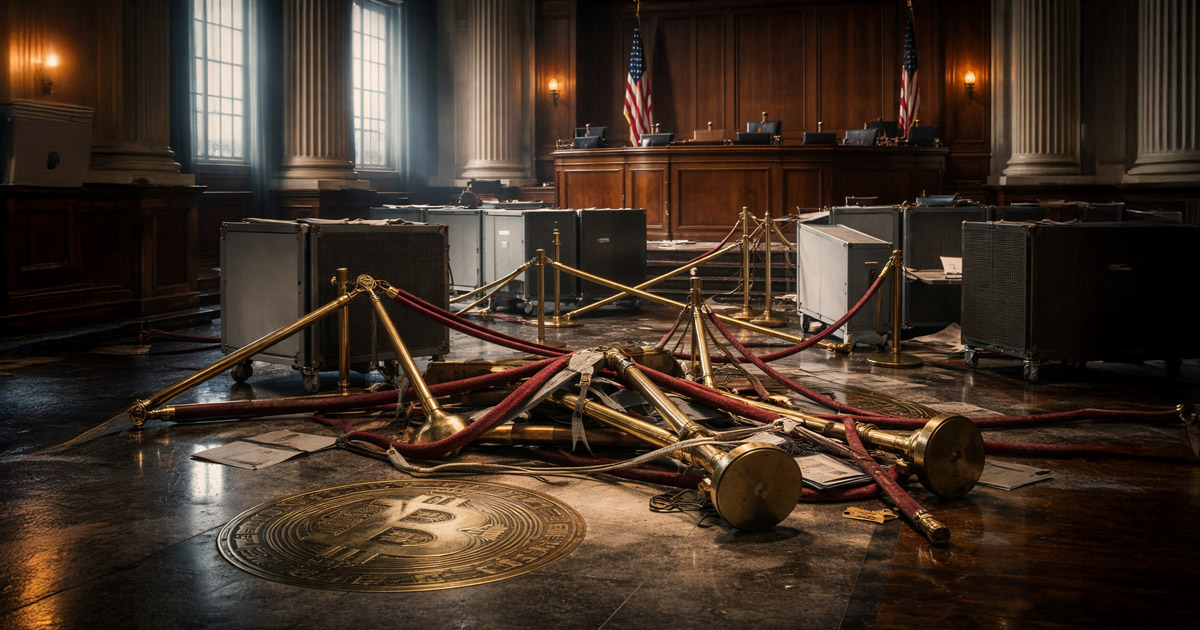
The SEC and CFTC have just signed an agreement that turns months of public harmonization talk into a formal operating framework for crypto, derivatives, and hybrid market products.

The agreement covers product definitions, clearing and margin rules, dually registered venues and intermediaries, crypto assets, reporting, examinations, surveillance, and enforcement.

SEC Chair Paul Atkins admitted that years of “regulatory turf wars,” duplicate registrations, and overlapping rules helped push activity to other jurisdictions. That turns a procedural announcement into a concrete claim: part of the U.S. crypto problem came from the U.S. regulatory structure itself, not only from the firms trying to navigate it.

The immediate effect, however, is procedural and is unlikely to move markets on its own.

The MOU does not rewrite securities or commodities law, and it does not settle every classification fight. But it establishes regular meetings, on-request data sharing, advance notice between agencies, cross-training, coordinated exams, and consultation on enforcement to avoid duplicate or conflicting outcomes.

For firms that interact with both agencies, that framework could change the cost, speed, and risk of operating in the United States before Congress passes any new crypto statute.

On CryptoSlate, Bitcoin traded at $68,318, up 4.12% over 24 hours, 4.31% over seven days, and 8.01% over 30 days. BTC dominance stood at 58.6%, while total crypto market capitalization was about $2.4 trillion.

In that market, a coordination pact between the two main U.S. regulators lands primarily as a development in market structure around Bitcoin, product design, and venue strategy.

Metric Value Source context
Bitcoin price $68,318.60 CryptoSlate market snapshot
24-hour change +4.12% Short-term price action
7-day change +4.31% Weekly trend
30-day change +8.01% Monthly trend
BTC dominance 58.6% Bitcoin share of crypto market
Total crypto market cap About $2.4 trillion Broader market size

The market signal is straightforward. Bitcoin is trading in a market where institutional access, product design, margin treatment, and venue structure still shape how capital moves.

That is where the SEC–CFTC deal could first show up.

The agencies are not promising a softer line. Instead, they aim to reduce overlap so one product or venue does not trigger two separate regulatory tracks with different forms, data demands, and enforcement risks.

From speeches to a signed process

This did not begin this week. The agencies had already spent months building the case publicly. On Sept. 5, 2025, they said fragmented oversight and legal uncertainty had pushed novel products overseas and floated a joint harmonization push covering definitions, data standards, reporting, capital and margin, and innovation-related exemptions.

See also  OAM crypto database end raises concerns as Italy prepares for MiCAR European passport

On Sept. 29, they held a joint roundtable focused on regulatory overlap and market structure.

The event mixed crypto-native firms with large traditional market operators, including CME, Nasdaq, ICE, Robinhood, Bank of America, J.P. Morgan, Citadel, and Jump. The cross-market mix shows the agreement reaches beyond crypto policy.

The agencies are treating crypto as part of a broader problem in U.S. market plumbing, where securities, derivatives, digital assets, and new venue models increasingly overlap.

The MOU itself notes that markets have become more convergent, more global, and more dependent on digital infrastructure and on-chain systems.

The public campaign continued into 2026. The agencies tied harmonization to U.S. financial leadership in January. They pushed further on March 10, when Atkins said staff had already begun joint meetings on product applications. By the time the MOU arrived a day later, the argument had shifted from theory to operating procedure.

The SEC also opened a public portal for meeting requests and written submissions. The written-input log showed that outside parties had already started filing views.

If the September and January speeches were stage-setting, March is where the agencies began to show their work.

The MOU does not alter statutory authority, and the document states that directly. The agencies still have separate mandates, enforcement powers, and political risks.

But the process now aims to move conflicts earlier. A shared meeting before a product filing. A shared exam plan before two teams arrive. A consultation before one enforcement action triggers a second, overlapping one.

For firms that have spent years preparing for both agencies at once, that shift represents a real operational change.

Date Public step Why it counts
Sept. 5, 2025 Joint statement on harmonization Agencies said fragmentation pushed products overseas
Sept. 29, 2025 Joint roundtable Public debate over overlap, venues, products, and market structure
Jan. 2026 Public harmonization push continued Agencies linked coordination to U.S. competitiveness
March 10, 2026 Atkins said joint product meetings had begun Showed the framework was moving into live applications
March 11, 2026 MOU signed Formalized meetings, data sharing, exams, and enforcement consultation
See also  AAVE, ZEC, EGLD, and ZRO as Crypto Market Shifts Toward Altcoins

The language still needs translation here.

“Harmonization” means the agencies are trying to stop sending firms through two separate bureaucratic tracks when one business touches both rulebooks.

“Dually registered venues” refers to platforms that may need to satisfy both agencies. “Coordinated oversight” means exam teams, reporting systems, and enforcement staff should compare notes before firms face duplicate scrutiny for the same issue.

Where the first test cases are likely to appear

The clearest near-term effects are likely to appear in product handling and market infrastructure rather than token-by-token classifications.

Atkins pointed to cross-margining as one area where separate regulatory silos can trap liquidity in different accounts when related positions could be managed together, according to his March 10 remarks.

In practice, that means regulators are examining whether firms can use collateral more efficiently across connected products instead of posting additional capital in separate regulatory buckets.

Another likely test area is crypto-linked products that do not fit neatly into one regulatory category.

CFTC Chair Caroline Pham Selig said staff had been considering margined spot crypto under an “actual delivery” exception and the classification of “true crypto-perpetuals.”

Questions like these can sit unresolved for months when firms are unsure which regulator controls the harder edge of the issue.

Under the new framework, the agencies say they want those disputes handled together rather than in parallel. This is where the next set of effects could emerge.

If the framework works, the first visible winners are unlikely to be retail traders reading a policy document over breakfast.

Instead, the impact will fall first on exchanges, clearing firms, brokers, and crypto operators seeking clarity on product design, registration paths, reporting systems, and exam risk.

The effects can still travel outward.

Faster product decisions can influence where liquidity forms. More efficient collateral treatment can change how capital is deployed. Fewer duplicate reporting demands can lower the cost of operating in U.S. markets.

These are the channels through which a procedural change can reshape market structure. The limits are just as important.

The MOU repeatedly uses language such as “endeavor,” “as practicable,” and “where appropriate,” particularly regarding notifications, exams, and enforcement coordination.

See also  Treasury Urges Congress to Give Crypto Platforms Power to Freeze Suspicious Funds

The agencies have signed a framework for working together. They have not erased the legal boundary between a security and a commodity, nor promised deadlines for every unresolved classification issue in crypto. That leaves a clear reporting question for the next quarter.

Will the MOU produce a concrete before-and-after example? A product filing that moves faster, a coordinated exam instead of two separate ones, or a reporting process that no longer requires duplicate systems.

Until one of those examples appears, the agreement remains a serious signal with an open scorecard.

What the next quarter could show

For Bitcoin, the regulatory shift is indirect but still meaningful.

Bitcoin itself sits near the edge of the agreement’s legal scope. The central issue is how the U.S. regulates the infrastructure around crypto, trading venues, derivatives, collateral, reporting systems, and the boundary between securities and commodities law.

If the agencies can narrow their overlap there, they make the U.S. a less costly place to build Bitcoin-linked and crypto-linked market products.

If they cannot, the same complaints Atkins raised in March will likely resurface under a different policy banner.

Bitcoin’s 30-day gain of 8.%, combined with 58.6% dominance in a roughly $2.4 trillion market, points to a crypto ecosystem where institutional channels still matter.

In a market of that size, procedural changes at the SEC and CFTC do not need to move spot prices immediately to shape long-term positioning. They can influence where new products launch, where firms commit capital, and how willing large operators are to build within the U.S. regulatory perimeter rather than around it.

The agencies acknowledged that regulatory overlap helped send activity elsewhere, then signed a framework intended to reduce that overlap.

The test begins now rather than in some distant legislative cycle.

The SEC’s public intake process is open. Staff meetings on product applications have already begun.

The first signs of success, or failure, should appear in product treatment, exam practices, and the speed at which the agencies deliver a single, coherent answer to firms that once received two.

The next clear signal is unlikely to be another press release.

It will be the first case where the truce changes an outcome.

The post The SEC finally admits US crypto chaos was caused by its own regulatory turf wars appeared first on CryptoSlate.

Admits Caused Chaos Crypto finally Regulatory SEC turf Wars
Share. Facebook Twitter Pinterest LinkedIn Tumblr Email

Related Posts

What Is the CLARITY Act? The US Crypto Bill That Could Reshape Digital Asset Regulation This Week

May 14, 2026

Michael Saylor Says the Transparency Act in the US Congress Will Positively Impact Bitcoin! Here Are the Details

May 14, 2026

ZachXBT Names Teen Behind $19 Million Crypto Theft Who Flaunted It On Instagram

May 14, 2026

Consensys Urges SEC to Exempt Self-Custody Wallets, Citing Regulatory Gap for 99% of Tokens

May 14, 2026
Add A Comment
Leave A Reply Cancel Reply

Top Posts

What AERO Means for Web3 Gaming

October 29, 2025

XRP flips BNB – Is massive ETF demand behind this bull run?

January 4, 2026

Stay ahead with the latest crypto news, market updates, blockchain insights, and trends. Your trusted source for everything happening in the digital asset world.


We're social. Connect with us:

Facebook X (Twitter) Instagram Pinterest YouTube
Top Insights

What Is the CLARITY Act? The US Crypto Bill That Could Reshape Digital Asset Regulation This Week

May 14, 2026

Stables Taps T-0 Network as Asia’s 60% Stablecoin Payment Share Tests USDT Rails

May 14, 2026

Exodus slashes Bitcoin holdings by 50% in Q1 2026 – Is BTC’s volatility why?

May 14, 2026
Get Informed

Subscribe to Updates

Get the latest creative news From Free.cc directly in your Inbox!

  • Contact
  • Privacy Policy
  • Terms & Conditions
  • Disclosure
© 2026 free.cc - All rights reserved.

Type above and press Enter to search. Press Esc to cancel.