
Close Menu
  • Latest News
    • Bitcoin
    • Ethereum
    • Altcoins
    • Meme Coins
  • Tech
    • Blockchain
    • Security and Privacy
  • Web 3
    • Gaming
  • Legal
    • Legal and Regulatory
    • Adoption
  • Analysis
  • Learn
    • Education
    • Wallets and Exchanges
  • Tools
    • Market Overview
    • Exchange Tool
What's Hot

Oliver Investigates Trump’s Crypto Ventures

July 29, 2026

Is the Web3 startup extinction event here, as Wall Street silently inherits crypto architecture?

July 29, 2026

Audiera loses KEY support – Can BEAT recover from a 24% crash?

July 29, 2026
Facebook X (Twitter) Instagram
  • Contact
  • Privacy Policy
  • Terms & Conditions
  • Disclosure
Facebook X (Twitter) Instagram
Free.cc (Free Cryptocurrency)Free.cc (Free Cryptocurrency)
  • Latest News
    1. Bitcoin
    2. Ethereum
    3. Altcoins
    4. Meme Coins
    5. View All

    Oliver Investigates Trump’s Crypto Ventures

    July 29, 2026

    Coinbase wants to be Canada’s ‘everything exchange,’ but says clearer rules are needed first

    July 29, 2026

    SEC Chairman Wants To Advance Crypto Clarity Act

    July 29, 2026

    Bitcoin whales buy 19K BTC – Can $61K keep the recovery alive?

    July 29, 2026

    A Breakthrough in Crypto Encryption Timescales

    July 29, 2026

    Why is crypto down today? $24B market cap loss exposes cracks in recovery

    July 28, 2026

    Tom Lee Reveals Why CLARITY Act Matters for Bitcoin, Ethereum, XRP and Crypto

    July 28, 2026

    Ethereum ETFs add $96M – Are institutions favoring ETH over Bitcoin?

    July 28, 2026

    Audiera loses KEY support – Can BEAT recover from a 24% crash?

    July 29, 2026

    AAVE faces $100 test after Revolut’s $6.44M transfer: Can buyers stay in control?

    July 29, 2026

    Kraken Brings CFTC-Regulated Perpetual Futures To US Traders

    July 28, 2026

    Ondo extends RWA dominance with new network – But will institutions use it?

    July 28, 2026

    Why Is BOME’s Price Up Today? Finally, Capital Rotating to the Meme Coins?

    July 28, 2026

    Brian Armstrong Warns Traders After BRIAN Meme Coin Surges and Crashes

    July 21, 2026

    $1.2 Billion Exits Memecoins: Binance Data Signals Heavy Sell-Off

    July 14, 2026

    CASHCAT Soars 1,600% Amid Robinhood Memecoin Frenzy

    July 8, 2026

    Oliver Investigates Trump’s Crypto Ventures

    July 29, 2026

    Is the Web3 startup extinction event here, as Wall Street silently inherits crypto architecture?

    July 29, 2026

    Audiera loses KEY support – Can BEAT recover from a 24% crash?

    July 29, 2026

    Your AI Chats May Be Showing up in Google Search — One Sharing Feature Made It Possible

    July 29, 2026
  • Tech
    1. Blockchain
    2. Security and Privacy
    3. View All

    Merck and Hashgraph Group launch Hedera-based product passport for EU compliance

    June 12, 2026

    COTI and Midnight Foundation Partner to Advance the Global Privacy Ecosystem

    June 11, 2026

    Cardano Gets Exposure From Olympics Committee

    June 11, 2026

    How Privacy and Composability Trade-Offs Differ

    June 11, 2026

    Your AI Chats May Be Showing up in Google Search — One Sharing Feature Made It Possible

    July 29, 2026

    Michael Saylor Says Bitcoin Can Grow 100-Fold, Warns Rule Changes Could Threaten Its Future

    July 29, 2026

    Apple’s App Store promoted fake Bitcoin wallet that stole $1.8M after developer spent a year warning them

    July 29, 2026

    A Quantum Computer Could One Day Break Crypto Security — Coinbase Is Preparing Now

    July 26, 2026

    Oliver Investigates Trump’s Crypto Ventures

    July 29, 2026

    Is the Web3 startup extinction event here, as Wall Street silently inherits crypto architecture?

    July 29, 2026

    Audiera loses KEY support – Can BEAT recover from a 24% crash?

    July 29, 2026

    Your AI Chats May Be Showing up in Google Search — One Sharing Feature Made It Possible

    July 29, 2026
  • Web 3
    1. Gaming
    2. View All

    Ichimoku Cloud Explained for Beginners: How to Read the “One-Glance” Indicator

    July 22, 2026

    How to Research a Crypto Coin Before You Buy (2026 Guide)

    July 17, 2026

    Top AI Logo Generators for Web3 Founders in 2026

    July 17, 2026

    Top 11 NFT games to play in July 2026

    July 16, 2026

    Oliver Investigates Trump’s Crypto Ventures

    July 29, 2026

    Is the Web3 startup extinction event here, as Wall Street silently inherits crypto architecture?

    July 29, 2026

    Audiera loses KEY support – Can BEAT recover from a 24% crash?

    July 29, 2026

    Your AI Chats May Be Showing up in Google Search — One Sharing Feature Made It Possible

    July 29, 2026
  • Legal
    1. Legal and Regulatory
    2. Adoption
    3. View All

    Crypto holders face a July 29 Maine deadline as state manual conflicts on when abandoned funds trigger seizure

    July 28, 2026

    How a crypto exchange secretly hid $53M in stolen crypto to prevent a bank run – as the SEC targets its directors

    July 28, 2026

    SEC warning over crypto yield vaults puts DeFi’s secret human controllers in the crosshairs

    July 27, 2026

    Lawsuit claims 3.8M dormant BTC using police lost-and-found rules as Congress races to stop it with CLARITY

    July 27, 2026

    Multi-trillion-dollar offshore engine driving 90% of crypto trading arrives in America

    July 26, 2026

    The $25 million Bitcoin glitch hiding inside Wall Street’s clearinghouses

    July 26, 2026

    The $1T network settling millions while banks sleep on weekends

    July 25, 2026

    Investors rejected crypto basket ETFs and now this $1.9 trillion manager is putting the reason to the test

    July 17, 2026

    Oliver Investigates Trump’s Crypto Ventures

    July 29, 2026

    Is the Web3 startup extinction event here, as Wall Street silently inherits crypto architecture?

    July 29, 2026

    Audiera loses KEY support – Can BEAT recover from a 24% crash?

    July 29, 2026

    Your AI Chats May Be Showing up in Google Search — One Sharing Feature Made It Possible

    July 29, 2026
  • Analysis

    SOL Price Eyes Breakout as Morgan Stanley Launches Solana ETP

    July 28, 2026

    ZEC Price Climbs After Zcash Ironwood Upgrade Goes Live

    July 28, 2026

    TRON Holds Multi-Year Bullish Trend as Institutional Adoption Accelerates—Can TRX Price Reach $1?

    July 28, 2026

    BOME Price Is Heating Up Again—Here’s Why

    July 28, 2026

    Key Reasons Behind the Sell-Off

    July 28, 2026
  • Learn
    1. Education
    2. Wallets and Exchanges
    3. View All

    What Is Robinhood Chain? The Ethereum Layer-2 Network for Tokenized Stocks

    July 12, 2026

    What Is BChat? The Decentralized Messaging App Built for Privacy

    June 2, 2026

    What Is an AI Prompt Injection Attack? The Hidden Threat Hijacking Your Chatbots

    May 31, 2026

    What Is AI Jailbreaking? A Beginner’s Guide to the Cat-and-Mouse Game Behind Every Chatbot

    May 17, 2026

    Is the Web3 startup extinction event here, as Wall Street silently inherits crypto architecture?

    July 29, 2026

    Federal court shields Kalshi and Polymarket from Minnesota’s felony crackdown days before deadline

    July 28, 2026

    Lawsuit claims BitMEX used server freezes and internal trading to seize 622 Bitcoin ahead of its September closure

    July 28, 2026

    BitMart’s sudden shutdown triggers withdrawal delays and on-chain panic, echoing the ghosts of 2022

    July 27, 2026

    Oliver Investigates Trump’s Crypto Ventures

    July 29, 2026

    Is the Web3 startup extinction event here, as Wall Street silently inherits crypto architecture?

    July 29, 2026

    Audiera loses KEY support – Can BEAT recover from a 24% crash?

    July 29, 2026

    Your AI Chats May Be Showing up in Google Search — One Sharing Feature Made It Possible

    July 29, 2026
  • Tools
    • Market Overview
    • Exchange Tool
Free.cc (Free Cryptocurrency)Free.cc (Free Cryptocurrency)
Home»Legal and Regulatory»The Fed may open direct settlement rails to crypto firms as banks warn of liquidity risk
Bitcoin logo
Legal and Regulatory

The Fed may open direct settlement rails to crypto firms as banks warn of liquidity risk

May 25, 2026No Comments6 Mins Read
Share
Facebook Twitter LinkedIn Pinterest Email

You never see the most important part of any of your payments. When an app says your money moved, a number changes on your screen, and the transaction looks and feels finished.

But underneath those interfaces lies a separate, invisible chain of bank reserves, settlement accounts, and Fed infrastructure that determines when your funds actually clear, who controls that settlement, and which institutions are allowed to participate in it at all.

For crypto payments, that underlying system has been off-limits. Exchanges and crypto companies have had to route all of their dollar payments through partner banks, which handled the actual settlement with the Federal Reserve on their behalf. When those relationships collapsed during the failures of Silvergate and Signature Bank in 2023, they revealed just how fragile that relationship was, and the industry has been building the case for direct Fed access ever since.

Two converging developments this week have brought that case to a head. In December 2025, the Fed formally requested public comment on a new “payment account” that would let eligible non-bank institutions clear and settle payments through Fed infrastructure, without receiving the full package of privileges available to traditional bank master accounts.

Then, on May 19, President Trump signed an executive order titled “Integrating Financial Technology Innovation Into Regulatory Frameworks,” directing the Fed to submit a comprehensive review of its payment access framework within 120 days and establish transparent application procedures within 90. The executive order can’t compel the Fed to act, but political backing at that level tends to clarify which way institutional attention is pointing.

Kraken provided the first real-world data point back in March. The Federal Reserve Bank of Kansas City approved a limited-purpose master account for Kraken Financial, the exchange’s Wyoming-chartered banking subsidiary, on March 4, making it the first crypto company in the US to gain direct access to the Fed’s core payment system after more than five years of regulatory engagement.
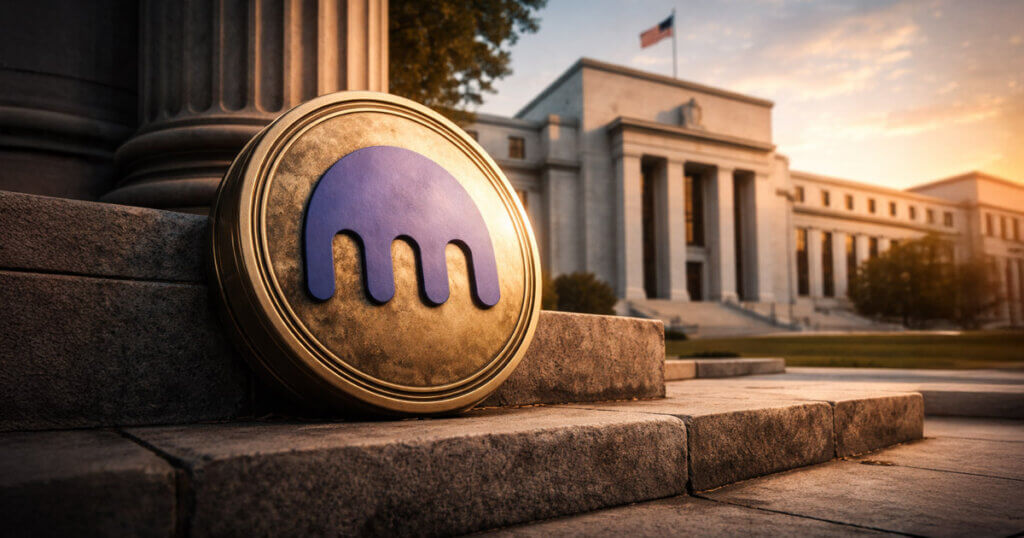
Kraken got fed up of waiting on TradFi so it built its own bank to access the Fed — and it just worked
Related Reading

See also  Pakistan authorities dismantle $60 million international crypto fraud network

Kraken got fed up of waiting on TradFi so it built its own bank to access the Fed — and it just worked

Kraken's master account could redefine pathways for crypto firms seeking direct access to the Federal Reserve's payment rails.
Mar 4, 2026
·
Oluwapelumi Adejumo

The account connects Kraken Financial directly to Fedwire, the real-time gross settlement network that processes trillions of dollars in transfers daily, cutting out the intermediary banks that previously handled dollar settlement on Kraken’s behalf.

It’s a limited arrangement, though: the exchange earns no interest on reserves and has no access to the discount window or intraday Fed credit. What it gained is settlement independence from the correspondent banking system, and for a company handling large institutional volumes, that’s a huge structural shift.

Ripple, which has applied for its own Fed master account and supports a restricted account structure for its RLUSD stablecoin, is among the most obvious next-in-line beneficiaries. Circle, whose USDC reserve management depends heavily on dollar settlement speed, has similarly strong business reasons to want direct access.

Kraken’s approval is now a live test case, and companies across the payments and stablecoin space are watching how the experiment develops before deciding how hard to push for their own applications.

What will the Fed’s proposed account actually do?

The payment account the Fed proposed in December is structurally different from a full master account. A full master account lets a regulated depository institution hold balances at the Fed, earn interest on those reserves, access intraday credit, and borrow from the discount window during periods of liquidity stress.

The proposed payment account removes all of that. Eligible institutions could settle through Fedwire, FedNow, and the National Settlement Service, hold limited reserve balances, and process payments across Fed infrastructure, but the Fed has been precise that the new account type wouldn’t expand or otherwise change legal eligibility for its services. Most applicants would still need to qualify under existing criteria, and balance caps would apply.

See also  US regulators dismiss SEC-CFTC merger rumors, move to dispel crypto ‘FUD’

Crypto and fintech companies would still see practical benefits. Exchanges and stablecoin issuers currently depend on banking intermediaries for dollar settlement, which concentrates operational risk. When a bank partner faces regulatory trouble or withdraws from crypto clients, the effects can reach multiple platforms simultaneously.

Direct access to Fed settlement infrastructure reduces that exposure and gives companies tighter control over their dollar liquidity during high-volume periods. For stablecoin issuers specifically, the ability to move reserves quickly and predictably during heavy redemption periods could be the difference between an orderly market and a disorderly one.

Fed Governor Christopher Waller said that a streamlined payment account should be operational by late 2026, suggesting the central bank sees this as a near-term deliverable rather than a long-run aspiration.

Why are banks fighting the Fed, and what are they actually worried about?

The banking industry’s opposition to the payment account framework has been pretty loud and organized. It’s also worth examining carefully, because it mixes legitimate risk concerns with what can only be described as competitive anxiety.

The Bank Policy Institute, backed by JPMorgan, Bank of America, and other major institutions, has argued that even limited direct access to Fedwire for crypto and fintech firms could threaten financial stability and create money-laundering vulnerabilities.

Fed Governor Michael Barr dissented from the December proposal on illicit finance grounds, saying it lacked adequate safeguards. Kraken’s master account drew immediate criticism from banking trade groups, who said the Kansas City Fed’s approval lacked transparency around the risk controls imposed.

Some of those arguments hold up. Non-bank institutions operating on Fedwire would do so under a different supervisory framework than insured banks, and AML compliance at crypto and fintech companies has historically been less scrutinized. Potential issues with liquidity are worth taking seriously, too: if funds migrate faster out of insured bank deposits and into non-bank platforms with direct settlement access, deposit flows become more volatile. An operational failure at a connected non-bank institution during a period of market stress could generate settlement disruptions that propagate far beyond that company.

See also  Vietnam launches 5-year crypto market pilot with strict controls

The competitive dimension is somewhat less openly discussed. Exchanges and other crypto platforms currently pay banks for the correspondent banking access they need to operate in dollars, and direct Fed settlement would restructure that arrangement, bringing settlement independence to the companies that were previously paying for it. For the large institutions backing the opposition campaign, the risk of losing that intermediation business is probably at least as motivating as the risk of systemic disruption.

The Fed’s design tries to thread the difference: narrow accounts, no backstops, no functional equivalence with insured banks, and eligibility requirements that most applicants won’t satisfy automatically.

Whether that structure holds under simultaneous pressure from crypto firms pushing for more and banking groups pushing for none is genuinely open. Kraken’s limited-purpose account is still a live experiment, the December comment period is ongoing, and Trump’s executive order is less than a week old.

For the first time, the argument about who gets to settle dollars inside the Federal Reserve system is being tested in practice rather than debated in theory.

The post The Fed may open direct settlement rails to crypto firms as banks warn of liquidity risk appeared first on CryptoSlate.

Banks Crypto direct Fed Firms Liquidity open rails Risk Settlement Warn
Share. Facebook Twitter Pinterest LinkedIn Tumblr Email

Related Posts

Oliver Investigates Trump’s Crypto Ventures

July 29, 2026

Is the Web3 startup extinction event here, as Wall Street silently inherits crypto architecture?

July 29, 2026

A Breakthrough in Crypto Encryption Timescales

July 29, 2026

SEC Chairman Wants To Advance Crypto Clarity Act

July 29, 2026
Add A Comment
Leave A Reply Cancel Reply

Top Posts

Michael Saylor’s Strategy Continues Bitcoin Acquisition Spree Following Early June Sale, Drops Another $100,000,000 on BTC

June 16, 2026

Ethereum vs. Bitcoin – Why 2026 could mark ETH’s comeback

December 13, 2025

Stay ahead with the latest crypto news, market updates, blockchain insights, and trends. Your trusted source for everything happening in the digital asset world.


We're social. Connect with us:

Facebook X (Twitter) Instagram Pinterest YouTube
Top Insights

Oliver Investigates Trump’s Crypto Ventures

July 29, 2026

Is the Web3 startup extinction event here, as Wall Street silently inherits crypto architecture?

July 29, 2026

Audiera loses KEY support – Can BEAT recover from a 24% crash?

July 29, 2026
Get Informed

Subscribe to Updates

Get the latest creative news From Free.cc directly in your Inbox!

  • Contact
  • Privacy Policy
  • Terms & Conditions
  • Disclosure
© 2026 free.cc - All rights reserved.

Type above and press Enter to search. Press Esc to cancel.