Close Menu
  • Latest News
    • Bitcoin
    • Ethereum
    • Altcoins
    • Meme Coins
  • Tech
    • Blockchain
    • Security and Privacy
  • Web 3
    • Gaming
  • Legal
    • Legal and Regulatory
    • Adoption
  • Analysis
  • Learn
    • Education
    • Wallets and Exchanges
  • Tools
    • Market Overview
    • Exchange Tool
  • INFO@FREE.CC
What's Hot

Texas questions whether AI data centers should pay for the grid they strain

June 20, 2026

Bitcoin institutional demand lags – Can adoption sustain BTC’s recovery?

June 20, 2026

CFTC And SEC Seek Input On Derivatives Definitions As Crypto

June 20, 2026
Facebook X (Twitter) Instagram
  • Contact
  • Privacy Policy
  • Terms & Conditions
  • Disclosure
Facebook X (Twitter) Instagram
Free.cc (Free Cryptocurrency)Free.cc (Free Cryptocurrency)
  • Latest News
    1. Bitcoin
    2. Ethereum
    3. Altcoins
    4. Meme Coins
    5. View All

    Bitcoin institutional demand lags – Can adoption sustain BTC’s recovery?

    June 20, 2026

    Why the Bear Market Is Still Very Much Alive

    June 20, 2026

    GoMining challenges Jack Dorsey’s Square with a pure BTC payment rail

    June 20, 2026

    Prediction Market Kalshi Eyes IPO As Revenue Hits $2 Billion

    June 20, 2026

    Ethereum Foundation Faces Potential Funding Crisis

    June 19, 2026

    Ethereum Q1 2026: Insights From Etherealize Report

    June 19, 2026

    Exclusive: Bitcoin, Ethereum, and XRP Price Predictions

    June 17, 2026

    Ethereum Exchange Reserves Hit a 10-Year Low—Is a Supply Shock Brewing?

    June 16, 2026

    CFTC And SEC Seek Input On Derivatives Definitions As Crypto

    June 20, 2026

    Ethereum Foundation Promotes Clear Signing Standards To Secu

    June 20, 2026

    Kalshi IPO Talk Shows Prediction Markets Moving Mainstream

    June 20, 2026

    Aztec Legacy Exploit Shows Risk Of Deprecated Crypto Contracts

    June 20, 2026

    Dogecoin Cash Files U.S. Patent for DOGP Blockchain Framework

    June 15, 2026

    How SIREN Went From AI Memecoin to Boom-and-Bust

    June 8, 2026

    Meme Coin Market Faces Imbalance as Supply Rises, Demand Falls

    April 4, 2026

    Crypto Interest Rising Toward Meme Coin Sector

    January 9, 2026

    Texas questions whether AI data centers should pay for the grid they strain

    June 20, 2026

    Bitcoin institutional demand lags – Can adoption sustain BTC’s recovery?

    June 20, 2026

    CFTC And SEC Seek Input On Derivatives Definitions As Crypto

    June 20, 2026

    Why the Bear Market Is Still Very Much Alive

    June 20, 2026
  • Tech
    1. Blockchain
    2. Security and Privacy
    3. View All

    Merck and Hashgraph Group launch Hedera-based product passport for EU compliance

    June 12, 2026

    COTI and Midnight Foundation Partner to Advance the Global Privacy Ecosystem

    June 11, 2026

    Cardano Gets Exposure From Olympics Committee

    June 11, 2026

    How Privacy and Composability Trade-Offs Differ

    June 11, 2026

    Fake GitHub Stars and AI Videos Mask a Crypto Clipper

    June 18, 2026

    Zcash Climbs 80% Since June 5 as Traders Shrug off Orchard Bug Fears – Bitcoin News

    June 18, 2026

    Rokarolla Trojan Combines Banking Fraud With Device Surveillance

    June 16, 2026

    FBI Warns Courier Cash Pickups Are Driving Crypto Scams

    June 16, 2026

    Texas questions whether AI data centers should pay for the grid they strain

    June 20, 2026

    Bitcoin institutional demand lags – Can adoption sustain BTC’s recovery?

    June 20, 2026

    CFTC And SEC Seek Input On Derivatives Definitions As Crypto

    June 20, 2026

    Why the Bear Market Is Still Very Much Alive

    June 20, 2026
  • Web 3
    1. Gaming
    2. View All

    GoMining Rolls Out GoBTC Pay SDK for Bitcoin Merchant Payments

    June 20, 2026

    Real Finance Launches $ASSET Rewards Campaign to Support RWA Ecosystem Growth

    June 19, 2026

    Playnance’s $GCOIN Lists on KoinBX Amid Rapid India Community Growth

    June 18, 2026

    GMATRIXS and Plum Protocol Partner to Blend GameFi with Meme Assets, Driving Multi-Chain Web3 User Experience

    June 16, 2026

    Texas questions whether AI data centers should pay for the grid they strain

    June 20, 2026

    Bitcoin institutional demand lags – Can adoption sustain BTC’s recovery?

    June 20, 2026

    CFTC And SEC Seek Input On Derivatives Definitions As Crypto

    June 20, 2026

    Why the Bear Market Is Still Very Much Alive

    June 20, 2026
  • Legal
    1. Legal and Regulatory
    2. Adoption
    3. View All

    Texas questions whether AI data centers should pay for the grid they strain

    June 20, 2026

    CME lawsuit challenges whether Kalshi’s Bitcoin leverage push can become an everything-exchange

    June 19, 2026

    Illinois’ new crypto tax puts users under a burden stocks do not face

    June 18, 2026

    Congress moves to rebuild crypto crime task force after DOJ dismantled its dedicated crypto team

    June 15, 2026

    Bitcoin network activity has a dramatic rebound

    June 20, 2026

    Pump Fun revenue slows as Collector Crypt’s $5.1M card-pack week reshapes Solana’s consumer loop

    June 19, 2026

    Global $2.75B payments deal shows stablecoins moving into the rails they were meant to bypass

    June 19, 2026

    Global $2.75B payments deal shows stablecoins moving into the rails they were meant to bypass

    June 19, 2026

    Texas questions whether AI data centers should pay for the grid they strain

    June 20, 2026

    Bitcoin institutional demand lags – Can adoption sustain BTC’s recovery?

    June 20, 2026

    CFTC And SEC Seek Input On Derivatives Definitions As Crypto

    June 20, 2026

    Why the Bear Market Is Still Very Much Alive

    June 20, 2026
  • Analysis

    Can New Ecosystem Upgrades Trigger a Rally?

    June 20, 2026

    Bitcoin’s ‘digital credit’ yield trade breaks below par as margin calls hit $10 billion market

    June 20, 2026

    The Next Target Could Surprise Traders

    June 20, 2026

    Franklin Templeton new ETFs would convert US companies stock dividends into Bitcoin exposure

    June 20, 2026

    Why is Crypto Going Down Today?

    June 19, 2026
  • Learn
    1. Education
    2. Wallets and Exchanges
    3. View All

    What Is BChat? The Decentralized Messaging App Built for Privacy

    June 2, 2026

    What Is an AI Prompt Injection Attack? The Hidden Threat Hijacking Your Chatbots

    May 31, 2026

    What Is AI Jailbreaking? A Beginner’s Guide to the Cat-and-Mouse Game Behind Every Chatbot

    May 17, 2026

    What’s on the Ethereum Roadmap: Glamsterdam, Hegota and Beyond

    March 30, 2026

    HYPE ETFs quietly pulled $161M in one month as Wall Street buys crypto’s on-chain exchange bet

    June 15, 2026

    Crypto exchanges are opening a two-front war for the stock market

    June 12, 2026

    Crypto’s killer app may be selling stocks after its own tokens failed retail

    June 10, 2026

    Vitalik wants DeFi price crashes to stop triggering automatic liquidations

    June 4, 2026

    Texas questions whether AI data centers should pay for the grid they strain

    June 20, 2026

    Bitcoin institutional demand lags – Can adoption sustain BTC’s recovery?

    June 20, 2026

    CFTC And SEC Seek Input On Derivatives Definitions As Crypto

    June 20, 2026

    Why the Bear Market Is Still Very Much Alive

    June 20, 2026
  • Tools
    • Market Overview
    • Exchange Tool
  • INFO@FREE.CC
Free.cc (Free Cryptocurrency)Free.cc (Free Cryptocurrency)
Home»Legal and Regulatory»Texas questions whether AI data centers should pay for the grid they strain
Bitcoin shrugged off Japan’s rate hike – The bigger liquidity test came from Washington
Legal and Regulatory

Texas questions whether AI data centers should pay for the grid they strain

June 20, 2026No Comments7 Mins Read
Share
Facebook Twitter LinkedIn Pinterest Email

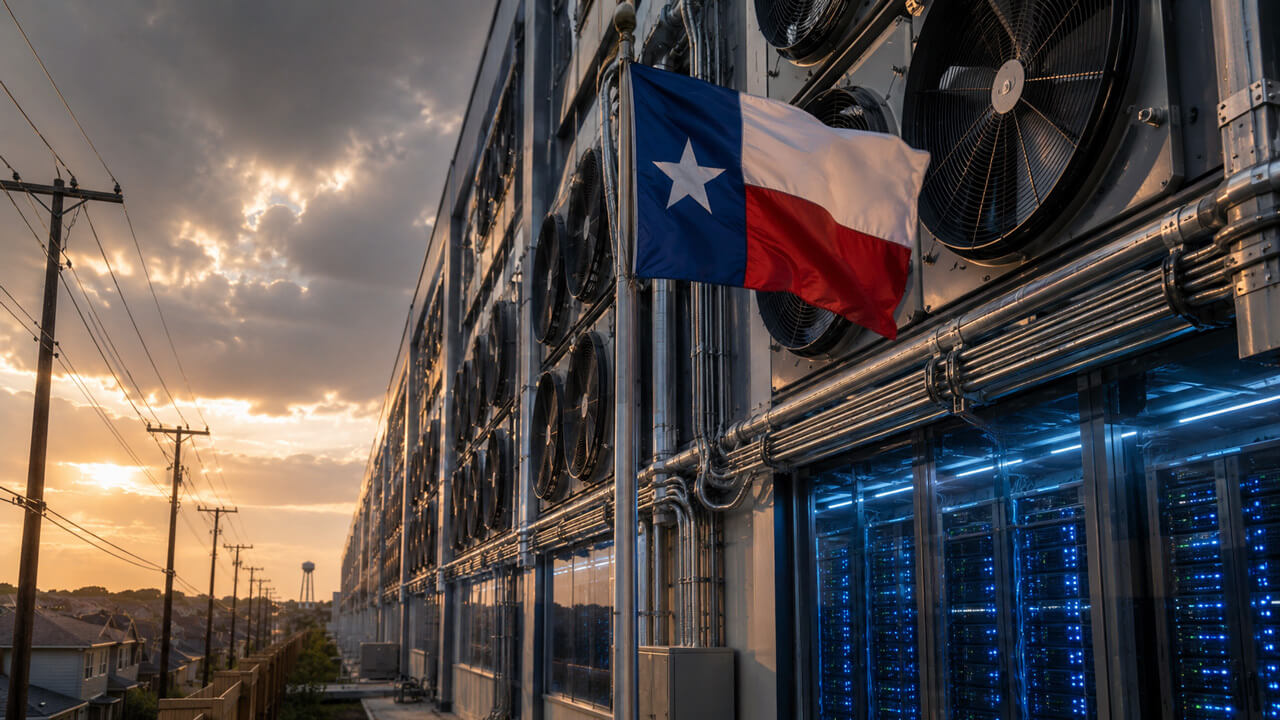
Texas spent years courting AI companies, cloud providers, and Bitcoin miners with cheap electricity, abundant land, and a sales tax exemption that’s grown into one of the state’s costliest incentive programs.

But now, Governor Greg Abbott has told state regulators to flip the arrangement, directing them to require data centers to fund the grid they depend on, so households would “stop subsidizing one of the fastest-growing industries in the world.”

That rather sudden change in sentiment could become the template for how the rest of America regulates the AI buildout.

The state spent the better part of the last decade making itself the easiest place in America to build a data center, and the bill for that hospitality seems to have come due.

Texas now has roughly 6.5 gigawatts of capacity under construction, about a fifth of the national pipeline, and the real estate firm JLL projects it could overtake Northern Virginia as the world’s largest data center market by 2030.

The state’s sales tax exemption for qualifying facilities will cost it roughly $3.2 billion in forgone revenue over the next two years, with about $1.3 billion of that landing this year alone, according to the comptroller’s office.

There are 121 facilities currently drawing on the break, which waives the state’s 6.25% sales tax on everything from servers and cooling systems to the enormous quantities of electricity these sites consume.

On June 10, Abbott sent a letter to the Public Utility Commission and ERCOT instructing them to keep the cost of all that growth from passing on to residential customers and to start placing it with the companies creating the demand.

What Abbott laid out could serve as a regulatory roadmap for other states. He said that the PUC and ERCOT should require data centers to fully fund the electric infrastructure built to serve them, ordered the commission to begin lowering residential transmission costs by the end of July, and asked both agencies to deliver a joint memo by July 17 spelling out what they can do under existing authority and what will need fresh legislation in 2027.

See also  Bitcoin, Ethereum, XRP Price Prediction Ahead of U.S. CPI Data

His directive also included calls for water-efficient cooling, mandatory reporting on power and water use, and a hard look at whether that expensive sales tax exemption should survive at all.

What changes when the meter runs the other way

Demands at this scale explain why a state as friendly to industry as Texas has decided to step in. ERCOT set its all-time peak at 85,508 megawatts in August 2023, and the grid operator’s preliminary long-term forecast now estimates peak demand of up to 367,790 megawatts by 2032, more than quadrupling the record.

Even the conservative version of the picture climbs steadily, from roughly 98,000 megawatts in 2026 toward 111,000 by 2032 before any of those large loads are layered in. The interconnection queue shows the same acceleration, with large-load requests rising about 270% in 2025 to roughly 226 gigawatts by late in the year, with 73% of that demand coming from data centers.

Those numbers mean that a new project will look very different once Abbott’s directive works its way through the rulemaking process. Developers should expect to shoulder the upfront costs of substations, transmission upgrades, and interconnection work that used to be spread across the broader base of ratepayers. That raises the capital required to break ground and pushes more operators to generate or store their own power on-site.

Behind-the-meter generation, co-located gas or solar, and large battery installations all become more appealing once a company knows it’s financing its own connection from day one, an approach already visible in projects like Fermi America’s Project Matador near Amarillo, which is funding its own private power grid, so the campus brings new generation onto the system as it draws from it.

Stricter water rules and annual usage reporting are also expected, and the long-running sales tax exemption that made Texas so cheap could shrink or vanish when the Legislature convenes in 2027.

See also  Data Leak Forces Password Reset at Crypto Exchange Poloniex

Operators already operating in Texas have less to manage in the near term, since signed interconnection agreements remain contractual and difficult to reopen, so the heaviest effects fall on new builds and major expansions.

But much of this still hinges on what the PUC and ERCOT decide they can do without a new statute and how aggressively the 2027 session moves. Abbott pointed back to Senate Bill 6, the 2025 law that already requires large loads to bring backup power and curtail it during grid emergencies, as a sign that the state had already started down this road before concluding that more was needed.

The reaction from much of the industry has been better than expected because clear rules written in advance provide developers and lenders with the certainty they love and spare projects the political backlash that follows AI wherever it goes.

Why Bitcoin miners might come out ahead in Texas

One of the most overlooked parts of Abbott’s directive is the line Texas regulators keep drawing between flexible and inflexible demand, since Bitcoin miners sit on the winning side of that divide.

A mining facility can power down within minutes and bring its draw to near zero when prices spike, which is why ERCOT has spent years integrating miners into its controllable load resource programs and leaning on them to curtail within seconds when reserves thin.

AI inference and training generally have to run flat out on continuous power, so the more a future rulebook rewards loads that can flex with the grid, the better a miner looks beside a hyperscaler. By one estimate, ERCOT’s decision to integrate miners as flexible load after the 2021 blackouts helped the state avoid roughly $18 billion in new gas peaker construction.

Flexibility cuts in both directions, though, because any miner seeking a new interconnection will meet the same demand as everyone else to fund its own infrastructure, and the larger threat to mining economics is the competition for cheap power itself.

See also  Sui Partnership with Nansen Unlocks Revolutionary On-Chain Data Access for Developers

As CryptoSlate has documented through 2026, AI operators are bidding up firm electricity to levels that squeeze the thin margins miners survive on, and BlackRock has warned clients that data centers could consume as much as 24% of US electricity by 2030, a number large enough to reorder where every kind of compute gets built.

Miners have already tasted the upside of Texas volatility, with one stretch showing a 31% rise in mining energy use alongside an 80% drop in local electricity prices, and the open question is whether dispatchable demand keeps that privileged status as the grid tightens.

Texas almost certainly won’t be the last state to work through this. The backlash is already strong at home, where the San Marcos City Council recently rejected a proposed $1.5 billion data center after nearly nine hours of public comment. It also runs nationwide, with a March Quinnipiac poll finding 65% of Americans oppose an AI data center in their own community.

Virginia, Georgia, and Arizona are wrestling with the same surge in demand and strain on transmission, making the Texas approach an early test case the rest of the country will be watching.

We’ve now got one of the most business-friendly states in America, which built its data center boom on the most generous incentives ever seen, and was the first to move to make that industry pay its own way.

Abbott is betting that clearer rules and fairer cost allocation will keep the investment flowing while sparing households the bill, and if that bet pays off, the next phase of the AI boom will be shaped by the politics of the electric grid and the question of who pays for the power.

The post Texas questions whether AI data centers should pay for the grid they strain appeared first on CryptoSlate.

Centers Data Grid Pay Questions Strain Texas
Share. Facebook Twitter Pinterest LinkedIn Tumblr Email

Related Posts

GoMining Rolls Out GoBTC Pay SDK for Bitcoin Merchant Payments

June 20, 2026

CME lawsuit challenges whether Kalshi’s Bitcoin leverage push can become an everything-exchange

June 19, 2026

Illinois’ new crypto tax puts users under a burden stocks do not face

June 18, 2026

Ethereum (ETH) Price Stalls Near Key Support, But On-Chain Data Tells a Different Story

June 18, 2026
Add A Comment
Leave A Reply Cancel Reply

Top Posts

What Is Aster Chain and How the Protocol Plans to Expand Beyond BNB Chain

June 8, 2026

BTC Price Enters Fifth Month of Correction—Is Bitcoin Entering a Bear Phase?

February 3, 2026

Stay ahead with the latest crypto news, market updates, blockchain insights, and trends. Your trusted source for everything happening in the digital asset world.


We're social. Connect with us:

Facebook X (Twitter) Instagram Pinterest YouTube
Top Insights

Texas questions whether AI data centers should pay for the grid they strain

June 20, 2026

Bitcoin institutional demand lags – Can adoption sustain BTC’s recovery?

June 20, 2026

CFTC And SEC Seek Input On Derivatives Definitions As Crypto

June 20, 2026
Get Informed

Subscribe to Updates

Get the latest creative news From Free.cc directly in your Inbox!

  • Contact
  • Privacy Policy
  • Terms & Conditions
  • Disclosure
© 2026 free.cc - All rights reserved.

Type above and press Enter to search. Press Esc to cancel.