Close Menu
  • Latest News
    • Bitcoin
    • Ethereum
    • Altcoins
    • Meme Coins
  • Tech
    • Blockchain
    • Security and Privacy
  • Web 3
    • Gaming
  • Legal
    • Legal and Regulatory
    • Adoption
  • Analysis
  • Learn
    • Education
    • Wallets and Exchanges
  • Tools
    • Market Overview
    • Exchange Tool
  • INFO@FREE.CC
What's Hot

Stablecoin regulation converts issuers into psuedo-banks while adding a barrier to entry for smaller players

June 21, 2026

Arthur Hayes Says AI Took Money From Bitcoin, Explains What Happens When It Crashes

June 21, 2026

Ethereum’s Jaredfromsubway MEV bot drained after approving its own $7.5M theft

June 21, 2026
Facebook X (Twitter) Instagram
  • Contact
  • Privacy Policy
  • Terms & Conditions
  • Disclosure
Facebook X (Twitter) Instagram
Free.cc (Free Cryptocurrency)Free.cc (Free Cryptocurrency)
  • Latest News
    1. Bitcoin
    2. Ethereum
    3. Altcoins
    4. Meme Coins
    5. View All

    Arthur Hayes Says AI Took Money From Bitcoin, Explains What Happens When It Crashes

    June 21, 2026

    Ethereum’s biggest ‘sandwich’ bot drained of $7.5 million in ironic exploit

    June 21, 2026

    Franklin Templeton Files For Two ETFs That Reinvest Stock Dividends Into Bitcoin

    June 21, 2026

    Is Bitcoin falling to $52K? What to expect as 2 bearish signs emerge

    June 21, 2026

    Robert Kiyosaki Signals Interest In Bitcoin As Gold & Silver Prices Fall

    June 20, 2026

    Ethereum Foundation Faces Potential Funding Crisis

    June 19, 2026

    Ethereum Q1 2026: Insights From Etherealize Report

    June 19, 2026

    Exclusive: Bitcoin, Ethereum, and XRP Price Predictions

    June 17, 2026

    Ethereum Foundation Details Clear Signing Standards to Fight Phishing

    June 21, 2026

    Bitcoin Cost-Of-Production Signal Raises Miner Stress Questi

    June 21, 2026

    Bitcoin Faces Key $64,100 Resistance As Analyst Watches Fib

    June 21, 2026

    CFTC And SEC Seek Input On Derivatives Definitions As Crypto

    June 20, 2026

    Dogecoin Cash Files U.S. Patent for DOGP Blockchain Framework

    June 15, 2026

    How SIREN Went From AI Memecoin to Boom-and-Bust

    June 8, 2026

    Meme Coin Market Faces Imbalance as Supply Rises, Demand Falls

    April 4, 2026

    Crypto Interest Rising Toward Meme Coin Sector

    January 9, 2026

    Stablecoin regulation converts issuers into psuedo-banks while adding a barrier to entry for smaller players

    June 21, 2026

    Arthur Hayes Says AI Took Money From Bitcoin, Explains What Happens When It Crashes

    June 21, 2026

    Ethereum’s Jaredfromsubway MEV bot drained after approving its own $7.5M theft

    June 21, 2026

    Morgan Stanley’s proposed 0.14% ETH and SOL fees could turn the next crypto ETF race into a price fight

    June 21, 2026
  • Tech
    1. Blockchain
    2. Security and Privacy
    3. View All

    Merck and Hashgraph Group launch Hedera-based product passport for EU compliance

    June 12, 2026

    COTI and Midnight Foundation Partner to Advance the Global Privacy Ecosystem

    June 11, 2026

    Cardano Gets Exposure From Olympics Committee

    June 11, 2026

    How Privacy and Composability Trade-Offs Differ

    June 11, 2026

    Microsoft Warns of New USB-Based Malware Targeting Crypto Users

    June 21, 2026

    Fake GitHub Stars and AI Videos Mask a Crypto Clipper

    June 18, 2026

    Zcash Climbs 80% Since June 5 as Traders Shrug off Orchard Bug Fears – Bitcoin News

    June 18, 2026

    Rokarolla Trojan Combines Banking Fraud With Device Surveillance

    June 16, 2026

    Stablecoin regulation converts issuers into psuedo-banks while adding a barrier to entry for smaller players

    June 21, 2026

    Arthur Hayes Says AI Took Money From Bitcoin, Explains What Happens When It Crashes

    June 21, 2026

    Ethereum’s Jaredfromsubway MEV bot drained after approving its own $7.5M theft

    June 21, 2026

    Morgan Stanley’s proposed 0.14% ETH and SOL fees could turn the next crypto ETF race into a price fight

    June 21, 2026
  • Web 3
    1. Gaming
    2. View All

    Nexus Acquires Homegrown App Marketplace One Store, Expanding into Global Web3 Game Hub

    June 21, 2026

    GoMining Rolls Out GoBTC Pay SDK for Bitcoin Merchant Payments

    June 20, 2026

    Real Finance Launches $ASSET Rewards Campaign to Support RWA Ecosystem Growth

    June 19, 2026

    Playnance’s $GCOIN Lists on KoinBX Amid Rapid India Community Growth

    June 18, 2026

    Stablecoin regulation converts issuers into psuedo-banks while adding a barrier to entry for smaller players

    June 21, 2026

    Arthur Hayes Says AI Took Money From Bitcoin, Explains What Happens When It Crashes

    June 21, 2026

    Ethereum’s Jaredfromsubway MEV bot drained after approving its own $7.5M theft

    June 21, 2026

    Morgan Stanley’s proposed 0.14% ETH and SOL fees could turn the next crypto ETF race into a price fight

    June 21, 2026
  • Legal
    1. Legal and Regulatory
    2. Adoption
    3. View All

    Stablecoin regulation converts issuers into psuedo-banks while adding a barrier to entry for smaller players

    June 21, 2026

    Morgan Stanley’s proposed 0.14% ETH and SOL fees could turn the next crypto ETF race into a price fight

    June 21, 2026

    Texas questions whether AI data centers should pay for the grid they strain

    June 20, 2026

    CME lawsuit challenges whether Kalshi’s Bitcoin leverage push can become an everything-exchange

    June 19, 2026

    Turkish lira stablecoins show why Europe’s regulated euro tokens may struggle

    June 21, 2026

    Bitcoin network activity has a dramatic rebound

    June 20, 2026

    Pump Fun revenue slows as Collector Crypt’s $5.1M card-pack week reshapes Solana’s consumer loop

    June 19, 2026

    Global $2.75B payments deal shows stablecoins moving into the rails they were meant to bypass

    June 19, 2026

    Stablecoin regulation converts issuers into psuedo-banks while adding a barrier to entry for smaller players

    June 21, 2026

    Arthur Hayes Says AI Took Money From Bitcoin, Explains What Happens When It Crashes

    June 21, 2026

    Ethereum’s Jaredfromsubway MEV bot drained after approving its own $7.5M theft

    June 21, 2026

    Morgan Stanley’s proposed 0.14% ETH and SOL fees could turn the next crypto ETF race into a price fight

    June 21, 2026
  • Analysis

    Ethereum’s Jaredfromsubway MEV bot drained after approving its own $7.5M theft

    June 21, 2026

    Can Bulls Push It to $0.64 Next?

    June 21, 2026

    Solana Transactions Surge as Social Buzz Fades — What Does It Mean for SOL’s Next Rally?

    June 21, 2026

    Hedge Fund Billionaire Pours $190,674,000 Into Google, Facebook and Three Stocks That Have Each Exploded Over 2x Year-to-Date

    June 21, 2026

    Can New Ecosystem Upgrades Trigger a Rally?

    June 20, 2026
  • Learn
    1. Education
    2. Wallets and Exchanges
    3. View All

    What Is BChat? The Decentralized Messaging App Built for Privacy

    June 2, 2026

    What Is an AI Prompt Injection Attack? The Hidden Threat Hijacking Your Chatbots

    May 31, 2026

    What Is AI Jailbreaking? A Beginner’s Guide to the Cat-and-Mouse Game Behind Every Chatbot

    May 17, 2026

    What’s on the Ethereum Roadmap: Glamsterdam, Hegota and Beyond

    March 30, 2026

    HYPE ETFs quietly pulled $161M in one month as Wall Street buys crypto’s on-chain exchange bet

    June 15, 2026

    Crypto exchanges are opening a two-front war for the stock market

    June 12, 2026

    Crypto’s killer app may be selling stocks after its own tokens failed retail

    June 10, 2026

    Vitalik wants DeFi price crashes to stop triggering automatic liquidations

    June 4, 2026

    Stablecoin regulation converts issuers into psuedo-banks while adding a barrier to entry for smaller players

    June 21, 2026

    Arthur Hayes Says AI Took Money From Bitcoin, Explains What Happens When It Crashes

    June 21, 2026

    Ethereum’s Jaredfromsubway MEV bot drained after approving its own $7.5M theft

    June 21, 2026

    Morgan Stanley’s proposed 0.14% ETH and SOL fees could turn the next crypto ETF race into a price fight

    June 21, 2026
  • Tools
    • Market Overview
    • Exchange Tool
  • INFO@FREE.CC
Free.cc (Free Cryptocurrency)Free.cc (Free Cryptocurrency)
Home»Legal and Regulatory»Stablecoin regulation converts issuers into psuedo-banks while adding a barrier to entry for smaller players
FCC robocall rule could make phone accounts a richer target for crypto attackers
Legal and Regulatory

Stablecoin regulation converts issuers into psuedo-banks while adding a barrier to entry for smaller players

June 21, 2026No Comments5 Mins Read
Share
Facebook Twitter LinkedIn Pinterest Email

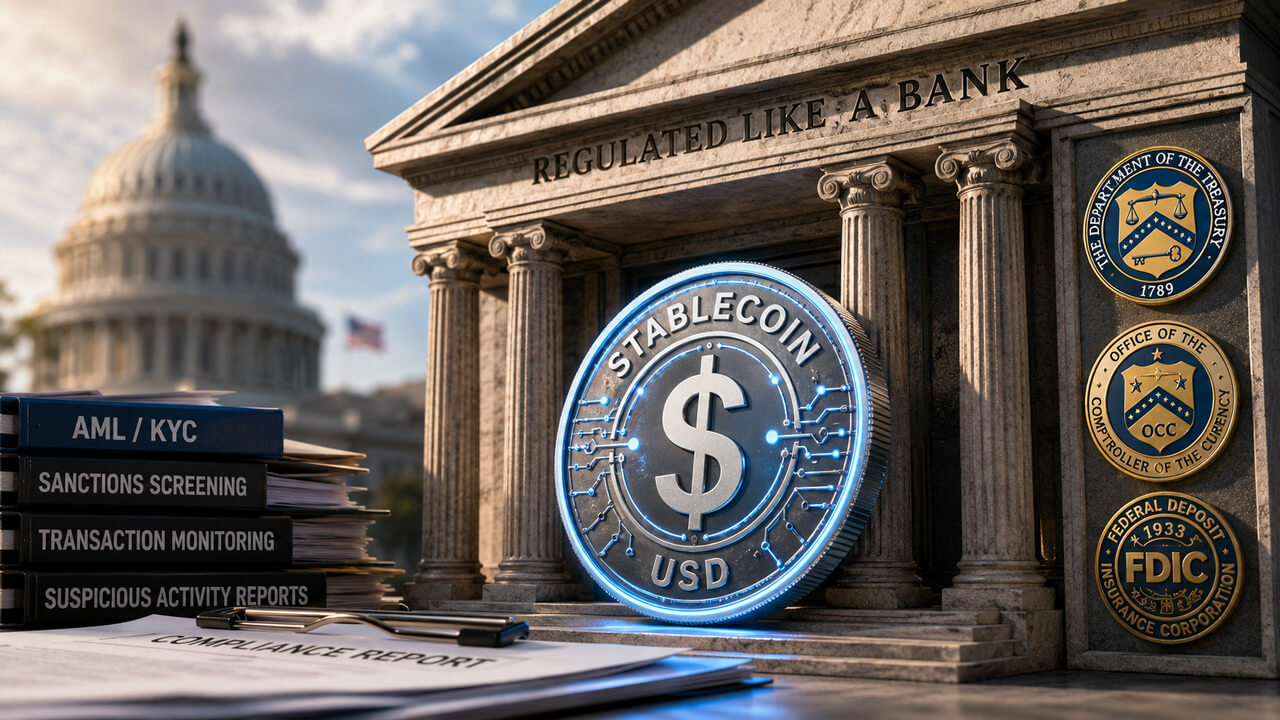
Three federal agencies have proposed rules that would make stablecoin issuers operate like banks. The Treasury wants them to run anti-money-laundering and sanctions programs.

The Office of the Comptroller of the Currency (OCC) wants a weekly confidential report and a quarterly financial report from each one, and the Federal Deposit Insurance Corporation (FDIC) wants Bank Secrecy Act obligations applied to the issuers it supervises.

If adopted, these proposals will turn the issuance of a dollar-pegged token into a job that requires customer screening, transaction monitoring, suspicious activity reporting, reserve disclosures, and a steady stream of data to a primary regulator.

The next phase of stablecoin regulation is therefore less about permission to issue a token and more about whether an issuer can carry the cost of being supervised like a financial institution.

Much of this formalizes what large issuers already do. But for smaller ones, the compliance burden will become the biggest barrier to entering a market now worth roughly $320 billion. The legal clarity the industry spent years fighting for came with an operating cost that decides who can realistically compete.

The GENIUS Act, signed into law in July 2025, is the federal framework for payment stablecoins, the dollar-pegged tokens designed to maintain a steady value and facilitate payments and settlement. It lets a company issue these tokens only as a “permitted payment stablecoin issuer,” or PPSI, meaning payment stablecoin issuers must be cleared by regulators under the federal regime.

Treasury opened the rulemaking that fills in the details in late 2025, and the proposals landing through 2026 are where that permission will become a working compliance regime.

See also  Coinbase standoff over stablecoin reward CLARITY is now holding up rules for the entire US crypto market

Stablecoin issuers are turning into compliance companies

A stablecoin issuer’s product looks simple, since one token is meant to equal one dollar, but the regulated version carries a long operational tail.

Stablecoin compliance now means teams and systems to identify customers, monitor transactions, screen wallets and counterparties against sanctions lists, flag suspicious behavior, and document all of it for an examiner. The work moves from the edge of a crypto company to the center of the business.

That change in demands took shape in April 2026, when the Treasury’s FinCEN and OFAC issued a joint proposed rule that would treat permitted issuers as financial institutions under the Bank Secrecy Act and, for the first time, require a category of US persons to maintain an effective sanctions-compliance program.

The FDIC followed on May 22 with a parallel rule for the issuers it supervises, the ones that operate as subsidiaries of state nonmember banks and state savings associations.

All of this changes the cost structure of the business. The competitive edge moves toward compliance capacity, so issuers that can afford lawyers, transaction-monitoring vendors, reporting systems, and durable banking relationships hold an advantage over newcomers building the same machinery from scratch.

The supervision side became concrete in June 2026, when the OCC published draft reporting forms for issuers under its jurisdiction. Each issuer would file a weekly confidential report on every stablecoin it issues, covering issuance, redemptions, trading volume, and reserve assets, plus a quarterly report on financial conditions that looks much like the call reports that national banks file.

Issuers with more than $50 billion outstanding would also produce audited annual financial reports, and the OCC would examine each one at least once every 12 months. Weekly data gives regulators early insight into reserve problems or redemption stress, and it turns a token project into a continuously monitored financial company.

See also  Justin Sun Reaffirms Zero-Tolerance Policy on Illegal Activities at Tron

The market is getting smaller and more institutional

The same framework limits how regulated issuers can compete for users. The GENIUS Act bars permitted issuers from paying holders any interest or yield on the token, and the OCC proposal carries that ban into its rules, reserving scrutiny for affiliate arrangements designed to circumvent it.

Yield has been one of crypto’s strongest tools for winning users, so issuers that can’t pay it directly will instead compete on liquidity, integrations, payment utility, and institutional access.

Put those costs together, and the result is likely to be consolidation. Large issuers can absorb compliance costs, build reporting systems, hire former regulators, and retain their banking partners, while smaller ones may struggle to justify the expense unless they serve a defined niche or partner with a larger regulated platform.

A state-chartered nonbank issuer that crosses $10 billion in circulation would generally have to move to a federal license, so scale itself would pull issuers toward federal supervision. The FDIC estimates that five to 30 of the institutions it supervises could win approval to issue through subsidiaries in the framework’s first few years.

That smaller field comes with a tradeoff between credibility and flexibility. A regulated stablecoin will be more attractive to banks, brokers, payment companies, and corporate treasuries because it will have clear rules and a familiar regulator. The same oversight makes the token resemble a tokenized layer of the existing banking system more than the open financial infrastructure early advocates described.

The companies that will benefit from this are those that already understand how supervised institutions work, which is part of why Tether has moved toward a compliant US product called USAT, while Circle has leaned further into its regulated posture.

See also  Revolut's stablecoin test targets its 12M UK users

The GENIUS Act stablecoin rules were framed as a breakthrough for the sector, and they remain one.. Its implementation phase shows that legal clarity comes with a supervisory regime attached, and the next stage of growth will depend less on issuing a token and more on proving an issuer can survive inside the financial system.

The companies that manage it may become core dollar infrastructure for banks and businesses, while the ones that can’t carry the load may be regulated out of the race before the framework takes full effect in 2027.

The post Stablecoin regulation converts issuers into psuedo-banks while adding a barrier to entry for smaller players appeared first on CryptoSlate.

Adding Barrier converts Entry issuers Players psuedobanks Regulation smaller Stablecoin
Share. Facebook Twitter Pinterest LinkedIn Tumblr Email

Related Posts

Morgan Stanley’s proposed 0.14% ETH and SOL fees could turn the next crypto ETF race into a price fight

June 21, 2026

Texas questions whether AI data centers should pay for the grid they strain

June 20, 2026

CME lawsuit challenges whether Kalshi’s Bitcoin leverage push can become an everything-exchange

June 19, 2026

Illinois’ new crypto tax puts users under a burden stocks do not face

June 18, 2026
Add A Comment
Leave A Reply Cancel Reply

Top Posts

21Shares Files Amendment for First U.S. Spot XRP ETF, 20-Day Countdown Begins

November 8, 2025

Morgan Stanley Ordered To Pay $117,400,000 Fine for Dividend Tax Evasion Scandal

December 16, 2025

Stay ahead with the latest crypto news, market updates, blockchain insights, and trends. Your trusted source for everything happening in the digital asset world.


We're social. Connect with us:

Facebook X (Twitter) Instagram Pinterest YouTube
Top Insights

Stablecoin regulation converts issuers into psuedo-banks while adding a barrier to entry for smaller players

June 21, 2026

Arthur Hayes Says AI Took Money From Bitcoin, Explains What Happens When It Crashes

June 21, 2026

Ethereum’s Jaredfromsubway MEV bot drained after approving its own $7.5M theft

June 21, 2026
Get Informed

Subscribe to Updates

Get the latest creative news From Free.cc directly in your Inbox!

  • Contact
  • Privacy Policy
  • Terms & Conditions
  • Disclosure
© 2026 free.cc - All rights reserved.

Type above and press Enter to search. Press Esc to cancel.