
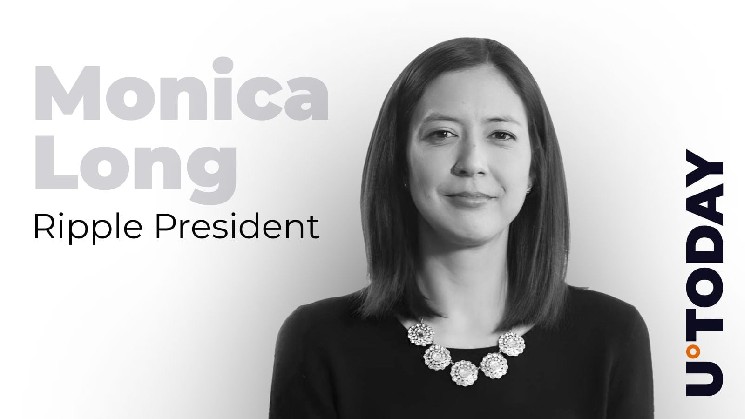
As Robinhood pushes into always-on markets through blockchain technology, the two crypto executives discussed the “unstoppable freight train” of tokenization and what was needed to build the future of global financial services on-chain.
Tokenization involves representing real-world or traditional financial assets as digital tokens on a blockchain, and it is attracting growing attention because it could enable assets to be issued, transferred, and managed through blockchain-based infrastructure.
Ripple CEO Brad Garlinghouse shares this same viewpoint, saying that as traditional and digital finance converge, market infrastructure is migrating to modern rails. Settlement is moving to real-time, 24/7 and tokenized assets can be traded, financed and used as collateral.
Ripple reported a banner year, with Long commenting on this milestone in an X post: “Our best year ever—approaching $900 million in annualized product revenue run rate exiting 2026, with customers and partners like Standard Chartered, DBS, HSBC, Robinhood, BNY and more using our blockchain infrastructure solutions built with XRPL for a variety of use cases to move, hold, tokenize and deploy assets.”
Robinhood teams up with Ripple
The conversation between the two crypto executives follows a major announcement ahead of the Swell event, which revealed a strategic partnership between Ripple and Robinhood to power the next generation of finance.
Robinhood will integrate Ripple Treasury to modernize and automate its global treasury operations, including cash and liquidity management, cash flow forecasting, payments, risk management, and intercompany netting. The financial services provider will leverage $RLUSD on the XRPL for institutional settlement, extending the stablecoin’s utility across Bitstamp by Robinhood’s growing institutional business.
$RLUSD has been listed on Robinhood Chain and Bitstamp by Robinhood and is expected to be available later this year in the Robinhood app.