Close Menu
  • Latest News
    • Bitcoin
    • Ethereum
    • Altcoins
    • Meme Coins
  • Tech
    • Blockchain
    • Security and Privacy
  • Web 3
    • Gaming
  • Legal
    • Legal and Regulatory
    • Adoption
  • Analysis
  • Learn
    • Education
    • Wallets and Exchanges
  • Tools
    • Market Overview
    • Exchange Tool
  • INFO@FREE.CC
What's Hot

US Military Tests Bitcoin Node for Cybersecurity Research

April 24, 2026

Tron’s Justin Sun sues Trump-linked World Liberty Financial over frozen assets

April 24, 2026

The question isn’t whether privacy. It’s what sort of privacy

April 24, 2026
Facebook X (Twitter) Instagram
  • Contact
  • Privacy Policy
  • Terms & Conditions
  • Disclosure
Facebook X (Twitter) Instagram
Free.cc (Free Cryptocurrency)Free.cc (Free Cryptocurrency)
  • Latest News
    1. Bitcoin
    2. Ethereum
    3. Altcoins
    4. Meme Coins
    5. View All

    US Military Tests Bitcoin Node for Cybersecurity Research

    April 24, 2026

    Crypto Veterans Flip Bullish on Bitcoin As BTC Trades at $78,000 – Here Are Their Price Targets

    April 24, 2026

    The market repriced DeFi in just 48 hours

    April 24, 2026

    Pantera Capital Urges Satsuma To Dump All Bitcoin As Shares Collapse 99%

    April 23, 2026

    Ethereum Near Key Zone After 36% Gain

    April 24, 2026

    Bitmine Stakes 61,232 ETH Worth $142M

    April 22, 2026

    Ethereum Targets Lower Range As Resistance Zone Comes Into Play

    April 22, 2026

    Ethereum Price Rises, But On-Chain Data Signals Weak Demand —What’s Next for ETH?

    April 21, 2026

    What’s Happening Between ETH And The Financial Systems?

    April 24, 2026

    Could Ripple XRP Power Cross-Border Payments? Russia’s Early Tests Suggest Potential

    April 23, 2026

    Crypto Billionaire Justin Sun Files Lawsuit Against Trump-Linked World Liberty Financial Over ‘Wrongfully’ Frozen Tokens

    April 23, 2026

    Ethereum Price Rejected Above $2,400, Upside Momentum Starts To Fade

    April 23, 2026

    Meme Coin Market Faces Imbalance as Supply Rises, Demand Falls

    April 4, 2026

    Crypto Interest Rising Toward Meme Coin Sector

    January 9, 2026

    Memes Market Cap Adds $10B in Days: Fresh Capital or Dead-Cat-Bounce?

    January 5, 2026

    Meme Coin Market Surges Past $45B as Shiba Inu, PEPE, BONK Stage 54% Price Pump

    January 4, 2026

    US Military Tests Bitcoin Node for Cybersecurity Research

    April 24, 2026

    Tron’s Justin Sun sues Trump-linked World Liberty Financial over frozen assets

    April 24, 2026

    The question isn’t whether privacy. It’s what sort of privacy

    April 24, 2026

    What’s Happening Between ETH And The Financial Systems?

    April 24, 2026
  • Tech
    1. Blockchain
    2. Security and Privacy
    3. View All

    The question isn’t whether privacy. It’s what sort of privacy

    April 24, 2026

    Ripple Joins BIS Taskforce For Cross Border Payments Expansion

    April 24, 2026

    ZetaChain Onboards Kimi and Alibaba Qwen as AI Models Go Cross-Chain

    April 23, 2026

    Monthly Active Addresses Explode – Analyzing the Surge in Layer-1 and Layer-2 Network Utility

    April 23, 2026

    How crypto futures markets are feeding ‘scam coin’ insider pump and dumps

    April 22, 2026

    North Korean Blamed for $290m KelpDAO Crypto Heist

    April 21, 2026

    Chainalysis Flags Critical Blind Spot in DeFi Security as $292M Exploit Bypasses Burn Verification

    April 21, 2026

    Ripple’s Schwartz Flags DeFi Bridge Trade-Offs After KelpDAO Incident

    April 21, 2026

    US Military Tests Bitcoin Node for Cybersecurity Research

    April 24, 2026

    Tron’s Justin Sun sues Trump-linked World Liberty Financial over frozen assets

    April 24, 2026

    The question isn’t whether privacy. It’s what sort of privacy

    April 24, 2026

    What’s Happening Between ETH And The Financial Systems?

    April 24, 2026
  • Web 3
    1. Gaming
    2. View All

    GameFi is effectively dead as 93% of projects collapse

    April 24, 2026

    More than 90% of Web3 games failed after $15 billion boom as gamers never showed up: Caladan

    April 23, 2026

    Carbon 2.0: How dMRV Is Turning Carbon Credits Into Data-Driven Assets

    April 23, 2026

    UXLINK Taps ANOME Protocol to Redefine Web3 Gaming, SocialFi, and NFTFi

    April 23, 2026

    US Military Tests Bitcoin Node for Cybersecurity Research

    April 24, 2026

    Tron’s Justin Sun sues Trump-linked World Liberty Financial over frozen assets

    April 24, 2026

    The question isn’t whether privacy. It’s what sort of privacy

    April 24, 2026

    What’s Happening Between ETH And The Financial Systems?

    April 24, 2026
  • Legal
    1. Legal and Regulatory
    2. Adoption
    3. View All

    Tron’s Justin Sun sues Trump-linked World Liberty Financial over frozen assets

    April 24, 2026

    New York sues Coinbase, Gemini over prediction market offerings

    April 24, 2026

    Explosive Class Action Alleges False Advertising and Market Manipulation in Crypto AI Project

    April 23, 2026

    US admiral who blasted crypto is now running a Bitcoin node for America’s security

    April 23, 2026

    Cardano development teams wants almost $50 million for Bitcoin DeFi and Vision 2030

    April 24, 2026

    Oil tanker attacked after falling for crypto scam granting fake Strait of Hormuz safe passage

    April 21, 2026

    Six years after “DeFi Summer” is the sun already setting on the decentralized finance revolution?

    April 20, 2026

    Bitcoin network activity just hit an 8-year low — has Wall Street replaced retail in the market?

    April 19, 2026

    US Military Tests Bitcoin Node for Cybersecurity Research

    April 24, 2026

    Tron’s Justin Sun sues Trump-linked World Liberty Financial over frozen assets

    April 24, 2026

    The question isn’t whether privacy. It’s what sort of privacy

    April 24, 2026

    What’s Happening Between ETH And The Financial Systems?

    April 24, 2026
  • Analysis

    SPK Price Explodes After Breakout, But Overbought Signals Flash Warning

    April 23, 2026

    US Bankers association push for 60 day pause to stop stablecoin rules going live

    April 23, 2026

    STABLE Price Jumps 15% After CEO Spotlight, But Is This Rally Sustainable?

    April 23, 2026

    ZEC Price Prediction: Zcash Retests Key Level

    April 23, 2026

    Monero Price Analysis: XMR Presses $400 Resistance

    April 23, 2026
  • Learn
    1. Education
    2. Wallets and Exchanges
    3. View All

    What’s on the Ethereum Roadmap: Glamsterdam, Hegota and Beyond

    March 30, 2026

    What Is Bluesky? The Decentralized Social Media Rival to Elon Musk’s X

    March 27, 2026

    What Is Strategy (MSTR)? The Bitcoin Treasury Company

    February 21, 2026

    What Are Prediction Markets? How Polymarket, Kalshi and Myriad Work

    February 13, 2026

    Over 80% of Bitcoin ETF assets hit Coinbase custody choke point with $74B at risk

    April 13, 2026

    FTX begins $2.2B payout. Can Bitcoin absorb another liquidity test?

    March 31, 2026

    BlinkEx investment platform infrastructure – matching, risk controls, reliability

    March 21, 2026

    Over $2B in “lost” Bitcoin to hit markets this month creating sell pressure within fragile $67k–$74k range

    March 20, 2026

    US Military Tests Bitcoin Node for Cybersecurity Research

    April 24, 2026

    Tron’s Justin Sun sues Trump-linked World Liberty Financial over frozen assets

    April 24, 2026

    The question isn’t whether privacy. It’s what sort of privacy

    April 24, 2026

    What’s Happening Between ETH And The Financial Systems?

    April 24, 2026
  • Tools
    • Market Overview
    • Exchange Tool
  • INFO@FREE.CC
Free.cc (Free Cryptocurrency)Free.cc (Free Cryptocurrency)
Home»Legal and Regulatory»Kraken just got rare Federal Reserve access in a move crypto firms have chased for years
Kraken just got rare Federal Reserve access in a move crypto firms have chased for years
Legal and Regulatory

Kraken just got rare Federal Reserve access in a move crypto firms have chased for years

March 5, 2026No Comments8 Mins Read
Share
Facebook Twitter LinkedIn Pinterest Email

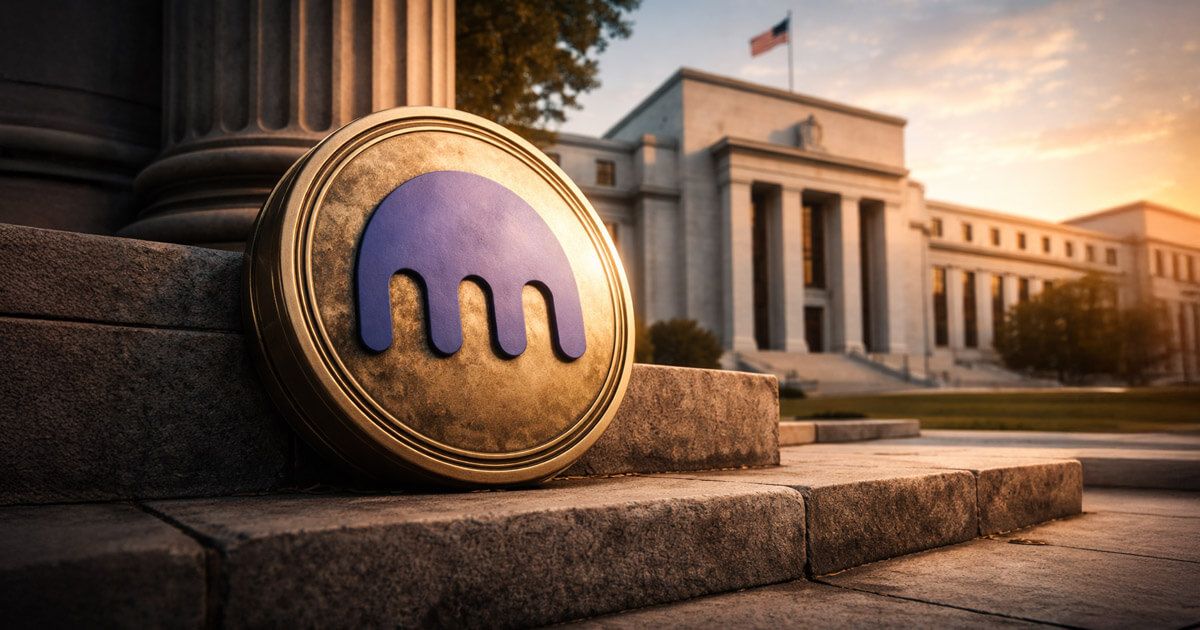
Kraken has cleared a regulatory hurdle that crypto firms have chased for years: direct access to the Federal Reserve’s core payments infrastructure.

On March 4, the exchange said its Wyoming-chartered bank, Kraken Financial, has been granted a Federal Reserve master account, allowing it to settle US dollar payments directly over Fed rails instead of routing transfers through sponsor banks.

The US Fed confirmed that the crypto firm’s bank was granted approval as a Tier 3 entity with a limited-purpose account authorized for an initial one-year term.

This approval gives the digital-asset industry a practical example of what more direct access to the US payments system could look like.

It also arrives at a moment when the Fed is trying to define a narrower form of central bank access, one that could give certain institutions the ability to connect to key settlement services without extending the full package of benefits traditionally associated with Fed accounts.

Kansas City Fed President Jeff Schmid said:

“As we know, the payments landscape is actively evolving. Throughout this transformation, the integrity and stability of the US payments system remain our priority.”

That is why the decision matters beyond one crypto company.

Kraken’s account appears to be an early real-world test of a payments-focused model that policymakers in Washington have been debating, one designed to separate settlement access from the broader public backstops tied to the banking system.

A pilot inside a broader policy shift

For decades, Fed master accounts have been the gateway to settlement in central bank money, final, irreversible, and highly prized by large financial institutions.

Federal Reserve to finalize guidelines on crypto access to master account
Related Reading

Federal Reserve to finalize guidelines on crypto access to master account

The Fed Reserve said it will issue new guidelines to review master account applications, which will ensure transparent and consistent decisions.

Aug 16, 2022
·
Oluwapelumi Adejumo

That status has made them one of the most consequential forms of financial access in the US system.

In recent years, however, new charter types such as Wyoming’s Special Purpose Depository Institutions, or SPDIs, and other fintech-like banking models have forced regulators into a harder conversation.

Should nontraditional institutions be able to settle directly at the Fed? If so, how far should that access extend?

See also  US President Donald Trump Speaks About Tariffs and the Supreme Court Ruling!

The Fed’s answer has been moving toward a narrower framework rather than a broad opening.

In December 2025, the central bank formally asked for public comment on a prototype “Payment Account,” a concept distinct from a full master account and designed to provide access only to a subset of payment services.

Under that proposal, the Fed would offer a tightly limited package with no interest paid on balances. There would be no access to the discount window, no intraday credit, and built-in controls to prevent overdrafts.

The prototype would also impose an overnight balance cap, the lesser of $500 million and 10% of total assets. Services would be restricted to certain settlement rails, including Fedwire Funds and FedNow, while excluding others such as FedACH.

That design reflects a broader regulatory goal. The Fed appears to be trying to preserve the efficiency benefits of direct settlement access while limiting the ways nontraditional institutions can tap into the central bank safety net.

In public remarks, Fed Governor Christopher Waller has said streamlined payment accounts should be operational by late 2026, underscoring that the central bank is thinking about how to modernize access without expanding risk in ways that resemble shadow banking.

Kraken’s approval fits neatly into that policy backdrop. Even if the account is formally classified as a master account, the one-year, limited-purpose structure makes it look closer to a controlled policy experiment than a full embrace of open access.

Why crypto firms care about direct settlement

For most crypto firms, dollar payments still depend on a small number of partner banks willing to provide access to the broader financial system.

That arrangement creates a structural weakness. When sponsor banks change their risk appetite, face regulatory pressure, or decide to reduce exposure to crypto clients, exchanges and stablecoin firms can lose key payment channels even when customer demand remains strong.

That has happened repeatedly in the industry, particularly during periods of regulatory scrutiny or banking stress. The result has been a system in which many crypto firms remain dependent on intermediaries for basic dollar movement.

Direct settlement could reduce that reliance.

For Kraken, access to Fed rails could improve the speed, resilience, and predictability of dollar payments.

See also  Washington has started selecting which crypto firms control custody at a national level

It could reduce the operational friction of routing transfers through partner banks, and it could give the company greater control over a part of the user experience that has often been vulnerable to external disruptions.

Arjun Sethi, Co-CEO of Payward and Kraken, said:

“This architecture could enable atomic settlement between fiat and crypto, institutional-grade cash management integrated with digital asset custody, and programmable financial products built within a fully regulated framework. This is what it looks like when crypto infrastructure matures into core financial infrastructure.”

For the broader industry, the development introduces a possible new divide.

Firms that can meet bank-like standards for regulation, governance, and supervision may be able to internalize more of their payments stack.

However, others that cannot will likely remain reliant on sponsor banks and exposed to the same bottlenecks that have shaped crypto banking access in the United States.

Meanwhile, Kraken’s path also highlights how regulation itself can become a competitive advantage.

The company pursued access through a Wyoming SPDI, a charter type the state describes as fully reserved and not permitted to lend customers’ fiat deposits as traditional fractional-reserve banks do.

That structure may make the model easier for regulators to evaluate because it reduces some of the classic maturity-mismatch and bank-run risks associated with conventional banking.

At the same time, it raises the threshold for the rest of the industry. Many crypto firms are unlikely to pursue bank-style charters. And even among those that do, there is no guarantee that direct Fed access will follow.

The likely paths from here

The Fed has said its Payment Account prototype does not change legal eligibility requirements.

That means the most expansive scenario, in which ordinary fintech companies suddenly gain direct access to the central bank, remains unlikely.

So, a narrower outcome is more plausible.

One possibility is that Kraken remains an exception. In that scenario, the Fed treats the arrangement as a contained test case, uses it to assess controls and operational risks, and then proceeds cautiously or delays additional approvals due to supervisory or political concerns.

A second possibility is the development of a small cluster of institutions with similar access. That group could include crypto custody banks, trust banks, or narrowly focused payments institutions with bank-like governance and legal eligibility.

See also  Circle weighs in on GENIUS Act implementation: ‘Simple, strong rules’

Under that model, the sponsor-bank bottleneck would ease, but only for firms willing and able to operate within a highly regulated structure.

A third possibility is broader standardization after 2026 if the Fed formally launches payment accounts on the timeline Waller has outlined.

If that happens, a payments-only access layer could become a more durable option for eligible institutions seeking connectivity to services such as Fedwire or FedNow.

Even then, access would likely remain limited to firms that meet strict regulatory and compliance standards.

What the industry should watch

The next phase of this development is likely to be less about the approval process and more about how the arrangement functions in practice.

For Kraken, the first question is whether the limited-purpose, one-year approval is renewed. The second is whether the scope of the account eventually aligns more clearly with the Fed’s emerging payments-only framework or expands beyond it.

For the industry, the key issue is whether the model can be replicated.

If other special-purpose or narrowly chartered institutions receive comparable access, that would suggest the Fed is prepared to move beyond a single-company case and develop a more systematic approach.

That is what makes Kraken’s approval important.

It is not only a corporate milestone for a crypto exchange seeking closer access to the center of the dollar system. It is also a policy experiment with implications for the future design of US payments access.

If the arrangement works operationally and satisfies supervisors, it could strengthen the case for allowing a narrow class of regulated, payments-focused institutions to settle more directly over Fed rails.

If it does not, it could reinforce the argument that access to the central bank should remain tightly linked to traditional banking.

Either way, the issue that crypto firms have debated for years is no longer abstract. It is now being tested inside the machinery of the US payments system.

The post Kraken just got rare Federal Reserve access in a move crypto firms have chased for years appeared first on CryptoSlate.

access chased Crypto Federal Firms Kraken Move Rare reserve Years
Share. Facebook Twitter Pinterest LinkedIn Tumblr Email

Related Posts

Tron’s Justin Sun sues Trump-linked World Liberty Financial over frozen assets

April 24, 2026

Crypto Veterans Flip Bullish on Bitcoin As BTC Trades at $78,000 – Here Are Their Price Targets

April 24, 2026

New York sues Coinbase, Gemini over prediction market offerings

April 24, 2026

Explosive Class Action Alleges False Advertising and Market Manipulation in Crypto AI Project

April 23, 2026
Add A Comment
Leave A Reply Cancel Reply

Top Posts

Bitcoin Hitting $76,000—Is This a ‘Dead-Cat-Bounce’ Setup to Drag the BTC Price to $50K?

March 18, 2026

Bitcoin price has never ended a year higher after a start this bad — can 2026 break the pattern?

March 28, 2026

Stay ahead with the latest crypto news, market updates, blockchain insights, and trends. Your trusted source for everything happening in the digital asset world.


We're social. Connect with us:

Facebook X (Twitter) Instagram Pinterest YouTube
Top Insights

US Military Tests Bitcoin Node for Cybersecurity Research

April 24, 2026

Tron’s Justin Sun sues Trump-linked World Liberty Financial over frozen assets

April 24, 2026

The question isn’t whether privacy. It’s what sort of privacy

April 24, 2026
Get Informed

Subscribe to Updates

Get the latest creative news From Free.cc directly in your Inbox!

  • Contact
  • Privacy Policy
  • Terms & Conditions
  • Disclosure
© 2026 free.cc - All rights reserved.

Type above and press Enter to search. Press Esc to cancel.