
Hyperliquid’s [HYPE] stablecoin market is becoming increasingly concentrated as liquidity continues shifting toward USD Coin [USDC] instead of the native USDH.
The trend reflects traders’ preference for deeper liquidity and established settlement assets over newer DeFi-native stablecoins.
Hyperliquid Foundation has put out roughly $10 million in grants to assist in migration costs and ensure that each of its protocols continues to run smoothly. Those are HIP-1, HIP-3, HyperEVM protocols, bridges, and native markets.
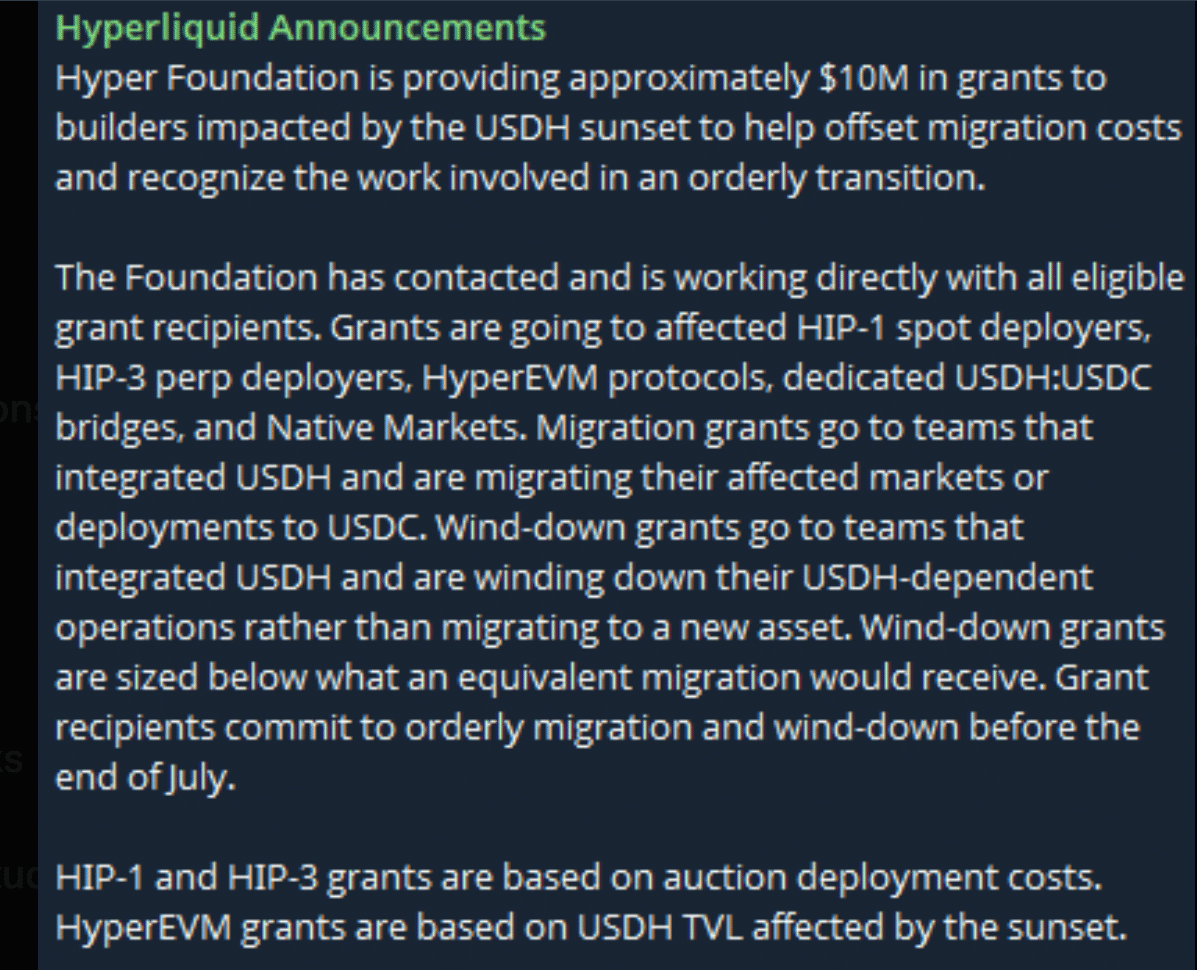
In addition, users can swap their USDH for USDC through the same migration paths, reducing friction during the transition.
According to DeFiLlama, USDC now dominates Hyperliquid’s stablecoin liquidity.
In fact, USDC accounts for $5.74 billion of Hyperliquid’s $5.96 billion stablecoin pool. Conversely, USDH holdings have fallen sharply to just $20 million.
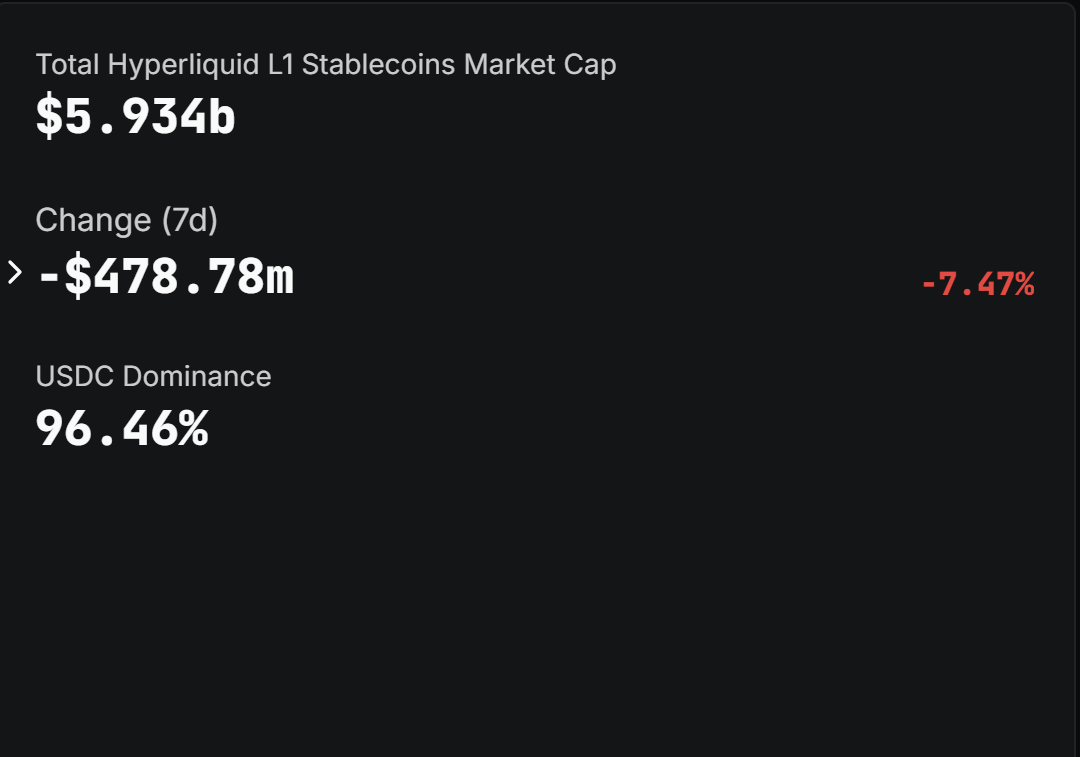
Meanwhile, Tether [USDT] trails at around $155 million. These figures clearly indicate that network effects are supporting the growing dominance of USDC.
This imbalance suggests network effects are reinforcing USDC’s leadership, making it the preferred collateral across spot and perpetual markets. If institutional activity continues expanding, USDC’s dominance could strengthen further.
Otherwise, USDH would require meaningful utility improvements to regain market share.
Protocol activity reinforces HYPE utility
That orderly migration is already translating into stronger on-chain activity as Hyperliquid continues expanding around its USDC-first model. The shift did not disrupt the user participation.
It allowed for a sustained level of approximately 6,932 Daily Active Addresses and over 315,000 Daily Transactions, according to DeFiLlama data.
Meanwhile, Perpetual Trading Volume remained near $2.8 billion, reinforcing Hyperliquid’s leadership in on-chain derivatives.
Growing activity also generates Annualized Fee Revenue in the hundreds of millions, creating recurring value for the ecosystem. Those fees increasingly flow into HYPE through staking, priority fees, buybacks, and incentives instead of relying mainly on speculation.
If trading activity and USDC liquidity continue growing together, HYPE’s long-term value capture could strengthen further. Otherwise, slower network activity may gradually reduce revenue growth.