Close Menu
  • Latest News
    • Bitcoin
    • Ethereum
    • Altcoins
    • Meme Coins
  • Tech
    • Blockchain
    • Security and Privacy
  • Web 3
    • Gaming
  • Legal
    • Legal and Regulatory
    • Adoption
  • Analysis
  • Learn
    • Education
    • Wallets and Exchanges
  • Tools
    • Market Overview
    • Exchange Tool
What's Hot

Malaysia central bank launches DLT platform for tokenized bonds

October 23, 2026

Bitcoin Core Changes Security Policy as AI Makes Vulnerabilities Easier to Find

October 23, 2026

Robinhood (HOOD) sees surge in Bitcoin (BTC), Gold prediction markets as traders move beyond sports

October 23, 2026
Facebook X (Twitter) Instagram
  • Contact
  • Privacy Policy
  • Terms & Conditions
  • Disclosure
Facebook X (Twitter) Instagram
Free.cc (Free Cryptocurrency)Free.cc (Free Cryptocurrency)
  • Latest News
    1. Bitcoin
    2. Ethereum
    3. Altcoins
    4. Meme Coins
    5. View All

    Robinhood (HOOD) sees surge in Bitcoin (BTC), Gold prediction markets as traders move beyond sports

    October 23, 2026

    AI Risk Could Force Bitcoin Drawdown To $10,000

    October 23, 2026

    Bitcoin Open Interest jumps 8% – Why BTC price faces liquidation risks

    October 23, 2026

    Bitcoin, Hyperliquid (HYPE) and Zcash (ZEC) Price Ready to Bounce Back

    October 23, 2026

    Ethereum’s Glamsterdam testnet hits setback – Why Solana remains ahead

    October 23, 2026

    ETH Slips Below $2,400 as ETF Outflows and Market Sell-Off Pressure Bulls

    October 22, 2026

    Ethereum: Can $61M in whale withdrawals help ETH bulls regain control?

    October 22, 2026

    Ethereum staking hits record highs – So why are yields falling?

    October 22, 2026

    Ethereum Delays Glamsterdam Test On Hoodi Over Smart Contract Compatibility Questions

    October 23, 2026

    Cosmos crypto defies market weakness – Can ATOM rally toward $2?

    October 23, 2026

    Chainlink’s $1.02M whale buy: An early Q4 signal or an isolated bet?

    October 23, 2026

    Zcash Foundation Details Zebra Sync Fixes Ahead Of NU7 Release

    October 23, 2026

    Top 5 Memecoins to Watch in 2026: Hype, Utility, or Growth?

    October 14, 2026

    Did Jean Phil Go Viral First — or Was the Viral Persona Built to Launch a Memecoin?

    October 5, 2026

    Thinking Cat Gains Momentum After CASHCAT’s Breakout

    August 12, 2026

    What Tokens Could He Target?

    July 30, 2026

    Malaysia central bank launches DLT platform for tokenized bonds

    October 23, 2026

    Bitcoin Core Changes Security Policy as AI Makes Vulnerabilities Easier to Find

    October 23, 2026

    Robinhood (HOOD) sees surge in Bitcoin (BTC), Gold prediction markets as traders move beyond sports

    October 23, 2026

    Polymarket US Sues Ohio to Block Sports-Contract Crackdown

    October 23, 2026
  • Tech
    1. Blockchain
    2. Security and Privacy
    3. View All

    Malaysia central bank launches DLT platform for tokenized bonds

    October 23, 2026

    Pyth Pro Powers New Loan Pools with WIF, PUMP, and SOL

    October 23, 2026

    neox-rs v2.7.0 merges 185 Reth upstream commits, closes nine vulnerabilities

    October 23, 2026

    NeoRedPill launches Telegram wallet bot with Neo N3 wallets, cross-chain bridging

    October 23, 2026

    Bitcoin Core Changes Security Policy as AI Makes Vulnerabilities Easier to Find

    October 23, 2026

    Coinbase, Bitgo Say Unaffected by PHP Flaw; Binance’s CZ Urges Caution

    October 22, 2026

    Crypto Thieves Hijack Ngrave Alerts and Walk Away With $2.56M

    October 21, 2026

    Zcash Proposes New Privacy Layer to Guard Swaps From Quantum Risks

    October 20, 2026

    Malaysia central bank launches DLT platform for tokenized bonds

    October 23, 2026

    Bitcoin Core Changes Security Policy as AI Makes Vulnerabilities Easier to Find

    October 23, 2026

    Robinhood (HOOD) sees surge in Bitcoin (BTC), Gold prediction markets as traders move beyond sports

    October 23, 2026

    Polymarket US Sues Ohio to Block Sports-Contract Crackdown

    October 23, 2026
  • Web 3
    1. Gaming
    2. View All

    Top 12 NFT games every player should know about in August 2026

    September 22, 2026

    GameShame Studios founder details Raijin Protocol’s roadmap in NeoPod’s sixth AMA

    September 22, 2026

    Proof of Play to shut down after blockchain gaming thesis falls short

    September 22, 2026

    How BC.GAME is turning players into stakeholders

    September 22, 2026

    Malaysia central bank launches DLT platform for tokenized bonds

    October 23, 2026

    Bitcoin Core Changes Security Policy as AI Makes Vulnerabilities Easier to Find

    October 23, 2026

    Robinhood (HOOD) sees surge in Bitcoin (BTC), Gold prediction markets as traders move beyond sports

    October 23, 2026

    Polymarket US Sues Ohio to Block Sports-Contract Crackdown

    October 23, 2026
  • Legal
    1. Legal and Regulatory
    2. Adoption
    3. View All

    Polymarket US Sues Ohio to Block Sports-Contract Crackdown

    October 23, 2026

    Crypto PACs spend big on Ohio Senate race

    October 23, 2026

    Stand With Crypto Advances GENIUS Act Implementation

    October 23, 2026

    Digital Chamber Celebrates GENIUS Act Finalization, A Win

    October 23, 2026

    Germany’s main savings bank network launches Bitcoin trading

    October 21, 2026

    Two firms control corporate Bitcoin buys, even as business adoption broadens

    October 16, 2026

    AI agents keep coming back for crypto as x402 wallet refill rate surges to 89%

    October 15, 2026

    Interactive Brokers moves into Ethereum’s $110 billion staking market as institutional demand accelerates

    October 14, 2026

    Malaysia central bank launches DLT platform for tokenized bonds

    October 23, 2026

    Bitcoin Core Changes Security Policy as AI Makes Vulnerabilities Easier to Find

    October 23, 2026

    Robinhood (HOOD) sees surge in Bitcoin (BTC), Gold prediction markets as traders move beyond sports

    October 23, 2026

    Polymarket US Sues Ohio to Block Sports-Contract Crackdown

    October 23, 2026
  • Analysis

    Can Rising Social Dominance Push PEPE Coin Higher?

    October 23, 2026

    Fake election polls expose a Kalshi loophole that could leave traders paying for fraud

    October 23, 2026

    Evernorth XRP Holdings to Target Higher XRP Per Share, CEO Says

    October 23, 2026

    The Crucial $245 Level That Decides Bittensor’s Next Move

    October 23, 2026

    Can Fibre Push TIA Toward $9?

    October 22, 2026
  • Learn
    1. Education
    2. Wallets and Exchanges
    3. View All

    What Is Robinhood Chain? The Ethereum Layer-2 Network for Tokenized Stocks

    July 12, 2026

    What Is BChat? The Decentralized Messaging App Built for Privacy

    June 2, 2026

    What Is an AI Prompt Injection Attack? The Hidden Threat Hijacking Your Chatbots

    May 31, 2026

    What Is AI Jailbreaking? A Beginner’s Guide to the Cat-and-Mouse Game Behind Every Chatbot

    May 17, 2026

    Coinbase Ireland’s cash safeguards fell €5 million short before 2024 fix

    October 23, 2026

    SideSwap reopens Bitcoin swaps while Liquid reserves stay locked

    October 22, 2026

    Binance bStocks collateral pricing moves to 24/7

    October 21, 2026

    Binance Pool shuts on November 10, with record access ending two weeks later

    October 18, 2026

    Malaysia central bank launches DLT platform for tokenized bonds

    October 23, 2026

    Bitcoin Core Changes Security Policy as AI Makes Vulnerabilities Easier to Find

    October 23, 2026

    Robinhood (HOOD) sees surge in Bitcoin (BTC), Gold prediction markets as traders move beyond sports

    October 23, 2026

    Polymarket US Sues Ohio to Block Sports-Contract Crackdown

    October 23, 2026
  • Tools
    • Market Overview
    • Exchange Tool
Free.cc (Free Cryptocurrency)Free.cc (Free Cryptocurrency)
Home»Analysis»Ethereum’s privacy push faces a 12-month deadline as markets reward privacy-first assets
Analysis

Ethereum’s privacy push faces a 12-month deadline as markets reward privacy-first assets

May 27, 2026No Comments8 Mins Read
Share
Facebook Twitter LinkedIn Pinterest Email

Ethereum developers are racing to bring native privacy to the world’s largest smart contract blockchain as investors warn that delays could weaken ETH’s claim as crypto’s default settlement layer.

The pressure has intensified as the market rotates toward privacy-focused assets while Ethereum struggles to hold investor attention amid its current wave of FUD and questions over its identity.

ETH has fallen roughly 30% this year and recently traded near $2,000, even as Zcash has registered double-digit gains during the same period.

That divergence has turned privacy from a long-running cypherpunk goal into a product deadline for Ethereum.

The network still dominates stablecoin settlement, tokenization, decentralized finance, and Layer 2 activity, but its default transparency remains a problem for users and institutions that do not want balances, counterparties, or transaction histories visible in real time.

Tom Dunleavy, head of venture at Varys Capital, said Ethereum’s privacy push is bullish, but only if developers move quickly.

According to him:

“Super bullish on the privacy push for Ethereum, but it needs to happen in a reasonable, under-12-month timeframe, or it effectively doesn’t matter. Ethereum now more than ever is in a race on the product side, and its competition is extremely well-funded, motivated, and has all of the connections Ethereum lacks. Ship or die.”

The warning comes as Ethereum’s market position is already under pressure. GSR Research said blockchain revenue is shifting toward rival networks such as Solana, Tron, and Hyperliquid, while the ETH-to-Bitcoin ratio recently hit its lowest level since mid-2025.
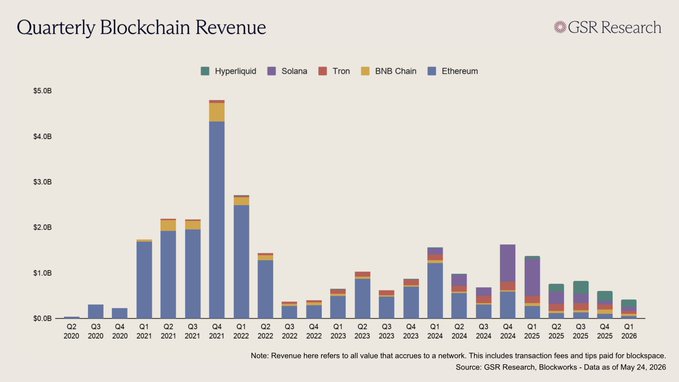
Quarterly Blockchain Revenue
Quarterly Blockchain Revenue (Source: GSR Research)

This trend is also reflected in CryptoQuant data, which points to a sharp retreat among retail and mid-tier Ethereum holders.

According to the firm, wallets holding between 100 and 1,000 ETH have nearly halved their balances over the past three years, falling from a 2023 peak of 16.2 million ETH to roughly 8.75 million ETH today.

Larger holders have also begun reducing exposure. Wallets holding between 1,000 and 10,000 ETH, which helped drive Ethereum’s 2024 rally, reportedly started trimming their positions late last year.
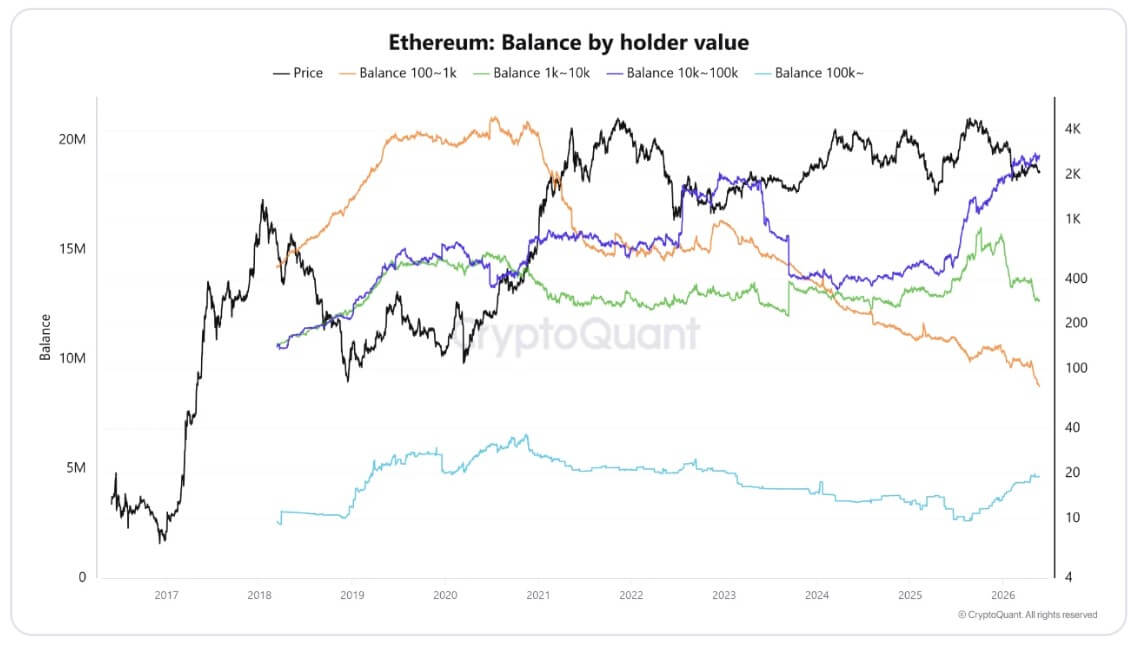
Ethereum Holders Balances
Ethereum Holders’ Balances (Source: CryptoQuant)

Those outflows cannot be directly attributed to demand for privacy. However, they add pressure to Ethereum’s broader narrative at a time when privacy-focused assets are gaining market attention, and investors are questioning what could restore ETH’s momentum.

How privacy became a crypto market trade

The push for Ethereum privacy coincides with a broader market thesis that financial confidentiality will dictate the next major cryptocurrency cycle.

See also  After Kalshi appeal, prediction markets fight could head to US Supreme Court

Grayscale Research recently published an analysis arguing that the digital asset sector is on the cusp of a “third wave” of widespread public attention regarding financial privacy.
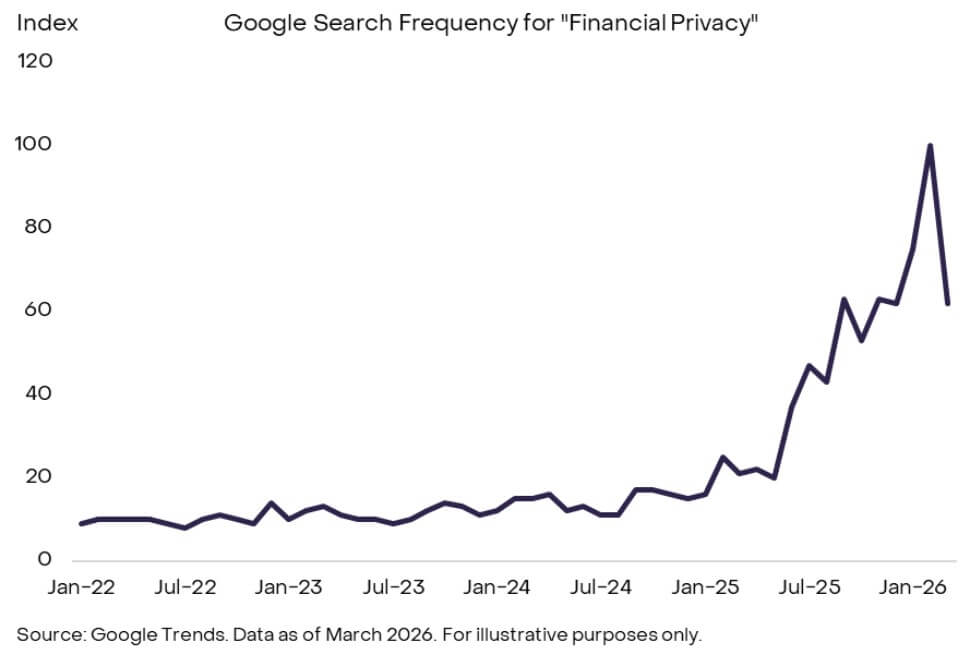
Financial Privacy
Financial Privacy Search on Google (Source: Grayscale)

According to the firm, this shift is driven by the proliferation of stablecoins and blockchain-based applications, as well as the rapid advancement of artificial intelligence. These AI tools, Grayscale warned, introduce new and highly sophisticated methods of financial surveillance.

On public blockchains, balances, counterparties, and transaction histories can remain visible indefinitely.

Grayscale researchers emphasized that the demand for privacy is not solely limited to users seeking full anonymity. Instead, it reflects ordinary preferences for confidentiality in economic life.

Individuals generally do not want their spending history exposed by default, while businesses require confidentiality for supplier payments, payroll, and treasury flows. Institutions similarly view the real-time mapping of their wallet structures as a non-starter.

However, implementing these features involves significant commercial tradeoffs.

Grayscale noted that stronger privacy protections have historically led to weaker market distribution, creating friction with centralized exchange support, regulatory compliance, and wallet integration.

Despite these hurdles, Grayscale Investments Chairman Barry Silbert echoed the report’s sentiment, declaring that the “privacy era” in digital assets has officially commenced.
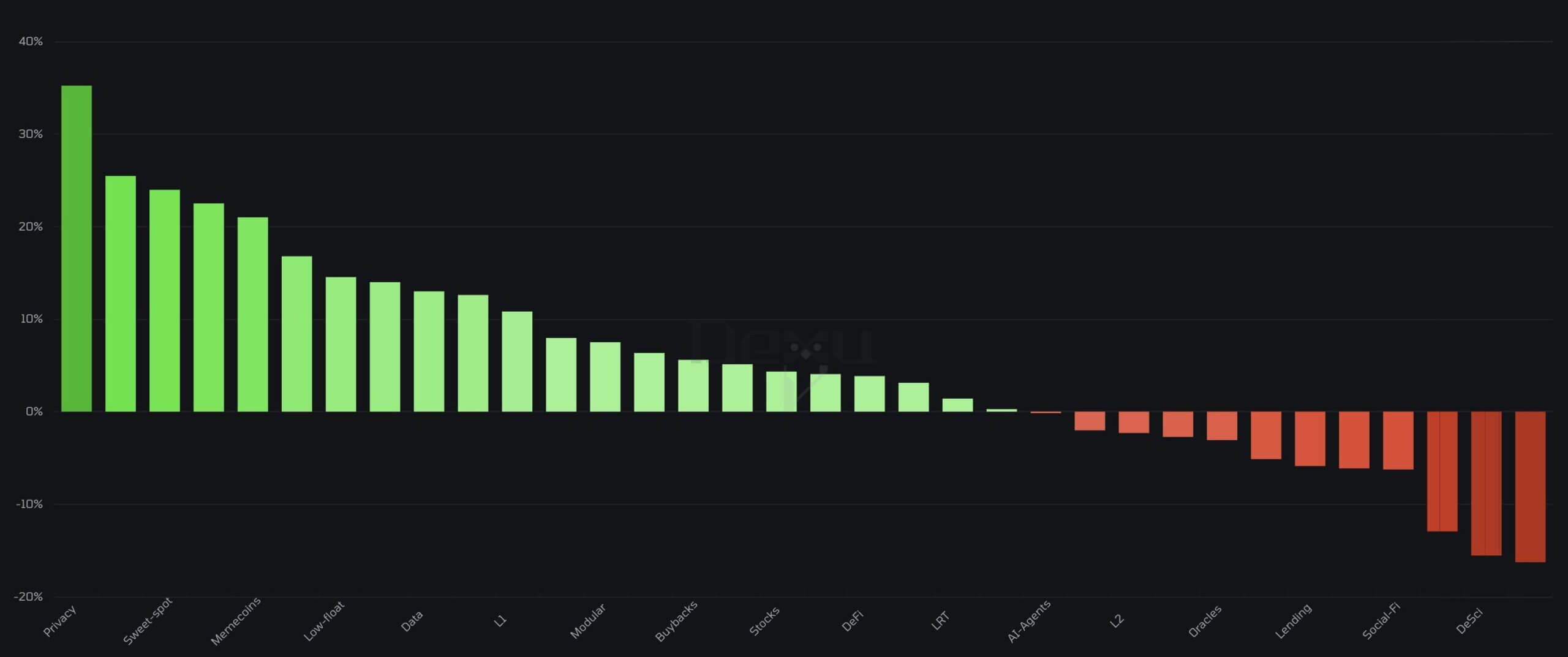
Privacy Coins
Privacy Coins Dominate Crypto Industry Meta

This narrative shift is already evident in the crypto market, where Zcash’s market capitalization has surged by over 900% in the past year, approaching nearly $10 billion. Even Monero, which frequently faces regulatory scrutiny over its use in illicit markets, has doubled in value.

Ethereum co-founder makes play for privacy

Over the past weeks, Ethereum co-founder Vitalik Buterin has pushed the issue back to the front of the network’s technical agenda, calling for developers to “accelerate the cypherpunk privacy reality” after years of privacy research and debate.

His near-term roadmap focuses on three areas, including account abstraction and FOCIL, keyed nonces, and access-layer privacy work.

Together, they are designed to make private Ethereum activity harder to censor, harder to link, and less dependent on trusted infrastructure.

FOCIL, short for fork-choice-enforced inclusion lists, is designed to address transaction censorship.

Today, transactions can sit in a public mempool before they are finalized, giving block builders and other intermediaries visibility into pending activity. That creates openings for exclusion, front-running, and surveillance.

See also  Bitcoin (BTC) faces an 'identity crisis' and DeFi devs need to stop acting like tech bros

FOCIL would allow a committee of validators to propose lists of transactions that block builders are expected to include.

If builders ignore those transactions, their blocks may be rejected by the network. The mechanism is designed to make it harder to censor transactions, including private transfers, before they reach the chain.

Account abstraction addresses another weakness in Ethereum’s current design. Most users still rely on externally owned accounts controlled by a single private key.

Account abstraction allows accounts to behave more like programmable smart contracts, supporting features such as social recovery, multisignature approval, and fee sponsorship.

CryptoSlate Daily Brief

Daily signals, zero noise.

Market-moving headlines and context delivered every morning in one tight read.

5-minute digest 100k+ readers

Free. No spam. Unsubscribe any time.

Whoops, looks like there was a problem. Please try again.

You’re subscribed. Welcome aboard.

For privacy, that flexibility matters because wallet activity can be structured to reduce obvious behavioral patterns. It also makes it easier for applications or relayers to pay fees on behalf of users without forcing every action through the same exposed account model.

Keyed nonces target a narrower but important metadata leak. Ethereum accounts currently use a single counter, known as a nonce, to prevent the same transaction from being replayed. Because that counter increases in sequence, observers can use it to link transactions that might otherwise appear separate.

The proposed fix splits the account counter into different replay domains. That would allow separate types of activity to use different nonce keys, making it harder to link private actions back to the same account through simple sequencing.

Lastly, the most ambitious part of that wider push may be Kohaku, an Ethereum Foundation-backed open-source toolkit designed to bring privacy features into the wallets people already use. The project goes beyond private transfers by targeting the access-layer leaks that expose users before a transaction even settles.

Even if transactions become private, wallets can still leak information when they query the blockchain. Most wallets rely on remote procedure call providers to check balances, read smart contracts, and submit transactions, giving those providers visibility into a user’s IP address, wallet identity, and requested data.

Kohaku is designed to reduce that exposure by giving wallet developers privacy and security components that can be integrated into existing products. Its roadmap includes private sending, safer key management, private reads, and a reference wallet for developers and power users.

See also  Bitcoin takes bigger treasury role in Cardano Foundation assets

The toolkit can also connect wallets to shielded protocols such as Railgun, which is already live on Ethereum, and Privacy Pools, which remains in development.

Ultimately, its goal is to give users private transfers and DeFi access without forcing them to adopt niche tools or move away from wallets they already use.

Ethereum researcher soispoke.eth said the combined package could enable the blockchain network to offer native, trustless, and censorship-resistant private transactions as soon as next year if the proposals ship together.

Why ETH needs to ship privacy features

Crypto lawyer Gabriel Shapiro said these privacy works could help Ethereum compete for institutional tokenization because enterprises need confidentiality for tokenized securities, treasury flows, and DeFi interactions.

That argument goes to the center of Ethereum’s investment case. The network’s advantage has long been its breadth: stablecoins, lending markets, decentralized exchanges, tokenized assets, Layer 2 networks, and developer infrastructure.

However, this breadth alone may not be enough if every financial interaction remains visible by default.

For institutions, public settlement without privacy can be a liability. A company does not want competitors mapping its suppliers. A fund does not want trading routes exposed. A bank does not want clients’ tokenized securities activity to be visible on a public ledger.

Ethereum has the infrastructure to serve those users, but the market is pressing for proof that privacy can reach wallet-level products rather than remain a research agenda.

That is why Dunleavy’s 12-month warning lands with force: Zcash already has the clearest privacy narrative, and Monero remains a major privacy asset despite exchange and regulatory pressure.

At the same time, rival blockchain networks, including Solana, Tron, and Hyperliquid, are capturing market attention while Bitcoin still commands the strongest institutional demand.

Still, Ethereum has the deepest application base in crypto with over $350 billion in assets tokenized on the blockchain, but the market is no longer treating that lead as permanent.

If Hegota introduces usable privacy products within the next year, the feature could strengthen ETH’s role as a settlement infrastructure for both individuals and institutions.

However, if those upgrades remain technical promises, the current privacy trade may continue rewarding assets that made confidentiality their core feature from the start.

12Month assets Deadline Ethereums faces markets Privacy PrivacyFirst Push Reward
Share. Facebook Twitter Pinterest LinkedIn Tumblr Email

Related Posts

Robinhood (HOOD) sees surge in Bitcoin (BTC), Gold prediction markets as traders move beyond sports

October 23, 2026

Ethereum’s Glamsterdam testnet hits setback – Why Solana remains ahead

October 23, 2026

Can Rising Social Dominance Push PEPE Coin Higher?

October 23, 2026

Fake election polls expose a Kalshi loophole that could leave traders paying for fraud

October 23, 2026
Add A Comment
Leave A Reply Cancel Reply

Top Posts

Bitcoin Targets $80,000, Ethereum Eyes $2,700 and XRP Could Hit $1.55 Says Chart Analyst

April 15, 2026

Scammer Loses $4,800,000 in Bitcoin as Thieves Drain Ledger Wallets Holding ‘Task Scam’ Proceeds

October 18, 2026

Stay ahead with the latest crypto news, market updates, blockchain insights, and trends. Your trusted source for everything happening in the digital asset world.


We're social. Connect with us:

Facebook X (Twitter) Instagram Pinterest YouTube
Top Insights

Malaysia central bank launches DLT platform for tokenized bonds

October 23, 2026

Bitcoin Core Changes Security Policy as AI Makes Vulnerabilities Easier to Find

October 23, 2026

Robinhood (HOOD) sees surge in Bitcoin (BTC), Gold prediction markets as traders move beyond sports

October 23, 2026
Get Informed

Subscribe to Updates

Get the latest creative news From Free.cc directly in your Inbox!

  • Contact
  • Privacy Policy
  • Terms & Conditions
  • Disclosure
© 2026 free.cc - All rights reserved.

Type above and press Enter to search. Press Esc to cancel.