

Ethereum entered the U.S. inflation release with bullish momentum already building as buyers defended higher lows following its recovery from June’s weakness. That momentum strengthened after headline CPI slowed to 3.5%, below the 3.8% forecast and 4.2% prior reading.
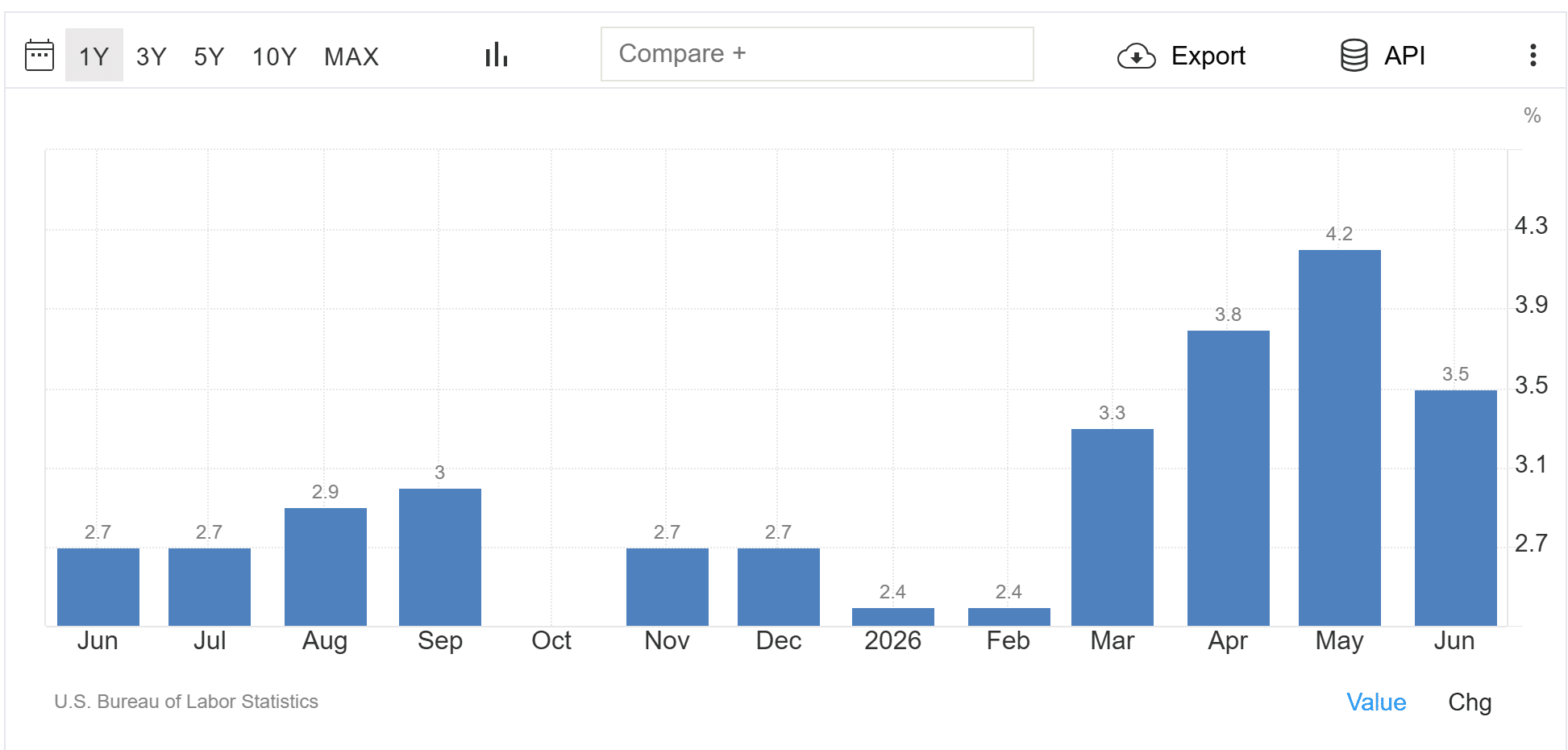
The data weakened the Dollar Index and eased Treasury yields, encouraging fresh demand for risk assets. Binance then recorded more than $1.2 billion in Ethereum [ETH] taker buy volume, accelerating the existing advance and lifting Ethereum toward the $1,895 zone.
Rather than sparking a new trend, the inflation surprise reinforced the ongoing recovery, suggesting macro conditions strengthened buyers’ conviction even as Bitcoin continued attracting the larger share of risk capital.
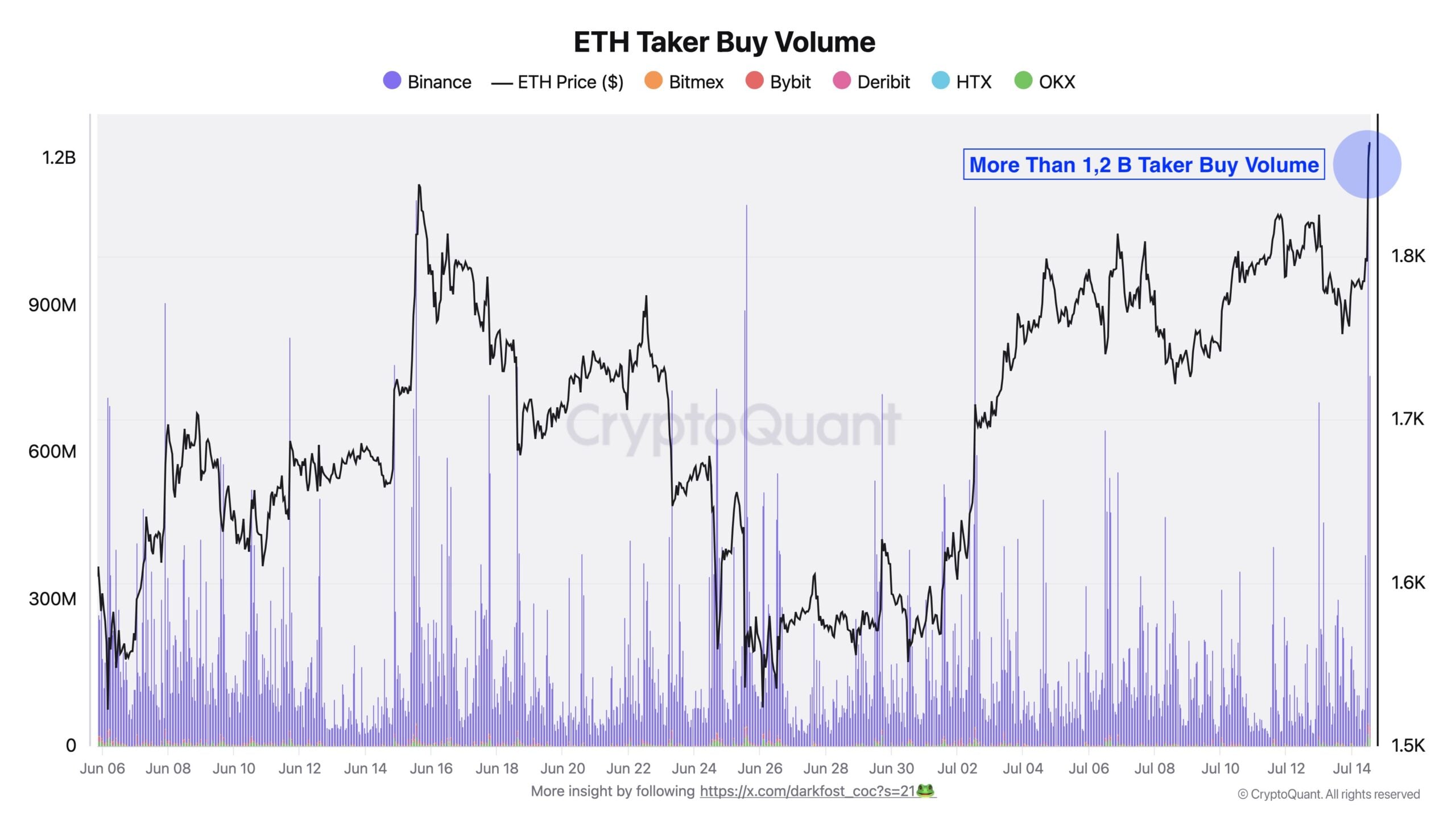
Yet the rally soon lost momentum as Bitcoin attracted stronger relative demand and early buyers locked in profits. That divergence suggests traders welcomed improving macro conditions but still preferred Bitcoin [BTC] as the market’s primary macro hedge.
That shift left Ethereum’s advance dependent on broader capital rotation rather than the CPI surprise alone.
Institutional accumulation tightens Ethereum’s supply
The macro-driven rebound has drawn attention back to Ethereum, yet institutional positioning had already started shifting before the latest rally.
Over the past two weeks, exchange withdrawals culminated in a 90,024 ETH net outflow on 13 July. In addition to that, average seven-day net flows remained negative at roughly 5,000–15,000 ETH per day.
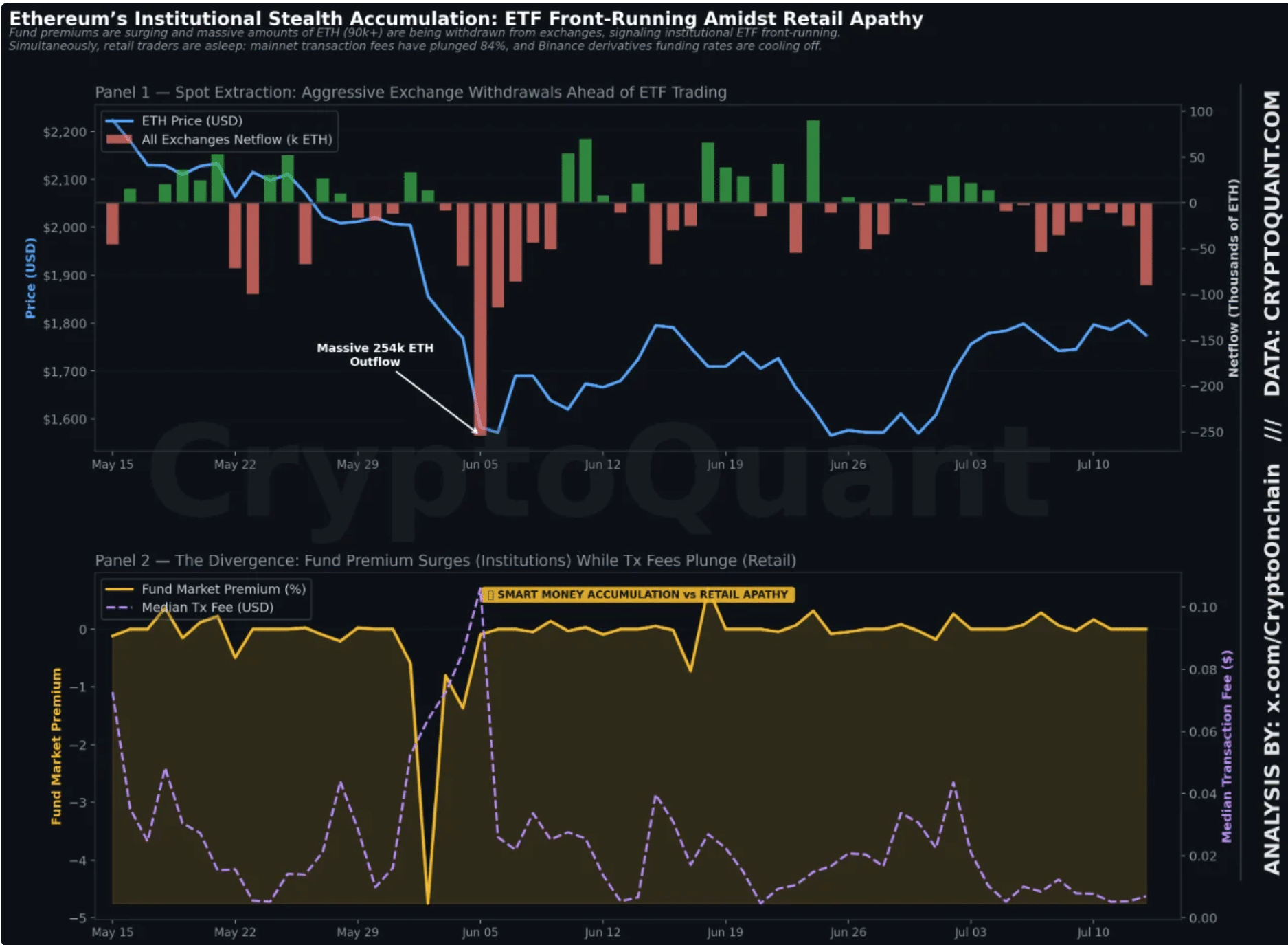
As a result of the consistent movement of assets off exchanges, the steady migration reduced Exchange Reserves to approximately 15.3 million ETH, with over 33% of the circulating supply now held off exchanges through staking, DeFi, and institutional custody.
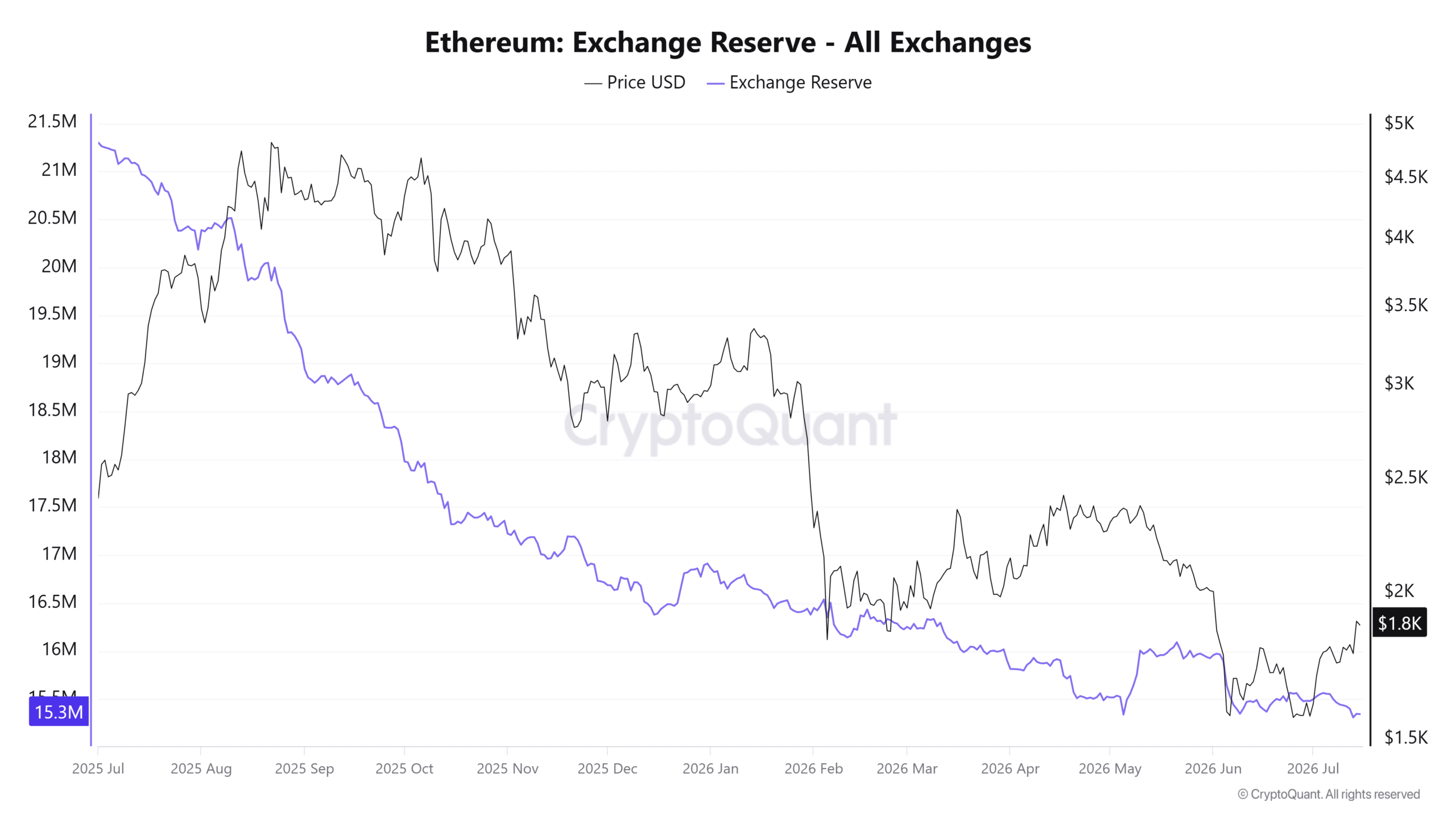
The metrics show that institutions are buying up liquid supply rather than speculative enthusiasm.
Yet, it appears retail participation is still low. As a result, there is less of a potential for an immediate sell-off due to institutions taking supply off the open market.
This further reinforces Ethereum’s long-term structural position within the market. Needless to say, it continues supporting the thesis that Ethereum will remain volatile for the short term but will ultimately strengthen long term.
Final Summary
- Ethereum [ETH] rallied on easing U.S. inflation, but the move lacked follow-through beyond the initial macro-driven buying.
- Ethereum exchange outflows and institutional accumulation continue tightening supply despite subdued retail participation.