
Close Menu
  • Latest News
    • Bitcoin
    • Ethereum
    • Altcoins
    • Meme Coins
  • Tech
    • Blockchain
    • Security and Privacy
  • Web 3
    • Gaming
  • Legal
    • Legal and Regulatory
    • Adoption
  • Analysis
  • Learn
    • Education
    • Wallets and Exchanges
  • Tools
    • Market Overview
    • Exchange Tool
  • INFO@FREE.CC
What's Hot

What Is the CLARITY Act? The US Crypto Bill That Could Reshape Digital Asset Regulation This Week

May 14, 2026

Stables Taps T-0 Network as Asia’s 60% Stablecoin Payment Share Tests USDT Rails

May 14, 2026

Exodus slashes Bitcoin holdings by 50% in Q1 2026 – Is BTC’s volatility why?

May 14, 2026
Facebook X (Twitter) Instagram
  • Contact
  • Privacy Policy
  • Terms & Conditions
  • Disclosure
Facebook X (Twitter) Instagram
Free.cc (Free Cryptocurrency)Free.cc (Free Cryptocurrency)
  • Latest News
    1. Bitcoin
    2. Ethereum
    3. Altcoins
    4. Meme Coins
    5. View All

    Exodus slashes Bitcoin holdings by 50% in Q1 2026 – Is BTC’s volatility why?

    May 14, 2026

    ZachXBT Names Teen Behind $19 Million Crypto Theft Who Flaunted It On Instagram

    May 14, 2026

    Analyst Says No Reason for Bitcoin Reversal, Sees BTC Approaching Next Resistance Levels – Here Are His Targets

    May 14, 2026

    70% of long-term holders are in profit as the bitcoin floor hardens

    May 13, 2026

    Bitcoin, Ethereum and XRP Price Analysis: What’s Coming Next?

    May 13, 2026

    Wells Fargo Boosts Ethereum ETF Holdings in Q1

    May 13, 2026

    Why Market Experts Are Still Predicting A Rise Above $10,000

    May 13, 2026

    Bitmine ETH Holdings Cross 5.2 Million—CEO Announces New Phase For Crypto Markets

    May 12, 2026

    XRP Holds Key Level, But Binance Flow Data Signals Weakening Demand

    May 14, 2026

    Bitcoin Just Entered A Deceptive Territory, Here’s What You Should Know

    May 14, 2026

    XRP Ledger Hits Record High In 10K+ Wallets: Santiment

    May 13, 2026

    Mysterious Bitcoin Whale Transfers $40B After Years Of Silence

    May 13, 2026

    Meme Coin Market Faces Imbalance as Supply Rises, Demand Falls

    April 4, 2026

    Crypto Interest Rising Toward Meme Coin Sector

    January 9, 2026

    Memes Market Cap Adds $10B in Days: Fresh Capital or Dead-Cat-Bounce?

    January 5, 2026

    Meme Coin Market Surges Past $45B as Shiba Inu, PEPE, BONK Stage 54% Price Pump

    January 4, 2026

    What Is the CLARITY Act? The US Crypto Bill That Could Reshape Digital Asset Regulation This Week

    May 14, 2026

    Stables Taps T-0 Network as Asia’s 60% Stablecoin Payment Share Tests USDT Rails

    May 14, 2026

    Exodus slashes Bitcoin holdings by 50% in Q1 2026 – Is BTC’s volatility why?

    May 14, 2026

    XRP Holds Key Level, But Binance Flow Data Signals Weakening Demand

    May 14, 2026
  • Tech
    1. Blockchain
    2. Security and Privacy
    3. View All

    Stables Taps T-0 Network as Asia’s 60% Stablecoin Payment Share Tests USDT Rails

    May 14, 2026

    UBOX Taps ClawWorks to Accelerate Independent AI Agent Economics

    May 14, 2026

    UXLINK And Origins Network Partner To Power Scalable AI-Driven Web3 Applications Using Decentralized Computing

    May 13, 2026

    WheelX.fi Expands Cross-Chain Liquidity Access Through KiteAI Integration

    May 13, 2026

    Ripple Shares DPRK Threat Data on Fraud Domains, Wallets, Campaigns

    May 5, 2026

    Digital Asset Security Moves Beyond Keys as Bitgo Adds 5-Layer Checks

    May 1, 2026

    Defillama Confirms April 2026 as Crypto’s Most-Hacked Month With 30 Incidents

    May 1, 2026

    Malicious npm Dependency Linked to AI Assisted Commit Targets Crypto W

    April 29, 2026

    What Is the CLARITY Act? The US Crypto Bill That Could Reshape Digital Asset Regulation This Week

    May 14, 2026

    Stables Taps T-0 Network as Asia’s 60% Stablecoin Payment Share Tests USDT Rails

    May 14, 2026

    Exodus slashes Bitcoin holdings by 50% in Q1 2026 – Is BTC’s volatility why?

    May 14, 2026

    XRP Holds Key Level, But Binance Flow Data Signals Weakening Demand

    May 14, 2026
  • Web 3
    1. Gaming
    2. View All

    NUMINE Joins Outer Ring MMO for the Expansion of Web3 Gaming Experiences

    May 13, 2026

    GMatrixs And MiniverseCore Join Forces To Unlock Web3 Gaming Experience With Cross-Chain DApp, DeFi Applications

    May 11, 2026

    The Identity Crisis of 2026: NFTs, AI Agents and Trust on the Agentic Web

    May 11, 2026

    DTCC’s May 2026 Tokenization Announcement Explained: What It Means for U.S. Securities and Real-World Assets

    May 11, 2026

    What Is the CLARITY Act? The US Crypto Bill That Could Reshape Digital Asset Regulation This Week

    May 14, 2026

    Stables Taps T-0 Network as Asia’s 60% Stablecoin Payment Share Tests USDT Rails

    May 14, 2026

    Exodus slashes Bitcoin holdings by 50% in Q1 2026 – Is BTC’s volatility why?

    May 14, 2026

    XRP Holds Key Level, But Binance Flow Data Signals Weakening Demand

    May 14, 2026
  • Legal
    1. Legal and Regulatory
    2. Adoption
    3. View All

    What Is the CLARITY Act? The US Crypto Bill That Could Reshape Digital Asset Regulation This Week

    May 14, 2026

    Michael Saylor Says the Transparency Act in the US Congress Will Positively Impact Bitcoin! Here Are the Details

    May 14, 2026

    Consensys Urges SEC to Exempt Self-Custody Wallets, Citing Regulatory Gap for 99% of Tokens

    May 14, 2026

    Three men charged in US over crypto wrench attack spree

    May 13, 2026

    Tether launches decentralized local AI using Isaac Asimov’s Psychohistory straight out of Foundation

    May 11, 2026

    Has Donald Trump been a net positive for Bitcoin or created an unbreakable partisan divide?

    May 10, 2026

    BlackRock looks to sidestep Clarity yield issues, filing for two new tokenized money market funds

    May 10, 2026

    Cardano’s Charles Hoskinson says the future of crypto wallets will be inside iPhones and Androids

    May 8, 2026

    What Is the CLARITY Act? The US Crypto Bill That Could Reshape Digital Asset Regulation This Week

    May 14, 2026

    Stables Taps T-0 Network as Asia’s 60% Stablecoin Payment Share Tests USDT Rails

    May 14, 2026

    Exodus slashes Bitcoin holdings by 50% in Q1 2026 – Is BTC’s volatility why?

    May 14, 2026

    XRP Holds Key Level, But Binance Flow Data Signals Weakening Demand

    May 14, 2026
  • Analysis

    Trump’s CEO-filled China visit can decide whether Bitcoin’s $80,000 risk rally survives this week

    May 14, 2026

    Wall Street is buying XRP while Binance traders keep betting against it

    May 13, 2026

    Is a Drop Below $1 Coming Next?

    May 13, 2026

    UB Price Breakout Enters Discovery Phase

    May 13, 2026

    Billions Network Rally Accelerates After Binance Futures Launch

    May 13, 2026
  • Learn
    1. Education
    2. Wallets and Exchanges
    3. View All

    What’s on the Ethereum Roadmap: Glamsterdam, Hegota and Beyond

    March 30, 2026

    What Is Bluesky? The Decentralized Social Media Rival to Elon Musk’s X

    March 27, 2026

    What Is Strategy (MSTR)? The Bitcoin Treasury Company

    February 21, 2026

    What Are Prediction Markets? How Polymarket, Kalshi and Myriad Work

    February 13, 2026

    Coinbase went down for over 5 hours after missing earnings. Bulls still see a path to $300 billion by 2030

    May 8, 2026

    Coinbase cuts 14% of staff as Armstrong ties cost reset to AI and market volatility

    May 6, 2026

    Bitcoin is still in charge

    May 3, 2026

    CLARITY Act stablecoin fight shifts from yield to who captures digital-dollar economics

    April 29, 2026

    What Is the CLARITY Act? The US Crypto Bill That Could Reshape Digital Asset Regulation This Week

    May 14, 2026

    Stables Taps T-0 Network as Asia’s 60% Stablecoin Payment Share Tests USDT Rails

    May 14, 2026

    Exodus slashes Bitcoin holdings by 50% in Q1 2026 – Is BTC’s volatility why?

    May 14, 2026

    XRP Holds Key Level, But Binance Flow Data Signals Weakening Demand

    May 14, 2026
  • Tools
    • Market Overview
    • Exchange Tool
  • INFO@FREE.CC
Free.cc (Free Cryptocurrency)Free.cc (Free Cryptocurrency)
Home»Security and Privacy»Cryptojacking: It’s Jacked Up – Infosecurity Magazine
Cryptojacking: It’s Jacked Up - Infosecurity Magazine
Security and Privacy

Cryptojacking: It’s Jacked Up – Infosecurity Magazine

November 10, 2025No Comments7 Mins Read
Share
Facebook Twitter LinkedIn Pinterest Email

Cryptojacking is a new type of cybercrime which does not directly affect a user’s life, but can impact their productivity and personal devices. Depending on who you talk to cryptojacking might not even be considered a cybercrime, but more of an ethical dilemma.

Defined as “the unauthorized use of a computer, tablet, mobile phone, or connected home device by cybercriminals to mine for cryptocurrency”, the process of mining cryptocurrencies involves using a computer’s processing power to solve complex math equations by running algorithms in order to “mine” the cryptocurrency.

Simply put, cybercriminals have found a way to manipulate a user’s device into mining a cryptocurrency of their choice for them. Cryptojacking has been around for close to four to five years now, but became a problem toward the end of 2017. This is in part to the fact that cryptocurrencies saw a surge in their prices at this time. 
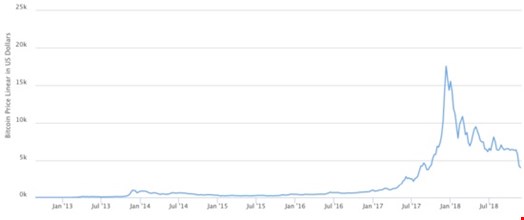
Figure 1: Price of Bitcoin from conception to end of 2018. Price surge is at the end of 2017.

This chart shows the rise and fall of bitcoin, which is the “gold standard” of crypto’s. The chart shows that at the end of 2017 and early in 2018, the price of bitcoin skyrocketed exponentially to almost $20,000 USD.

Another driving factor for the rise in cryptojacking is the fact that there is a whole lot less risk, for a much higher potential return on investment when compared to other forms of cybercrime.

Cryptojacking can be done in two different ways. One way to get a person’s device to effectively cryptojack using phishing emails where if a victim happens to “open attachments or click on links, the malware downloads onto their devices.”

The other way involves embedding malicious code onto websites through ads. If the victim is not privy to the fact that they have potentially downloaded malicious code from a phishing email, or that they visited a website with malicious code embedded on it, they could essentially be used to mine cryptocurrencies until they realize there is something wrong with their device or turn it off.

See also  Indian Arrested Over Sale of Illegal Drugs Disguised as Sex Aids on Dark Web

Cryptojacking through phishing occurs just like any other phishing-based attack: it is dependent on finding a user who will open an email with an attachment or link, and the user clicking on it or downloading the file. This in turn will put deliver what the attacker wants onto the user’s system.

Web browser miners reside in the code of the website, or in ads which are located on multiple websites. When a user visits this website, it will execute the code, which then runs the miner using the victims processing power to mine. Nothing is stored on the user’s computer and as soon as the user leaves the website the computers processing power is not being used by the attacker any longer.

According to a Check Point report from December of 2017, “Check Point researchers have found that crypto-miners managed to impact 55% of organizations globally.”

Cryptojacking sounds like it could be very lucrative for someone with a lot of free time on their hands. With the rise of cryptocurrency prices, an increase in price obviously means more profit if the attacker is still receiving the same amount of cryptocurrency coins from the miners. Some argue that cryptojacking is not worth the time that it takes to place malicious ads onto websites, or send phishing emails in hopes that someone clicks your link.

However, if a person was able to create a botnet and then inject the mining code onto it, the profits would be exponential. This image from Symantec details the differences that a botnet could potentially make in 30 days with file-based mining (phishing attempts), and browser-based mining (visiting websites/ads).

See also  Detecting and Responding to Cryptojacking with Artificial Intelligence

There is clearly a difference in the potential profits that an attacker could make using a botnet. This is due to the fact that if the attacker was able to install the malicious mining code onto the botnet systems with a file-based attack; they will be running the miners consistently. Compared to the browser-based mining method, file-based is making $700,000+ more because the browser method is dependent on the users physically being on the specific websites.
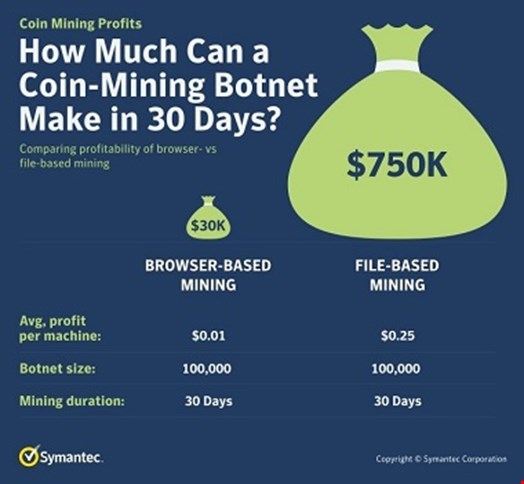
Figure 2: How Much Can a Coin-Mining Botnet Make in 30 Days?

It is important to note that the botnet in this example is comprised of 100,000 systems. This is an above average sized botnet, but is definitely not unheard of. As previously mentioned, the price of cryptocurrencies also directly correlates to the profits an attacker would bring in cryptojacking. With an operation detailed in the picture above controlling 100,000 systems running a file-based miner, the net profits could fluctuate thousands of dollars a day.

To some cryptojacking might seem like a victimless crime. This reasoning is because nothing is actually being stolen from the victim, and they aren’t necessarily being harmed. In most cases they don’t even know that their computers processing power is being used! This is not the case though. In many instances the victim is being harmed, but it is not necessarily always noticeable at first glance. According to research by Symantec, some of the affects that could be had on the end of the victim include:
 

  • “A slowdown in device performance”
  • “Overheating batteries”
  • “Devices becoming unusable”
  • “Reduction in productivity”
  • “Increased costs due to increased electricity usage, and for businesses operating in the cloud that are billed based on CPU usage”

So how can a user avoid cryptojacking and avoid the annoyance of a slower system, unusable devices, and overheating batteries all at the expense of an attacker getting “free” money? A good place to start is to install a security software suite. Any suite worth its salt will prevent cryptojacking scripts.

See also  Top 10: Cryptocurrency Heists - Infosecurity Magazine

A purpose-built solution such as an ad-blocker, and there are also anti-crypto mining extensions such as “no coin” and “miner block”.

Just as important is that awareness about cryptojacking must be spread. With the rise of cryptocurrencies, and the lack of risk involved in this kind of online threat, cryptojacking is only going to become more prominent. A First Look at Browser-Based Cryptojacking suggests that browser developers themselves could help mitigate this issue by “throttling client-side scripting, warning users when client-side scripting consumes excessive resources, and blocking the sources of known cryptojacking scripts.”

While many consider cryptojacking a crime, there are some who see otherwise. However, there is unquestionably an ethical dilemma when it comes to cryptojacking users. In-browser mining is a concept that is similar to cryptojacking. The difference lies in consent. There are some websites where users will agree to use the website if the site is allowed to run a crypto miner script. In theory this could be a substitute for ad-revenue if it were profitable enough.

Cryptojacking happens unbeknownst to the user, and can leave them frustrated with the issues that can come along with the use of their processing power without their knowledge. For many, the decision to allow a website to use your processing power while browsing their site could be a fair trade off as long as they don’t require too much processing power to noticeably slow down your system. It is simply the ability to make an informed decision that makes the difference ethically, and criminally, between cryptojacking and in-browser mining.


Christian Eaddy is currently a student at East Carolina University, studying Information and Computer Technology with a concentration in Security. 


Cryptojacking Infosecurity Jacked Magazine
Share. Facebook Twitter Pinterest LinkedIn Tumblr Email

Related Posts

Ripple Shares DPRK Threat Data on Fraud Domains, Wallets, Campaigns

May 5, 2026

Digital Asset Security Moves Beyond Keys as Bitgo Adds 5-Layer Checks

May 1, 2026

Defillama Confirms April 2026 as Crypto’s Most-Hacked Month With 30 Incidents

May 1, 2026

Malicious npm Dependency Linked to AI Assisted Commit Targets Crypto W

April 29, 2026
Add A Comment
Leave A Reply Cancel Reply

Top Posts

Malicious npm Dependency Linked to AI Assisted Commit Targets Crypto W

April 29, 2026

Analyst Says Ethereum Price Might Have Reached ‘Wave 4’ Bottom — Path To $5,000?

October 12, 2025

Stay ahead with the latest crypto news, market updates, blockchain insights, and trends. Your trusted source for everything happening in the digital asset world.


We're social. Connect with us:

Facebook X (Twitter) Instagram Pinterest YouTube
Top Insights

What Is the CLARITY Act? The US Crypto Bill That Could Reshape Digital Asset Regulation This Week

May 14, 2026

Stables Taps T-0 Network as Asia’s 60% Stablecoin Payment Share Tests USDT Rails

May 14, 2026

Exodus slashes Bitcoin holdings by 50% in Q1 2026 – Is BTC’s volatility why?

May 14, 2026
Get Informed

Subscribe to Updates

Get the latest creative news From Free.cc directly in your Inbox!

  • Contact
  • Privacy Policy
  • Terms & Conditions
  • Disclosure
© 2026 free.cc - All rights reserved.

Type above and press Enter to search. Press Esc to cancel.