Close Menu
  • Latest News
    • Bitcoin
    • Ethereum
    • Altcoins
    • Meme Coins
  • Tech
    • Blockchain
    • Security and Privacy
  • Web 3
    • Gaming
  • Legal
    • Legal and Regulatory
    • Adoption
  • Analysis
  • Learn
    • Education
    • Wallets and Exchanges
  • Tools
    • Market Overview
    • Exchange Tool
  • INFO@FREE.CC
What's Hot

STRC Is Junk Credit In A Bitcoin Costume, And Retail Is Holding $8.8 Billion Of It

June 22, 2026

Africa’s crypto crackdown is really a remittance revolution

June 22, 2026

Has Bitcoin found a price bottom? – Historic signal hints at BTC’s rebound

June 21, 2026
Facebook X (Twitter) Instagram
  • Contact
  • Privacy Policy
  • Terms & Conditions
  • Disclosure
Facebook X (Twitter) Instagram
Free.cc (Free Cryptocurrency)Free.cc (Free Cryptocurrency)
  • Latest News
    1. Bitcoin
    2. Ethereum
    3. Altcoins
    4. Meme Coins
    5. View All

    STRC Is Junk Credit In A Bitcoin Costume, And Retail Is Holding $8.8 Billion Of It

    June 22, 2026

    Has Bitcoin found a price bottom? – Historic signal hints at BTC’s rebound

    June 21, 2026

    Arthur Hayes Says AI Took Money From Bitcoin, Explains What Happens When It Crashes

    June 21, 2026

    Ethereum’s biggest ‘sandwich’ bot drained of $7.5 million in ironic exploit

    June 21, 2026

    Robert Kiyosaki Signals Interest In Bitcoin As Gold & Silver Prices Fall

    June 20, 2026

    Ethereum Foundation Faces Potential Funding Crisis

    June 19, 2026

    Ethereum Q1 2026: Insights From Etherealize Report

    June 19, 2026

    Exclusive: Bitcoin, Ethereum, and XRP Price Predictions

    June 17, 2026

    CME Group Sues CFTC Over Crypto Perpetual Futures Approval

    June 21, 2026

    Ethereum Foundation Details Clear Signing Standards to Fight Phishing

    June 21, 2026

    Bitcoin Cost-Of-Production Signal Raises Miner Stress Questi

    June 21, 2026

    Bitcoin Faces Key $64,100 Resistance As Analyst Watches Fib

    June 21, 2026

    Dogecoin Cash Files U.S. Patent for DOGP Blockchain Framework

    June 15, 2026

    How SIREN Went From AI Memecoin to Boom-and-Bust

    June 8, 2026

    Meme Coin Market Faces Imbalance as Supply Rises, Demand Falls

    April 4, 2026

    Crypto Interest Rising Toward Meme Coin Sector

    January 9, 2026

    STRC Is Junk Credit In A Bitcoin Costume, And Retail Is Holding $8.8 Billion Of It

    June 22, 2026

    Africa’s crypto crackdown is really a remittance revolution

    June 22, 2026

    Has Bitcoin found a price bottom? – Historic signal hints at BTC’s rebound

    June 21, 2026

    CME Group Sues CFTC Over Crypto Perpetual Futures Approval

    June 21, 2026
  • Tech
    1. Blockchain
    2. Security and Privacy
    3. View All

    Merck and Hashgraph Group launch Hedera-based product passport for EU compliance

    June 12, 2026

    COTI and Midnight Foundation Partner to Advance the Global Privacy Ecosystem

    June 11, 2026

    Cardano Gets Exposure From Olympics Committee

    June 11, 2026

    How Privacy and Composability Trade-Offs Differ

    June 11, 2026

    Microsoft Warns of New USB-Based Malware Targeting Crypto Users

    June 21, 2026

    Fake GitHub Stars and AI Videos Mask a Crypto Clipper

    June 18, 2026

    Zcash Climbs 80% Since June 5 as Traders Shrug off Orchard Bug Fears – Bitcoin News

    June 18, 2026

    Rokarolla Trojan Combines Banking Fraud With Device Surveillance

    June 16, 2026

    STRC Is Junk Credit In A Bitcoin Costume, And Retail Is Holding $8.8 Billion Of It

    June 22, 2026

    Africa’s crypto crackdown is really a remittance revolution

    June 22, 2026

    Has Bitcoin found a price bottom? – Historic signal hints at BTC’s rebound

    June 21, 2026

    CME Group Sues CFTC Over Crypto Perpetual Futures Approval

    June 21, 2026
  • Web 3
    1. Gaming
    2. View All

    Nexus Acquires Homegrown App Marketplace One Store, Expanding into Global Web3 Game Hub

    June 21, 2026

    GoMining Rolls Out GoBTC Pay SDK for Bitcoin Merchant Payments

    June 20, 2026

    Real Finance Launches $ASSET Rewards Campaign to Support RWA Ecosystem Growth

    June 19, 2026

    Playnance’s $GCOIN Lists on KoinBX Amid Rapid India Community Growth

    June 18, 2026

    STRC Is Junk Credit In A Bitcoin Costume, And Retail Is Holding $8.8 Billion Of It

    June 22, 2026

    Africa’s crypto crackdown is really a remittance revolution

    June 22, 2026

    Has Bitcoin found a price bottom? – Historic signal hints at BTC’s rebound

    June 21, 2026

    CME Group Sues CFTC Over Crypto Perpetual Futures Approval

    June 21, 2026
  • Legal
    1. Legal and Regulatory
    2. Adoption
    3. View All

    Stablecoin regulation converts issuers into psuedo-banks while adding a barrier to entry for smaller players

    June 21, 2026

    Morgan Stanley’s proposed 0.14% ETH and SOL fees could turn the next crypto ETF race into a price fight

    June 21, 2026

    Texas questions whether AI data centers should pay for the grid they strain

    June 20, 2026

    CME lawsuit challenges whether Kalshi’s Bitcoin leverage push can become an everything-exchange

    June 19, 2026

    Turkish lira stablecoins show why Europe’s regulated euro tokens may struggle

    June 21, 2026

    Bitcoin network activity has a dramatic rebound

    June 20, 2026

    Pump Fun revenue slows as Collector Crypt’s $5.1M card-pack week reshapes Solana’s consumer loop

    June 19, 2026

    Global $2.75B payments deal shows stablecoins moving into the rails they were meant to bypass

    June 19, 2026

    STRC Is Junk Credit In A Bitcoin Costume, And Retail Is Holding $8.8 Billion Of It

    June 22, 2026

    Africa’s crypto crackdown is really a remittance revolution

    June 22, 2026

    Has Bitcoin found a price bottom? – Historic signal hints at BTC’s rebound

    June 21, 2026

    CME Group Sues CFTC Over Crypto Perpetual Futures Approval

    June 21, 2026
  • Analysis

    Africa’s crypto crackdown is really a remittance revolution

    June 22, 2026

    Ethereum’s Jaredfromsubway MEV bot drained after approving its own $7.5M theft

    June 21, 2026

    Can It Fuel the Next Rally?

    June 21, 2026

    Can Bulls Push It to $0.64 Next?

    June 21, 2026

    Solana Transactions Surge as Social Buzz Fades — What Does It Mean for SOL’s Next Rally?

    June 21, 2026
  • Learn
    1. Education
    2. Wallets and Exchanges
    3. View All

    What Is BChat? The Decentralized Messaging App Built for Privacy

    June 2, 2026

    What Is an AI Prompt Injection Attack? The Hidden Threat Hijacking Your Chatbots

    May 31, 2026

    What Is AI Jailbreaking? A Beginner’s Guide to the Cat-and-Mouse Game Behind Every Chatbot

    May 17, 2026

    What’s on the Ethereum Roadmap: Glamsterdam, Hegota and Beyond

    March 30, 2026

    HYPE ETFs quietly pulled $161M in one month as Wall Street buys crypto’s on-chain exchange bet

    June 15, 2026

    Crypto exchanges are opening a two-front war for the stock market

    June 12, 2026

    Crypto’s killer app may be selling stocks after its own tokens failed retail

    June 10, 2026

    Vitalik wants DeFi price crashes to stop triggering automatic liquidations

    June 4, 2026

    STRC Is Junk Credit In A Bitcoin Costume, And Retail Is Holding $8.8 Billion Of It

    June 22, 2026

    Africa’s crypto crackdown is really a remittance revolution

    June 22, 2026

    Has Bitcoin found a price bottom? – Historic signal hints at BTC’s rebound

    June 21, 2026

    CME Group Sues CFTC Over Crypto Perpetual Futures Approval

    June 21, 2026
  • Tools
    • Market Overview
    • Exchange Tool
  • INFO@FREE.CC
Free.cc (Free Cryptocurrency)Free.cc (Free Cryptocurrency)
Home»Analysis»Africa’s crypto crackdown is really a remittance revolution
Analysis

Africa’s crypto crackdown is really a remittance revolution

June 22, 2026No Comments7 Mins Read
Share
Facebook Twitter LinkedIn Pinterest Email

Africa has never been friendly to crypto. Despite incredible adoption numbers on the continent, African governments have met almost every crypto discussion with bans or warnings.

However, some of its largest economies have abandoned that approach and are working to introduce licensing regimes, stablecoin oversight, and compliance rules designed to integrate digital assets into the financial system.

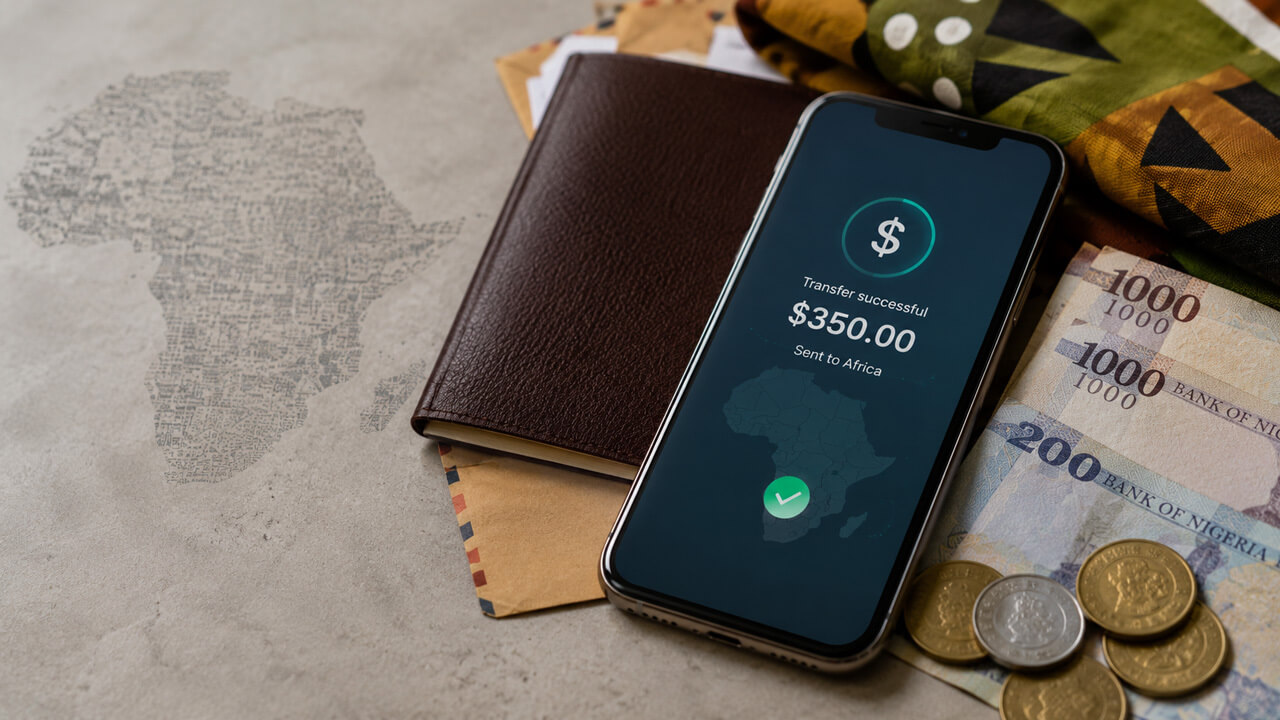
The shift in sentiment and action taken by governments is the answer to a change in what crypto has become on the ground, where it’s become less of an investment and more of a payment system that millions of people already use for remittances, savings, and cross-border trade.

Over the past two years, the government’s stance has flipped, and it seems to have flipped hardest where adoption is the deepest. After years of treating every kind of digital asset as a threat to monetary stability, ordering banks to close accounts tied to them, and warning citizens away from the sector, Nigeria, South Africa, and Kenya have each written digital assets into national law, building licensing regimes meant to supervise the market rather than shut it down.

In much of the continent, crypto has organically turned into working payment infrastructure, the rails that households and small businesses rely on to receive money from relatives abroad, protect savings from inflation, and settle cross-border trade.

Governments discovered that banning the activity did nothing to reduce demand; it just pushed that demand into peer-to-peer channels they couldn’t see, which is a worse outcome for any regulator trying to keep track of a financial system.

The bans collapsed because the demand was structural

The scale of crypto usage in Africa’s largest economies forced governments to rethink.

Between July 2024 and June 2025, Sub-Saharan Africa received more than $205 billion in on-chain value, a 52% jump from the year before that, making it the third-fastest-growing crypto region in the world, according to Chainalysis. Nigeria alone accounted for $92.1 billion of that total, nearly three times South Africa’s figure, and it’s now one of the largest grassroots crypto markets anywhere.

See also  State of Texas Officially Launches New Crypto Reserve With $5,000,000 Bitcoin Purchase: Report

What’s telling about the composition of those flows is how small most of them are. Transfers under $10,000 accounted for more than 8% of regional value, compared with 6% globally, which is a sign that people are using these assets for bills, payroll, and family support rather than trading.

Most of that activity is in dollar-pegged stablecoins, which now account for roughly 43% of the region’s crypto transaction volume. When the naira lost a large share of its value in early 2025, monthly on-chain volume across the region spiked toward $25 billion as households and companies moved into dollar-linked tokens to preserve their holdings. A stablecoin gives people access to dollars without a US bank account, and it does so on a settlement layer that runs at all hours.

We’ve also seen this shift in remittances, as Sub-Saharan Africa remains the most expensive region in the world to send money to, with the average cost of a transfer at nearly 8.8% of the amount sent, almost triple the 3% target set by the United Nations. Of the 13 corridors worldwide where costs exceeded 20% in 2025, nine originated in the region.

Against fees like that, a stablecoin transfer that settles in minutes for a fraction of a percent changes everything for the family receiving it, turning the chunk that would have gone to intermediaries into money they can actually use.

Faced with demand that strong, governments shifted from prohibition to oversight. Nigeria’s Investments and Securities Act of 2025, signed in March of that year, classified digital assets as securities and granted the Securities and Exchange Commission authority to license exchanges, which it has since begun to exercise. That same commission has publicly welcomed stablecoin businesses on the condition that they meet local compliance standards.

South Africa’s Financial Sector Conduct Authority has taken an even more granular approach, approving 310 crypto service provider licenses from 533 applications by the end of March 2026.

See also  Breakdown Below $110K or Recovery Toward $115K?

Kenya’s Virtual Asset Service Providers Act took effect in November 2025, splitting supervision between the central bank and the capital markets regulator.

Regulated dollarization is the trade-off that governments in Africa accepted

Bringing this market inside the formal system has consequences that policymakers across the continent still haven’t solved.

The assets people are adopting most heavily are pegged to the US dollar, so the more a regulator legitimizes stablecoin use, the more it encourages households and businesses to hold and transact in a foreign currency.

Financial inclusion improves because people who were previously locked out of access to dollars suddenly have it, but the central bank’s control over its monetary base weakens. As savings and payments shift toward dollar-linked tokens, demand for the local currency declines, and the revenue a government earns from issuing its own money erodes with it.

This problem doesn’t have a solution yet, and the laws and regulations emerging now are essentially early attempts to manage it. Licensing brings real benefits that governments want, including tax visibility, anti-money-laundering enforcement, consumer protection, and a banking sector willing to work with registered providers instead of treating them as a liability.

CryptoSlate Daily Brief

Daily signals, zero noise.

Market-moving headlines and context delivered every morning in one tight read.

5-minute digest 100k+ readers

Free. No spam. Unsubscribe any time.

Whoops, looks like there was a problem. Please try again.

You’re subscribed. Welcome aboard.

Nigeria has already moved to raise capital requirements for licensed firms, indicating it intends to supervise the sector in the same way it supervises other financial businesses.

The biggest problem is preserving the cost and speed advantages that made stablecoins attractive while layering on the compliance that formal oversight demands, because onboarding requirements and reporting obligations add friction that the informal market never had.

What gives the situation in Africa significance is that the rest of the developing world faces the same pressures. Expensive remittances, thin banking penetration, persistent inflation, and steady demand for dollars describe much of Latin America and South and Southeast Asia, just as they do Lagos or Accra.

See also  Dogecoin Price Signals Historic Rally Setup as Elon Musk Teases X Money Launch

The frameworks being tested in Nigeria, South Africa, and Kenya are, in effect, the first real-world evidence of whether a regulated stablecoin economy can coexist with a traditional monetary system.

Mobile money set the stage for what’s happening now, because Africa’s M-Pesa and the systems that followed it had trained a large population to move value through a phone well before stablecoins arrived, lowering the barrier when digital-dollar rails became available.

Competition is the other force at work here, and it reaches well beyond the continent. Stablecoins are increasingly going up against the correspondent banking networks and wire systems that have moved money internationally for generations, and the incumbents are responding.

Western Union, watching its app usage decline sharply as stablecoin remittances spread, is now building its own dollar token to distribute to more than 100 million customers, with early corridors planned in Africa and Latin America. A new federal stablecoin law in the United States has given it the regulatory cover it lacked a year earlier.

All of this leads to a change in how crypto adoption is measured. For years, the main metric was trading volume, which showed the amount of speculation on an asset.

In Africa, the number that counts is payment volume, and the activity behind it is people moving money they can’t afford to lose.

African governments spent a decade trying to ban a technology and have ended up supervising it, because the thing they were banning had already become the system through which a large part of their economies moves money.

If these experiments hold, they’ll show that the future of crypto isn’t to become money itself, but to become the infrastructure that carries money.

Africas crackdown Crypto remittance revolution
Share. Facebook Twitter Pinterest LinkedIn Tumblr Email

Related Posts

CME Group Sues CFTC Over Crypto Perpetual Futures Approval

June 21, 2026

Ethereum’s Jaredfromsubway MEV bot drained after approving its own $7.5M theft

June 21, 2026

Can It Fuel the Next Rally?

June 21, 2026

Morgan Stanley’s proposed 0.14% ETH and SOL fees could turn the next crypto ETF race into a price fight

June 21, 2026
Add A Comment
Leave A Reply Cancel Reply

Top Posts

#2018InReview Peter Lefkowitz, Chief Digital Risk Officer, Citrix

November 13, 2025

Scammers Create “AI Hologram” of C-Suite Crypto Exec

October 15, 2025

Stay ahead with the latest crypto news, market updates, blockchain insights, and trends. Your trusted source for everything happening in the digital asset world.


We're social. Connect with us:

Facebook X (Twitter) Instagram Pinterest YouTube
Top Insights

STRC Is Junk Credit In A Bitcoin Costume, And Retail Is Holding $8.8 Billion Of It

June 22, 2026

Africa’s crypto crackdown is really a remittance revolution

June 22, 2026

Has Bitcoin found a price bottom? – Historic signal hints at BTC’s rebound

June 21, 2026
Get Informed

Subscribe to Updates

Get the latest creative news From Free.cc directly in your Inbox!

  • Contact
  • Privacy Policy
  • Terms & Conditions
  • Disclosure
© 2026 free.cc - All rights reserved.

Type above and press Enter to search. Press Esc to cancel.