
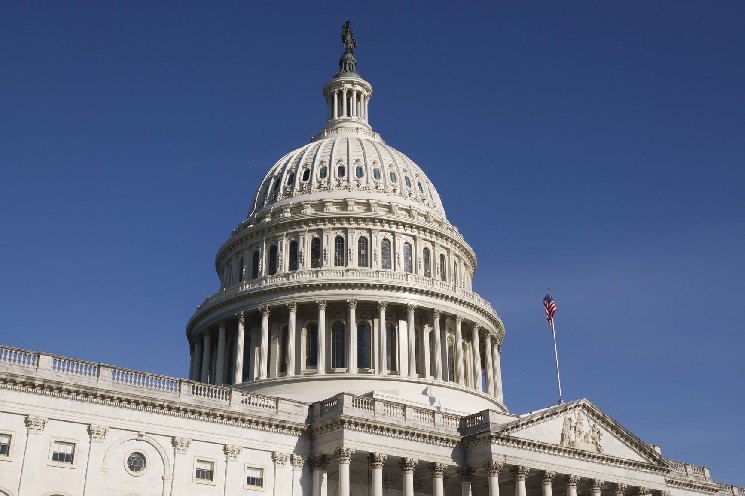
The CLARITY Act vote was 11 short of 60
The roll call is worse for the bill’s authors than a one-vote headline suggests. All 49 yeas were Republicans. The 50 nays included every Democrat who voted, both independents, and four Republicans: Susan Collins of Maine, Josh Hawley of Missouri, Jerry Moran of Kansas, and Tillis of North Carolina. Senator Christopher Coons, a Delaware Democrat, did not vote. Even if Coons had voted yes, and even if all four Republican nays had switched, the tally would have been 54, still six short of 60. To invoke cloture, the bill needed a bloc of Democrats who, on September 15, voted no.
The House had already passed the bill, 294 to 134, on July 17, 2025, and the Senate Banking Committee, then chaired by Senator Tim Scott, reported a substitute on June 1, 2026. A Congressional Research Service summary of the introduced text describes the core bargain: the Commodity Futures Trading Commission would generally regulate “digital commodities” and their venues, while the Securities and Exchange Commission would keep a defined role. That split, and later ethics language in the Senate, is what the floor fight was about.
Scott, in a committee statement on September 15, said nearly all Senate Republicans had voted to advance the bill, “but the motion fell short because of Senate Democrats,” and that it was now time for the SEC and the CFTC to set “clear rules of the road for digital assets until Congress legislates.” Elizabeth Warren, the committee’s ranking Democrat, urged a no vote that day, saying a bipartisan crypto bill was possible, “but not this bill,” which she argued posed “a massive risk to families, to our economy, and to our national security.”
The September vote did not leave all of crypto without a federal statute. Payment stablecoins already have the $GENIUS Act, and the OCC has begun to write the issuer rule. GL Insight covered that final rule last month. The CLARITY Act was the market-structure half: the status of tokens, exchanges and the boundary between the SEC and the CFTC. That half is what failed cloture, and what remains unsettled.
The midterms removed the reason to bargain in December
Democrats will organize both chambers in January. On November 9, CNBC put the House majority at at least 255 seats of 435, and said Democrats “could emerge with as many as 56 seats in the Senate.” Those figures are a floor and a ceiling, not a final count. As of the afternoon of November 10, 270toWin listed seven already-called Senate flips, including Texas, Ohio, Kansas and Maine, and two uncalled races: Alaska, where Democrat Mary Peltola and Republican Senator Dan Sullivan await a ranked-choice tabulation on November 18, and Mississippi, where Democrat Scott Colom led Republican Senator Cindy Hyde-Smith. Nineteen House races remained uncalled, including Louisiana runoffs in December. None of that uncertainty changes who will hold the gavels.
It does change the incentives in the next six weeks. A Republican majority in a lame-duck Senate had a reason, however thin after September, to try again while it still organized the Banking Committee. A Democratic majority-in-waiting can write the next bill itself in January. CNBC’s post-election preview put the point directly: Democrats “will have little incentive to cut deals” before the new Congress is sworn in.
Collins, one of the four Republican nays, lost her seat to Democrat Troy Jackson, CNBC reported. That does not help a December cloture vote. The next Senate will be more Democratic, not less.
The calendar is already spoken for
The Senate’s tentative 2026 schedule has the chamber out on November 11 to 13 for Veterans Day, November 23 to 27 for Thanksgiving, and December 21 to 31. Government funding expires on December 11, and any continuing resolution or full-year appropriations bill needs 60 votes in the Senate. The House passed a National Defense Authorization Act in July, CNBC notes, but Senate Democrats blocked their chamber’s version the same month, with Senate Minority Leader Chuck Schumer saying Democrats would “not go along” while the president was, in his words, “dragging America deeper into a war in Iran.” Defense Secretary Pete Hegseth also faces a vote on articles of impeachment, the same preview said.
A market-structure bill that already failed cloture does not outrank funding the government or the annual defense authorization. It could be attached to one of those must-pass vehicles. No such attachment has been announced, and the Democratic caucus that would have to supply the missing votes has just won the right to write its own version in January.
Two lame-duck paths exist on paper
The first path is the Tillis motion to reconsider. Because that motion was entered, the Senate can take another run at the September 15 cloture vote without starting the bill over. The arithmetic would still require a net gain of 11 yeas, almost all of them from Democrats who voted no, or a rewritten substitute those Democrats would accept. Warren invited Republicans “to come to the table and negotiate a real bipartisan crypto bill.” A substitute that moved more authority to the SEC, and tightened the ethics provisions she called inadequate, might change some no votes, but it would also change the House-passed text.
The second path is to attach a negotiated text to the December funding bill or to a final defense authorization. Must-pass vehicles can carry riders when the alternative is a shutdown. Democrats can wait six weeks and set the terms themselves. Republicans still need Democratic votes for cloture, and they will not organize the next Senate.
Either path is possible as Senate procedure, and unexpected as politics. The default, if neither happens, is simple. At noon on January 3, 2027, under the Twentieth Amendment, the 119th Congress ends. Unpassed bills die with it. H.R. 3633, the committee substitute, and the Tillis motion all expire, and a market-structure bill in the 120th Congress would have to be introduced, referred and marked up again.
Next year’s bill will be written under new chairs
Reporting since election night has already sketched what that reintroduction might look like. On November 4, journalist Eleanor Terrett described discussions among House Democrats about expanding Representative Maxine Waters’ “Crypto Investor and Consumer Bill of Rights,” an amendment from the 2025 CLARITY debate, into a broader market-structure bill for the next Congress, with more power for the SEC and a smaller role for the CFTC. That account is a reporter’s scoop about talks, not a bill text. It is consistent with Warren’s September argument, and with the fact that Democrats will now organize the committees that would do the work.
Warren is the current ranking member of Senate Banking. If Democrats organize the Senate, she is the natural next chair, though formal assignments have not been made, and Financial Services in the House would likewise move to a Democratic chair. A new bill would be marked up in those rooms, not in Scott’s. The $GENIUS Act would remain the stablecoin statute unless Congress reopens it. The open fight would again be over tokens, exchanges, and which federal agency is in charge.
Watch three things between now and January 3: any scheduled cloture, announced substitute, or attempt to attach market-structure language to the December 11 funding bill or the defense authorization; the remaining counts in Alaska, Mississippi and uncalled House races, which will set the margin but not reverse party control; and who is named to chair Banking and Financial Services, where a reintroduced bill would be written.
Unless one of those first items appears, the bill is finished as a 2026 project. It failed 49 to 50 in September, and the election handed the next Congress to the party that supplied most of the no votes. A lame-duck session with a funding deadline, a defense bill and a short calendar could still reconsider the bill, or attach it to something that must pass. There is no sign, as of November 12, that it will.