
H2 is becoming a key period for network upgrades. Notably, Ethereum is right at the center of that.
Its biggest upgrade since the Merge has entered the final testing phase. Known as Glamsterdam and targeted for H2 2026, the upgrade focuses on improving how Ethereum works at the protocol level.
It introduces parallel transaction processing and gradually raises the gas limit from 60 million toward 200 million, changes designed to boost throughput.
From an on-chain perspective, the timing couldn’t be better.
Following Q2’s back-to-back DeFi exploits, which wiped more than $10 million from Ethereum’s TVL in immediate outflows, the network is still working to rebuild on-chain liquidity and user activity. As the chart below shows, Aave, Ethereum’s largest lending protocol, has seen its TVL drop to around $13 billion from nearly $35 billion in early Q1.
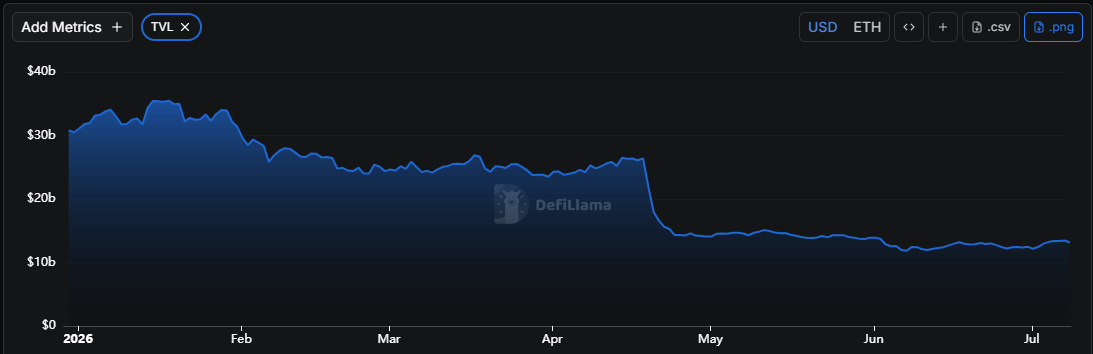
Against this backdrop, the upcoming Glamsterdam upgrade becomes a key infrastructure catalyst.
The logic is simple: By improving scalability and expanding network capacity, the upgrade could help Ethereum handle higher DeFi demand as liquidity gradually returns to the ecosystem. This becomes particularly interesting with the planned gas limit increase toward 200 million, which could significantly expand Ethereum’s transaction capacity and reduce pressure during periods of heavy on-chain activity.
The impact could also translate into price action.
ETH has started Q3 on a strong note, gaining 11%, but sustaining this momentum will require more than just short-term flows. A successful Glamsterdam upgrade could add a stronger fundamental narrative, supporting a more infrastructure-driven rally.
Naturally, the question becomes: Is Ethereum [ETH] setting up for a strong H2 cycle, or will macro uncertainty and weaker on-chain activity continue to limit its upside?
Ethereum faces an H2 reality check as DeFi liquidity weakens
Stablecoins continue to be the core liquidity engine behind DeFi activity.
However, the broader liquidity environment is showing signs of weakness, with the total stablecoin market cap falling to a four-month low. Over the past four months, around $5.82 billion in stablecoin supply has been wiped out, highlighting a clear slowdown in capital availability across crypto markets.
Adding to the pressure, Tether recently burned $2.5 billion in USDT on Ethereum, reducing the network’s total USDT supply to around $77 billion. This further shifts stablecoin liquidity away from Ethereum, widening the gap with TRON, which currently holds the largest USDT supply at over $87 billion.
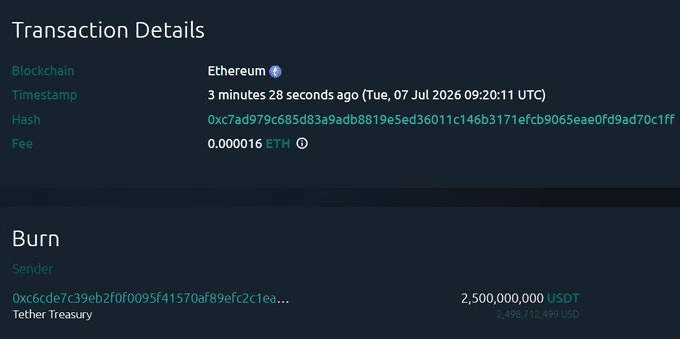
This burn highlights a key challenge for Ethereum’s H2 cycle.
On one hand, the upcoming Glamsterdam upgrade is building a bullish narrative around Ethereum’s scalability. On the other hand, weaker DeFi activity and declining stablecoin liquidity are creating on-chain pressure.
Since Ethereum’s smart contract ecosystem relies heavily on stablecoin flows, a sustained liquidity squeeze could slow DeFi recovery and make it harder for the network to regain momentum.
Meanwhile, institutional flows are adding another layer to the picture.
A large institutional wallet recently transferred 63,000 ETH to Coinbase. Combined with weaker liquidity conditions, this suggests Ethereum’s recent upside could be more of a short-term relief move rather than the beginning of a sustained trend.
Final Summary
- Ethereum’s Glamsterdam upgrade enters final testing, bringing major scalability improvements in H2 2026.
- ETH’s rally needs stronger DeFi activity to continue.