
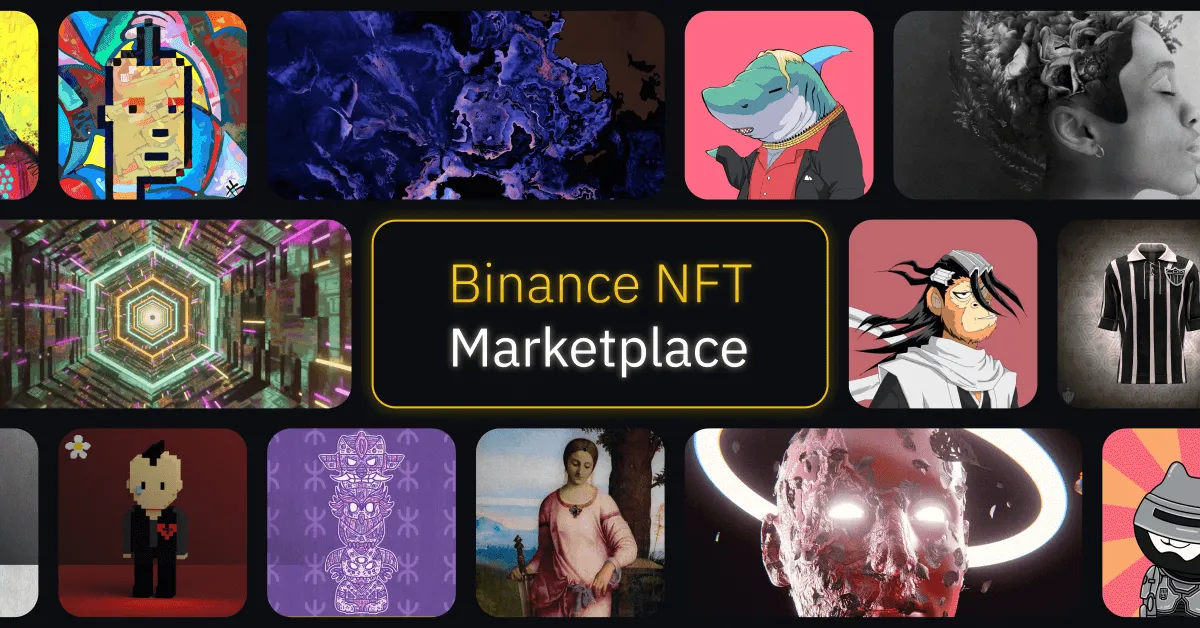
When Binance launched its NFT marketplace in June 2021, the timing felt electric. The exchange positioned the platform as “the world’s leading NFT marketplace and trading platform,” promising premier exhibitions, high liquidity, and minimal fees for creators and collectors. CZ himself declared it would give millions of Binance users access to “the booming NFT space.” It was the right bet, placed at the right moment — and it still failed.
By the end of 2021, Binance NFT had onboarded over 1,000 creators, listed more than 2.5 million NFTs across art, gaming, sports, and luxury fashion, and recorded a 30x increase in trading volume since launch. Those numbers looked impressive at the time. What nobody said out loud was that they were peak numbers, a snapshot of an industry running on pure speculation and FOMO, not fundamentals.
The collapse was predictable the moment the broader market turned. Annual NFT trading volumes across all blockchains exceeded $50 billion during 2022, but by 2025 that figure had collapsed to roughly $5.5 billion ,an 89% drawdown that wiped out the rationale for centralized NFT venues almost entirely. Binance didn’t fight it. They managed the retreat quietly, methodically. Polygon network support was removed from the marketplace in September 2023. Bitcoin Ordinals support was dropped in April 2024. The writing was on the wall long before this week’s announcement.
On June 3, Binance confirmed what everyone in the industry had already anticipated: the centralized NFT service will close on July 3, 2026, with users required to withdraw transferable NFTs to Binance Wallet or an external self-custody wallet before the deadline or lose access. The exchange called it an “upgrade.” It was not an upgrade. It was a quiet burial.
Why the CEX NFT model was doomed
The structural problem was never really about market conditions, it was about fit. Centralized exchanges built NFT marketplaces because they could, not because they should. NFT collectors want self-custody, interoperability, and community-driven discovery. What Binance offered was convenience inside a walled garden that felt increasingly out of step with how serious NFT participants actually behave. Meanwhile, purpose-built platforms like OpenSea and Magic Eden were iterating at a pace no CEX product team could match while managing a global trading exchange simultaneously.
Coinbase NFT launched in May 2022 with reported waitlists in the millions, halted marketplace functionality on July 10, 2024, and was fully sunset on August 1 of the same year. Kraken NFT launched in June 2023, entered withdrawal-only mode in November 2024, and shut down completely in February 2025. Binance is simply the last major exchange to acknowledge what its peers already accepted: the CEX-backed NFT marketplace model doesn’t work.
The market impact is real, but the damage was already done
It would be easy to frame this closure as a body blow to the NFT ecosystem. Binance had enormous distribution, hundreds of millions of registered users who, in theory, could have been converted into NFT participants. That conversion never happened at scale, and that failure matters more than the closure itself.
Active NFT wallets collapsed from over 500,000 at the market’s peak to fewer than 20,000 by 2025, an exodus that created a liquidity crisis driving floor prices down across most collections. Binance’s marketplace was never the reason people stayed in NFTs, and it won’t be the reason they leave. The damage to confidence is more symbolic: another institutional player admitting the category failed to deliver on its early promise.
For existing holders, the timeline is tight. Binance will reimburse withdrawal fees for up to 100,000 users who move eligible NFTs within the specified window, a gesture that at least acknowledges the inconvenience, if not the broader disappointment.
What comes next is consolidation around the survivors. OpenSea rebuilt its platform as OS2, a multichain trading aggregator now spanning 22 blockchains. Magic Eden acquired the trading app Slingshot in April 2025 to push beyond NFTs into broader token markets. The platforms that remain are adapting. The ones that couldn’t are gone.
Binance, for its part, is pivoting toward tokenized real-world assets and equities trading, a direction that makes far more institutional sense in 2026. The NFT marketplace was a product of a very specific cultural moment. That moment passed. The exchange was just slow to say so.
For more on where the NFT market goes from here, see our analysis of NFT market catalysts investors should watch in 2026 and our breakdown of what Bybit’s NFT shutdown revealed about market consolidation.