Close Menu
  • Latest News
    • Bitcoin
    • Ethereum
    • Altcoins
    • Meme Coins
  • Tech
    • Blockchain
    • Security and Privacy
  • Web 3
    • Gaming
  • Legal
    • Legal and Regulatory
    • Adoption
  • Analysis
  • Learn
    • Education
    • Wallets and Exchanges
  • Tools
    • Market Overview
    • Exchange Tool
What's Hot

New OCC stablecoin rule resets redemptions, and banks face big shifts

October 24, 2026

When Will BTC Hit $100K Again?

October 24, 2026

ABA Bankers Criticize US OCC’s GENIUS Act Rule Update

October 24, 2026
Facebook X (Twitter) Instagram
  • Contact
  • Privacy Policy
  • Terms & Conditions
  • Disclosure
Facebook X (Twitter) Instagram
Free.cc (Free Cryptocurrency)Free.cc (Free Cryptocurrency)
  • Latest News
    1. Bitcoin
    2. Ethereum
    3. Altcoins
    4. Meme Coins
    5. View All

    When Will BTC Hit $100K Again?

    October 24, 2026

    Chinese Prosecutors Seek Confiscation of 61,896 BTC Seized in UK From Massive Fraud: Report

    October 24, 2026

    Robinhood (HOOD) sees surge in Bitcoin (BTC), Gold prediction markets as traders move beyond sports

    October 23, 2026

    AI Risk Could Force Bitcoin Drawdown To $10,000

    October 23, 2026

    Ethereum’s Glamsterdam testnet hits setback – Why Solana remains ahead

    October 23, 2026

    ETH Slips Below $2,400 as ETF Outflows and Market Sell-Off Pressure Bulls

    October 22, 2026

    Ethereum: Can $61M in whale withdrawals help ETH bulls regain control?

    October 22, 2026

    Ethereum staking hits record highs – So why are yields falling?

    October 22, 2026

    IRYS crypto jumps nearly 580% as traders betting against it lose $21M

    October 24, 2026

    Ethereum Delays Glamsterdam Test On Hoodi Over Smart Contract Compatibility Questions

    October 23, 2026

    Cosmos crypto defies market weakness – Can ATOM rally toward $2?

    October 23, 2026

    Chainlink’s $1.02M whale buy: An early Q4 signal or an isolated bet?

    October 23, 2026

    Top 5 Memecoins to Watch in 2026: Hype, Utility, or Growth?

    October 14, 2026

    Did Jean Phil Go Viral First — or Was the Viral Persona Built to Launch a Memecoin?

    October 5, 2026

    Thinking Cat Gains Momentum After CASHCAT’s Breakout

    August 12, 2026

    What Tokens Could He Target?

    July 30, 2026

    New OCC stablecoin rule resets redemptions, and banks face big shifts

    October 24, 2026

    When Will BTC Hit $100K Again?

    October 24, 2026

    ABA Bankers Criticize US OCC’s GENIUS Act Rule Update

    October 24, 2026

    IRYS crypto jumps nearly 580% as traders betting against it lose $21M

    October 24, 2026
  • Tech
    1. Blockchain
    2. Security and Privacy
    3. View All

    SBI and Shinhan Card Partner on Blockchain Payments

    October 24, 2026

    Malaysia central bank launches DLT platform for tokenized bonds

    October 23, 2026

    Pyth Pro Powers New Loan Pools with WIF, PUMP, and SOL

    October 23, 2026

    neox-rs v2.7.0 merges 185 Reth upstream commits, closes nine vulnerabilities

    October 23, 2026

    Bitcoin Core Changes Security Policy as AI Makes Vulnerabilities Easier to Find

    October 23, 2026

    Coinbase, Bitgo Say Unaffected by PHP Flaw; Binance’s CZ Urges Caution

    October 22, 2026

    Crypto Thieves Hijack Ngrave Alerts and Walk Away With $2.56M

    October 21, 2026

    Zcash Proposes New Privacy Layer to Guard Swaps From Quantum Risks

    October 20, 2026

    New OCC stablecoin rule resets redemptions, and banks face big shifts

    October 24, 2026

    When Will BTC Hit $100K Again?

    October 24, 2026

    ABA Bankers Criticize US OCC’s GENIUS Act Rule Update

    October 24, 2026

    IRYS crypto jumps nearly 580% as traders betting against it lose $21M

    October 24, 2026
  • Web 3
    1. Gaming
    2. View All

    Top 12 NFT games every player should know about in August 2026

    September 22, 2026

    GameShame Studios founder details Raijin Protocol’s roadmap in NeoPod’s sixth AMA

    September 22, 2026

    Proof of Play to shut down after blockchain gaming thesis falls short

    September 22, 2026

    How BC.GAME is turning players into stakeholders

    September 22, 2026

    New OCC stablecoin rule resets redemptions, and banks face big shifts

    October 24, 2026

    When Will BTC Hit $100K Again?

    October 24, 2026

    ABA Bankers Criticize US OCC’s GENIUS Act Rule Update

    October 24, 2026

    IRYS crypto jumps nearly 580% as traders betting against it lose $21M

    October 24, 2026
  • Legal
    1. Legal and Regulatory
    2. Adoption
    3. View All

    New OCC stablecoin rule resets redemptions, and banks face big shifts

    October 24, 2026

    ABA Bankers Criticize US OCC’s GENIUS Act Rule Update

    October 24, 2026

    Treasury Secretary Bessent likens GENIUS Act to Lincoln-era banking reform

    October 24, 2026

    Polymarket US Sues Ohio to Block Sports-Contract Crackdown

    October 23, 2026

    Germany’s main savings bank network launches Bitcoin trading

    October 21, 2026

    Two firms control corporate Bitcoin buys, even as business adoption broadens

    October 16, 2026

    AI agents keep coming back for crypto as x402 wallet refill rate surges to 89%

    October 15, 2026

    Interactive Brokers moves into Ethereum’s $110 billion staking market as institutional demand accelerates

    October 14, 2026

    New OCC stablecoin rule resets redemptions, and banks face big shifts

    October 24, 2026

    When Will BTC Hit $100K Again?

    October 24, 2026

    ABA Bankers Criticize US OCC’s GENIUS Act Rule Update

    October 24, 2026

    IRYS crypto jumps nearly 580% as traders betting against it lose $21M

    October 24, 2026
  • Analysis

    Bitcoin ETFs shed $635 million as BTC tests their holdings’ estimated $81,500 cost basis

    October 24, 2026

    Can QNT Rebound Toward $373?

    October 23, 2026

    Can Rising Social Dominance Push PEPE Coin Higher?

    October 23, 2026

    Fake election polls expose a Kalshi loophole that could leave traders paying for fraud

    October 23, 2026

    Evernorth XRP Holdings to Target Higher XRP Per Share, CEO Says

    October 23, 2026
  • Learn
    1. Education
    2. Wallets and Exchanges
    3. View All

    What Is Robinhood Chain? The Ethereum Layer-2 Network for Tokenized Stocks

    July 12, 2026

    What Is BChat? The Decentralized Messaging App Built for Privacy

    June 2, 2026

    What Is an AI Prompt Injection Attack? The Hidden Threat Hijacking Your Chatbots

    May 31, 2026

    What Is AI Jailbreaking? A Beginner’s Guide to the Cat-and-Mouse Game Behind Every Chatbot

    May 17, 2026

    Coinbase Ireland’s cash safeguards fell €5 million short before 2024 fix

    October 23, 2026

    SideSwap reopens Bitcoin swaps while Liquid reserves stay locked

    October 22, 2026

    Binance bStocks collateral pricing moves to 24/7

    October 21, 2026

    Binance Pool shuts on November 10, with record access ending two weeks later

    October 18, 2026

    New OCC stablecoin rule resets redemptions, and banks face big shifts

    October 24, 2026

    When Will BTC Hit $100K Again?

    October 24, 2026

    ABA Bankers Criticize US OCC’s GENIUS Act Rule Update

    October 24, 2026

    IRYS crypto jumps nearly 580% as traders betting against it lose $21M

    October 24, 2026
  • Tools
    • Market Overview
    • Exchange Tool
Free.cc (Free Cryptocurrency)Free.cc (Free Cryptocurrency)
Home»Legal and Regulatory»Congress proposes removal of widely used Bitcoin tax loophole and giving it to regulated stablecoins
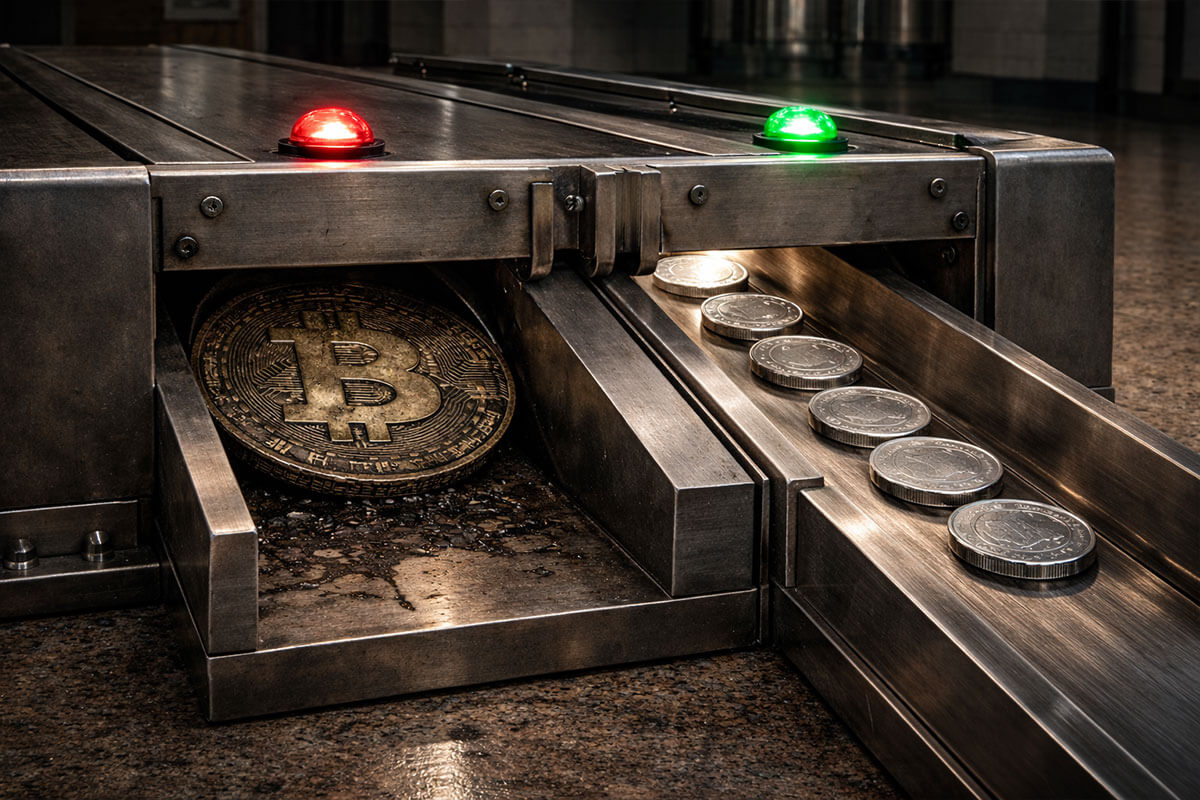
Bitcoin coin stopped at a metal gate while smaller tokens pass through, illustrating Congress targeting crypto wash-sale rules while favoring stablecoin tax treatment
Legal and Regulatory

Congress proposes removal of widely used Bitcoin tax loophole and giving it to regulated stablecoins

March 30, 2026No Comments7 Mins Read
Share
Facebook Twitter LinkedIn Pinterest Email

Congress has introduced the Digital Asset PARITY Act, a bipartisan discussion draft introduced by Reps. Steven Horsford and Max Miller, who would rewrite Section 1091 to cover “specified assets.”

The category explicitly includes actively traded digital assets and their derivatives, and carves out a narrow class of regulated payment stablecoins from routine gain-or-loss recognition.

The draft lands harder on the crackdown side than on the relief side, and that asymmetry is what gives the proposal its sharpest edge.

For years, crypto traders have exploited a gap that stock investors cannot touch. Under current law, wash-sale rules apply to “stock or securities,” a definition that excludes digital assets.

A trader could sell Bitcoin at a loss, buy back in the next day, and still claim the tax deduction, a maneuver the IRS explicitly bars in equity markets.

The PARITY Act draft closes that gap by rewriting Section 1091 to cover actively traded digital assets, notional principal contracts tied to them, and related derivatives, including options, forward contracts, futures contracts, and short positions.

The familiar 30-day-before-and-after replacement window applies, and the wash-sale changes take effect upon enactment.

Topic Current law PARITY Act draft
Section 1091 applies to Stock or securities “Specified assets”
Digital assets covered? No Yes, if actively traded
Derivatives covered? Not as crypto assets Yes: options, forwards, futures, shorts, related contracts
Replacement window 30 days before / after Same
Effective date Already in force for stocks After enactment

The stablecoin carveout

On the other side of the ledger, the draft says sellers recognize no gain or loss on the sale of a “Regulated Payment Stablecoin,” provided the transaction stays within a $0.99-$1.01 per-unit band.

When the exception applies, the taxpayer’s basis in the stablecoin is deemed to be $1.00 per unit for calculating any residual gain or loss.

The carveout does not extend to brokers or dealers in securities or commodities, and related-party transactions carry explicit anti-abuse flags, though those guardrails sit under technical drafting review.

See also  AI Coding Agents Drive Surge In Bitcoin Integration

A stablecoin must be a payment stablecoin under the GENIUS framework, a permitted issuer must issue it, it must peg solely to the US dollar, it must trade within 1% of $1.00 on at least 95% of trading days in the preceding 12 months, and the taxpayer must acquire it within 1% of $1.00.

The stablecoin section takes effect for taxable years beginning after Dec. 31, 2025, and the draft’s explanatory notes say that Congress is still working on whether to include a $200-per-transaction threshold and an aggregate annual limit in the final text.

That internal candor separates the stablecoin side from the wash-sale side, making the latter read like policy Congress has already decided.

The stablecoin carveout reflects the policy Congress wants, with Congress expecting Treasury to supply anti-abuse rules for coordinated arrangements but not yet embedding those guardrails in the black-letter text.

Qualification factor Draft requirement / treatment
Asset type Must be a Regulated Payment Stablecoin
Regulatory status Must qualify as a payment stablecoin under the GENIUS framework
Issuer Must be issued by a permitted issuer
Peg Must be pegged solely to the U.S. dollar
Trading stability test Must trade within 1% of $1.00 on at least 95% of trading days in the prior 12 months
Acquisition test Taxpayer must acquire it within 1% of $1.00
Transaction price band Sale/exchange must remain within $0.99–$1.01 per unit
Tax result if exception applies No gain or loss recognized on sale
Basis treatment Taxpayer’s basis is deemed to be $1.00 per unit for any residual gain/loss calculation
Excluded parties Does not apply to brokers or dealers in securities or commodities
Anti-abuse guardrails Related-party / coordinated-arrangement rules are flagged, but still under technical drafting review
Effective date Applies to taxable years beginning after Dec. 31, 2025
Open issue in draft Congress is still considering a $200 per-transaction threshold and a possible annual aggregate limit

The policy design

Congress is using the tax code to distinguish between “crypto as payment” and “crypto as trading.”

See also  Congress blocks introduction of any CBDC in the next 4 years – but the fight over digital money is just starting

The stablecoin market now sits at roughly $316 billion, with transaction volume exceeding $34 trillion last year, and a Wharton/WEF analysis found that roughly 99% of stablecoin activity still involves digital asset trading rather than payments.

Congress is offering tax relief to the use case it wants to encourage, and writing new costs into the one it wants to constrain.

The wash-sale rule does not apply where the taxpayer applies mark-to-market accounting to the specified asset, and the draft separately creates a mark-to-market election for dealers and traders in digital assets.

The political loser, more specifically, is the ordinary taxpayer using spot crypto for tax-loss harvesting.

Sophisticated trading businesses may access a cleaner elections framework than the current law provides.

The IRS finalized broker reporting rules for digital asset sales, requiring Form 1099-DA for transactions from Jan. 1, 2025, onward, with brokers furnishing taxpayer copies by Feb. 17, 2026.

Most 2025 statements will not include cost basis, leaving taxpayers to calculate it themselves. This means Congress is debating anti-abuse reform at the exact moment retail crypto holders are experiencing standardized reporting for the first time.

The policy direction also reflects a broader consensus that predates the draft. The 2025 White House digital assets report recommended extending wash-sale rules to digital assets, while explicitly stating that those rules should not apply to payment stablecoins.

The 2025 Joint Committee on Taxation report identified the current wash-sale gap and the absence of any de minimis rule for routine digital asset spending.

The PARITY Act is Congress trying to codify a split that tax policy had already mapped.

Where it lands

In an optimistic outcome, lawmakers finalize the stablecoin language cleanly, align it closely with GENIUS definitions, and pair the wash-sale crackdown with a clear $ 200-per-transaction threshold that makes small payments genuinely friction-free.

In that outcome, the tax code accelerates the adoption of on-chain regulated dollars. Visa data show that more than 99% of the stablecoin supply is dollar-denominated, and leading issuers earned more than $7 billion in reserve interest.

See also  IRS unveils Form 1099-DA for 2025 crypto taxes

If the OCC’s projected issuer base under GENIUS fills out, the carveout covers a material share of dollar stablecoin volume. Crypto gains a cleaner payment rail and a more level trading framework at the same time.

For the worst-case scenario, the wash-sale, short-sale, and derivative coverage survive with little dilution while the stablecoin section stalls in technical review, never reaching a final clean text before the legislative calendar tightens.

The mark-to-market election benefits professionals who can navigate an elections framework, and retail investors lose the loophole fastest, with no offsetting simplification on the payments side.

The broader crypto legislation had hit a new impasse, with banks and crypto firms still fighting over stablecoin economics.

The PARITY Act, as a discussion draft with multiple sections explicitly flagged for ongoing technical work, sits directly inside that gridlock. Taxpayers enter the 2026 filing season under new 1099-DA reporting obligations, with Congress pointing toward reform without yet enacting it.

Scenario Wash-sale rules Stablecoin carveout Main winners Main losers
Optimistic Enacted largely as drafted Finalized cleanly, possibly with clear $200 threshold Regulated stablecoin users, compliant firms Tax-loss harvesters
Worst case Crackdown survives Relief stalls in technical review Professional traders using MTM elections Retail crypto holders

Congress is more certain about closing the loophole than about the final contours of the stablecoin carveout.

The wash-sale rewrite is the harder edge of the draft, as it is concrete, broadly scoped, and ready to move. The stablecoin relief is the softer edge, presenting itself as directionally clear, mechanically unfinished, and dependent on a regulated-issuer framework that the OCC is still building out.

The version of the bill that actually reaches a vote will reveal which coalition Congress found less uncomfortable to disappoint.

The post Congress proposes removal of widely used Bitcoin tax loophole and giving it to regulated stablecoins appeared first on CryptoSlate.

Bitcoin Congress giving Loophole proposes regulated removal Stablecoins Tax Widely
Share. Facebook Twitter Pinterest LinkedIn Tumblr Email

Related Posts

New OCC stablecoin rule resets redemptions, and banks face big shifts

October 24, 2026

ABA Bankers Criticize US OCC’s GENIUS Act Rule Update

October 24, 2026

Bitcoin ETFs shed $635 million as BTC tests their holdings’ estimated $81,500 cost basis

October 24, 2026

Treasury Secretary Bessent likens GENIUS Act to Lincoln-era banking reform

October 24, 2026
Add A Comment
Leave A Reply Cancel Reply

Top Posts

Wells Fargo Favors S&P 500 Category That Comprises 30% of Billionaire Warren Buffett’s Portfolio

April 20, 2026

BTC Plunges Under $90,000, Will it Recover?

November 18, 2025

Stay ahead with the latest crypto news, market updates, blockchain insights, and trends. Your trusted source for everything happening in the digital asset world.


We're social. Connect with us:

Facebook X (Twitter) Instagram Pinterest YouTube
Top Insights

New OCC stablecoin rule resets redemptions, and banks face big shifts

October 24, 2026

When Will BTC Hit $100K Again?

October 24, 2026

ABA Bankers Criticize US OCC’s GENIUS Act Rule Update

October 24, 2026
Get Informed

Subscribe to Updates

Get the latest creative news From Free.cc directly in your Inbox!

  • Contact
  • Privacy Policy
  • Terms & Conditions
  • Disclosure
© 2026 free.cc - All rights reserved.

Type above and press Enter to search. Press Esc to cancel.