Close Menu
  • Latest News
    • Bitcoin
    • Ethereum
    • Altcoins
    • Meme Coins
  • Tech
    • Blockchain
    • Security and Privacy
  • Web 3
    • Gaming
  • Legal
    • Legal and Regulatory
    • Adoption
  • Analysis
  • Learn
    • Education
    • Wallets and Exchanges
  • Tools
    • Market Overview
    • Exchange Tool
  • INFO@FREE.CC
What's Hot

Congress Schedules CLARITY Act Hearing For July 17

June 24, 2026

KOSPI Shock Sends Fresh Warning Across Bitcoin And Risk Asse

June 24, 2026

CZ called Hyperliquid’s no KYC model “awesome”

June 24, 2026
Facebook X (Twitter) Instagram
  • Contact
  • Privacy Policy
  • Terms & Conditions
  • Disclosure
Facebook X (Twitter) Instagram
Free.cc (Free Cryptocurrency)Free.cc (Free Cryptocurrency)
  • Latest News
    1. Bitcoin
    2. Ethereum
    3. Altcoins
    4. Meme Coins
    5. View All

    Congress Schedules CLARITY Act Hearing For July 17

    June 24, 2026

    Analyzing Bitcoin’s 15% June decline despite $43mln in whale buys

    June 24, 2026

    Gold Price Drop Sparks Debate Over Crypto Outlook As Kiyosaki Awaits Buy Signal

    June 24, 2026

    Meta is developing a prediction market app called ‘Arena’ as sector booms: NYT

    June 24, 2026

    Why is Crypto Crashing Hard Today? BTC, ETH and XRP Fall 5%

    June 23, 2026

    Top 3 Analysts Reveal Ethereum Price Targets 

    June 23, 2026

    Why Is the Crypto Market Crashing Today?

    June 23, 2026

    Why Can’t Ethereum Price Hold Above $1,800? Key Factors Behind ETH’s Weak Momentum

    June 22, 2026

    KOSPI Shock Sends Fresh Warning Across Bitcoin And Risk Asse

    June 24, 2026

    Spot Bitcoin And Ether ETFs Bleed $134M As Institutions De-R

    June 24, 2026

    Ethereum Foundation Executive Says MEV Is Becoming Crypto’s

    June 23, 2026

    Ripple Secures Preliminary Luxembourg CASP Approval As EU Cr

    June 23, 2026

    Dogecoin Cash Files U.S. Patent for DOGP Blockchain Framework

    June 15, 2026

    How SIREN Went From AI Memecoin to Boom-and-Bust

    June 8, 2026

    Meme Coin Market Faces Imbalance as Supply Rises, Demand Falls

    April 4, 2026

    Crypto Interest Rising Toward Meme Coin Sector

    January 9, 2026

    Congress Schedules CLARITY Act Hearing For July 17

    June 24, 2026

    KOSPI Shock Sends Fresh Warning Across Bitcoin And Risk Asse

    June 24, 2026

    CZ called Hyperliquid’s no KYC model “awesome”

    June 24, 2026

    Analyzing Bitcoin’s 15% June decline despite $43mln in whale buys

    June 24, 2026
  • Tech
    1. Blockchain
    2. Security and Privacy
    3. View All

    Merck and Hashgraph Group launch Hedera-based product passport for EU compliance

    June 12, 2026

    COTI and Midnight Foundation Partner to Advance the Global Privacy Ecosystem

    June 11, 2026

    Cardano Gets Exposure From Olympics Committee

    June 11, 2026

    How Privacy and Composability Trade-Offs Differ

    June 11, 2026

    Microsoft Warns of New USB-Based Malware Targeting Crypto Users

    June 21, 2026

    Fake GitHub Stars and AI Videos Mask a Crypto Clipper

    June 18, 2026

    Zcash Climbs 80% Since June 5 as Traders Shrug off Orchard Bug Fears – Bitcoin News

    June 18, 2026

    Rokarolla Trojan Combines Banking Fraud With Device Surveillance

    June 16, 2026

    Congress Schedules CLARITY Act Hearing For July 17

    June 24, 2026

    KOSPI Shock Sends Fresh Warning Across Bitcoin And Risk Asse

    June 24, 2026

    CZ called Hyperliquid’s no KYC model “awesome”

    June 24, 2026

    Analyzing Bitcoin’s 15% June decline despite $43mln in whale buys

    June 24, 2026
  • Web 3
    1. Gaming
    2. View All

    Loaded Lions’ Mane City Mobile Heads to iOS and Android as Sign-Ups Begin

    June 23, 2026

    Nexus Acquires Homegrown App Marketplace One Store, Expanding into Global Web3 Game Hub

    June 21, 2026

    GoMining Rolls Out GoBTC Pay SDK for Bitcoin Merchant Payments

    June 20, 2026

    Real Finance Launches $ASSET Rewards Campaign to Support RWA Ecosystem Growth

    June 19, 2026

    Congress Schedules CLARITY Act Hearing For July 17

    June 24, 2026

    KOSPI Shock Sends Fresh Warning Across Bitcoin And Risk Asse

    June 24, 2026

    CZ called Hyperliquid’s no KYC model “awesome”

    June 24, 2026

    Analyzing Bitcoin’s 15% June decline despite $43mln in whale buys

    June 24, 2026
  • Legal
    1. Legal and Regulatory
    2. Adoption
    3. View All

    Centralized Wall Street gatekeepers to control investors’ route into tokenized stocks through old pipes

    June 23, 2026

    Europe’s Swedish krona stablecoin arrives with a warning: dollar liquidity may already be too far ahead

    June 22, 2026

    Kraken Fed account fight could shape how crypto firms get direct payment access

    June 22, 2026

    Crypto perps’ US future to be defined by what regulators decide to call them

    June 22, 2026

    South Korean digital bank with 15M users turns to Solana stablecoins for overseas transfers

    June 24, 2026

    Ripple gives RLUSD a MiCA foothold in Europe and route into African payments

    June 23, 2026

    $8.5M DeFi vault pulled overnight: The wake-up call for traders chasing high yields

    June 23, 2026

    British pound stablecoins capped to $53B ceiling as Bank of England sets out stablecoin rules

    June 23, 2026

    Congress Schedules CLARITY Act Hearing For July 17

    June 24, 2026

    KOSPI Shock Sends Fresh Warning Across Bitcoin And Risk Asse

    June 24, 2026

    CZ called Hyperliquid’s no KYC model “awesome”

    June 24, 2026

    Analyzing Bitcoin’s 15% June decline despite $43mln in whale buys

    June 24, 2026
  • Analysis

    CZ called Hyperliquid’s no KYC model “awesome”

    June 24, 2026

    Dogecoin Heads Toward Yearly Lows as Selling Pressure Builds — What’s Next for DOGE Price?

    June 24, 2026

    Solana is subsidizing high-volume traders before on-chain markets prove the activity can stick

    June 24, 2026

    Why Bittensor Price is Falling—Is TAO Heading to $200?

    June 23, 2026

    ‘Abrupt Change of Market Conditions’ Incoming Later This Year for Stocks, Says Fundstrat’s Tom Lee – Here’s Why

    June 23, 2026
  • Learn
    1. Education
    2. Wallets and Exchanges
    3. View All

    What Is BChat? The Decentralized Messaging App Built for Privacy

    June 2, 2026

    What Is an AI Prompt Injection Attack? The Hidden Threat Hijacking Your Chatbots

    May 31, 2026

    What Is AI Jailbreaking? A Beginner’s Guide to the Cat-and-Mouse Game Behind Every Chatbot

    May 17, 2026

    What’s on the Ethereum Roadmap: Glamsterdam, Hegota and Beyond

    March 30, 2026

    HYPE ETFs quietly pulled $161M in one month as Wall Street buys crypto’s on-chain exchange bet

    June 15, 2026

    Crypto exchanges are opening a two-front war for the stock market

    June 12, 2026

    Crypto’s killer app may be selling stocks after its own tokens failed retail

    June 10, 2026

    Vitalik wants DeFi price crashes to stop triggering automatic liquidations

    June 4, 2026

    Congress Schedules CLARITY Act Hearing For July 17

    June 24, 2026

    KOSPI Shock Sends Fresh Warning Across Bitcoin And Risk Asse

    June 24, 2026

    CZ called Hyperliquid’s no KYC model “awesome”

    June 24, 2026

    Analyzing Bitcoin’s 15% June decline despite $43mln in whale buys

    June 24, 2026
  • Tools
    • Market Overview
    • Exchange Tool
  • INFO@FREE.CC
Free.cc (Free Cryptocurrency)Free.cc (Free Cryptocurrency)
Home»Legal and Regulatory»Japan’s 20% crypto tax sets a new bar in Asia, pressuring Singapore and Hong Kong as retail costs fall
Solana
Legal and Regulatory

Japan’s 20% crypto tax sets a new bar in Asia, pressuring Singapore and Hong Kong as retail costs fall

November 24, 2025No Comments7 Mins Read
Share
Facebook Twitter LinkedIn Pinterest Email

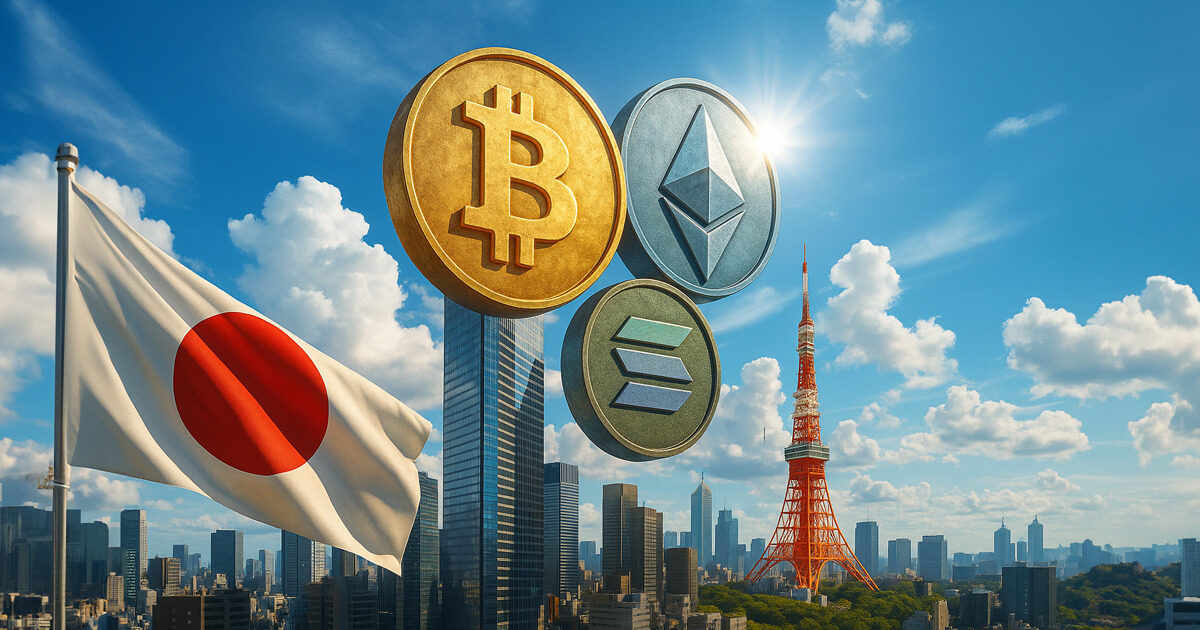
Japan is quietly preparing the most pro-crypto shift of any G7 nation.

According to multiple reports from local media, the Financial Services Agency (FSA) is drafting a sweeping reclassification of digital assets that would bring Bitcoin, Ethereum, and around 100 other tokens under the same umbrella as stocks and investment funds.

If the plan moves forward, Japan will treat these tokens as “financial products” starting in 2026, and with that comes a flat 20% tax, insider trading rules, and institutional pathways that could open the doors for banks, insurers, and public companies.

Why is Japan making the shift now?

For years, crypto in Japan has been operating in a regulatory gray zone. It has been tolerated, taxed heavily, and kept at arm’s length by the country’s most powerful financial institutions.

Under the current system, crypto gains are taxed as miscellaneous income, with marginal rates that can reach 55%. The shift to a financial-product status would reframe crypto as a peer asset to equities, rather than a speculative anomaly.

The timing here is deliberate. The FSA appears to be aiming for submission to the Diet in 2026, giving it a full year to finalize consultations, write legislation, and build a clear taxonomy.

The agency is learning from past failures (both domestic, such as the fallout from Mt. Gox and Coincheck, and global, like FTX and Terra), and rebuilding the crypto framework with institutional credibility in mind.

The proposed overhaul contains three essential components.

First, the tax parity: crypto holders of approved tokens would pay a 20% capital gains tax, the same as equity investors. That makes holding Bitcoin or Ethereum more attractive for long-term savers, corporate treasuries, and retail traders alike.

It also removes one of the most severe fiscal disincentives for Japanese residents to custody crypto domestically, potentially reversing years of offshore migration.

Second, the regulatory recategorization. Tokens like BTC and ETH would be reclassified under the Financial Instruments and Exchange Act (FIEA), Japan’s core securities law.

See also  Trump’s Crypto Czar Role Sits Empty as White House Names Vance Fraud Czar

That status triggers a raft of requirements, from issuer disclosures to insider trading enforcement, which signal to banks and brokerage arms that these assets now sit within their compliance perimeters.

If implemented as reported, these rules could authorize certain banks and financial institutions to offer crypto exposure directly to clients via affiliated brokerages or custodians.

Third, and perhaps most structurally important, is the gatekeeping function. The FSA is said to be curating a whitelist of roughly 105 tokens that meet the standards for classification.

This creates a bifurcated market: inside the regulatory perimeter, access to bank-grade custody, stock-like taxation, and institutional rails; outside it, tighter restrictions, limited exchange access, and a higher compliance burden.

For investors and token teams, this boundary could become a hard dividing line between what’s viable in Japan and what’s not.

A region takes notice

If Japan moves first on this front, it will be light-years ahead of its G7 peers in terms of regulatory clarity. But it won’t be alone in Asia. Singapore is already bedding in a new licensing regime that links tokenized deposits and stablecoins to card networks and banking pipes.

Hong Kong is piloting a tokenized green bond platform through the HKMA and giving banks regulatory room to handle digital assets via existing securities licenses. Korea, too, has launched a phased framework for crypto adoption among its largest corporations, with Samsung and SK exploring tokenized fund issuance and blockchain custody.

Jurisdiction Token Licensing Tax Clarity Stablecoin Rules Bank Participation Institutional Access
Japan ⚠ In progress (FSA whitelist) ✅ Proposed 20% flat ⚠ Early-stage ⚠ Conditional (2026+) ⚠ Pending legal changes
Singapore ✅ Live under PSA framework ⚠ No capital gains tax ✅ Licensing + pilots live ✅ Bank-linked products approved ⚠ Some constraints
Hong Kong ⚠ VATP licensing live ⚠ Case-by-case ✅ Stablecoin consultation underway ⚠ Under securities framework ⚠ Pilot-stage
South Korea ⚠ Gradual rollout ⚠ 2025 tax law pending ⚠ Still forming ⚠ Limited ⚠ Emerging

Note: ✅ = in place; ⚠ = partial or in progress; ❌ = absent. Based on public disclosures, 2025.

What sets Japan apart is that it’s tying everything to its domestic tax and disclosure rules. While Singapore and Hong Kong have focused more on custody, listing, and payment infrastructure, Japan is fixing one of the most decisive levers: after-tax returns.

See also  Belarus forms task force to crack down on illegal crypto transactions

If Japanese retail traders go from paying 55% to 20% on crypto gains, that could meaningfully tilt behavior. If banks and insurance groups are cleared to offer crypto-linked products under existing investment frameworks, that opens a path to institutional allocation that other G7 nations haven’t unlocked.

The effect on capital flows across Asia could be swift. Japanese exchanges could see higher net deposits as users bring assets home from offshore wallets. If local ETF providers get greenlit to offer Bitcoin and Ethereum vehicles, capital that had previously flowed to spot ETFs in the US might be repatriated.

Institutional treasuries that avoided crypto entirely under the old regime may begin to enter at the margins, especially if accounting rules and custodial infrastructure follow.

Year Bear Case Base Case Bull Case
2025 $0 $0 $0
2026 $100m $300m $800m
2027 $150m $700m $1,800m

Source: CryptoSlate modelling for crypto fund inflows in Japan based on proposed Japanese FSA reforms. Scenario ranges reflect ETF approval scope and institutional adoption speed.

This also raises pressure on regional competitors. Singapore has long promoted itself as a crypto hub, but it taxes capital gains only because it doesn’t formally recognize them at the personal level. Hong Kong is still recovering trust after the JPEX scandal and faces political constraints.

Korea is watching closely; its 2025 crypto tax regime could be revisited if Japan’s model proves more effective. And the US is nowhere near consensus on how to treat digital assets under securities law or tax code, despite efforts made in the House and Senate.

Country Tax Rate (Crypto Gains) Asset Classification Retail Access Institutional Access
Japan Up to 55% (current); 20% flat (proposed) “Financial Products” for 105 tokens (proposed) Broad (via registered exchanges) Conditional (via brokers/banks under new rules)
United States 0%–37% (based on holding and bracket) Property / Some tokens as securities Broad Growing via ETFs and custody channels
United Kingdom 20%–28% CGT, varies by bracket Property / Non-regulated for most tokens Broad Limited
Germany 0% after 1 year; otherwise income tax Private Asset (long-term holding) Broad Emerging
France Flat 30% on crypto gains Digital Asset (under AMF oversight) Broad Limited
Australia CGT based on income/timing Property / Digital Asset Broad Emerging
See also  CLARITY Act momentum slows to a crawl as lawmakers clash over crypto ethics rules

Source: National tax guidelines, local crypto frameworks (2025). Classification for Japan is proposed for 2026.

What this means for BTC, ETH, and SOL

The short-term impact for Bitcoin, Ethereum, and Solana depends on execution. The FSA has not published a draft bill yet, and no official list of the 105 tokens has been made public. The political calendar could delay progress, or the asset list could be narrower than hoped.

But structurally, the direction is clear: Bitcoin and Ethereum are being slotted into the same legal and tax frameworks as mainstream financial instruments.

If the rules come into force in 2026, that would coincide with the likely second full year of US spot ETF flows, the maturing of Europe’s MiCA framework, and the rollout of stablecoin legislation in the UK. That convergence could produce the clearest regulatory environment crypto has ever had across the major developed markets.

But, it’s important to note that crypto in Japan isn’t being de-risked, but rather normalized through rulebooks. For institutions, that’s the safer path. For retail, the tax shift changes the incentives.

And for Asia, it means one of the world’s largest capital pools is setting a standard others will likely be forced to match. The next two years will define where, how, and under what rules capital will move when it does.

The post Japan’s 20% crypto tax sets a new bar in Asia, pressuring Singapore and Hong Kong as retail costs fall appeared first on CryptoSlate.

Asia Bar Costs Crypto Fall Hong Japans Kong pressuring retail sets Singapore Tax
Share. Facebook Twitter Pinterest LinkedIn Tumblr Email

Related Posts

Gold Price Drop Sparks Debate Over Crypto Outlook As Kiyosaki Awaits Buy Signal

June 24, 2026

European Union’s ESMA Orders Unlicensed Crypto Firms To Exit EU Market As MiCA Deadline Arrives

June 23, 2026

Why is Crypto Crashing Hard Today? BTC, ETH and XRP Fall 5%

June 23, 2026

Donald Trump’s Crypto Regulation Timeline (2025–2026) and Bitcoin Price Reaction

June 23, 2026
Add A Comment
Leave A Reply Cancel Reply

Top Posts

Will WLD Price Hit $10?

September 10, 2025

Florida Crypto Confab Unshaken by Bitcoin Volatility

November 6, 2025

Stay ahead with the latest crypto news, market updates, blockchain insights, and trends. Your trusted source for everything happening in the digital asset world.


We're social. Connect with us:

Facebook X (Twitter) Instagram Pinterest YouTube
Top Insights

Congress Schedules CLARITY Act Hearing For July 17

June 24, 2026

KOSPI Shock Sends Fresh Warning Across Bitcoin And Risk Asse

June 24, 2026

CZ called Hyperliquid’s no KYC model “awesome”

June 24, 2026
Get Informed

Subscribe to Updates

Get the latest creative news From Free.cc directly in your Inbox!

  • Contact
  • Privacy Policy
  • Terms & Conditions
  • Disclosure
© 2026 free.cc - All rights reserved.

Type above and press Enter to search. Press Esc to cancel.