Close Menu
  • Latest News
    • Bitcoin
    • Ethereum
    • Altcoins
    • Meme Coins
  • Tech
    • Blockchain
    • Security and Privacy
  • Web 3
    • Gaming
  • Legal
    • Legal and Regulatory
    • Adoption
  • Analysis
  • Learn
    • Education
    • Wallets and Exchanges
  • Tools
    • Market Overview
    • Exchange Tool
  • INFO@FREE.CC
What's Hot

Crypto leaked by South Korean tax officials stolen a second time

March 6, 2026

Pi Network Co-Founder Unveils Crucial KYC Updates Every Pioneer Needs to Know

March 6, 2026

How Extreme Negative Funding Is Priming XRP For A High-Velocity Trend Reversal

March 6, 2026
Facebook X (Twitter) Instagram
  • Contact
  • Privacy Policy
  • Terms & Conditions
  • Disclosure
Facebook X (Twitter) Instagram
Free.cc (Free Cryptocurrency)Free.cc (Free Cryptocurrency)
  • Latest News
    1. Bitcoin
    2. Ethereum
    3. Altcoins
    4. Meme Coins
    5. View All

    The Core Issue: Consensus Cleanup

    March 6, 2026

    Canada launches new multi-crypto ETF as banks enter the sector

    March 6, 2026

    Bitcoin Price Debate Ignites as Bull Trap Warning Clashes With On-Chain Data

    March 6, 2026

    Bitcoin Primed for Rally Through March if History Repeats, According to Benjamin Cowen – But There’s a Catch

    March 5, 2026

    Top Analyst Reveals What’s Next For Bitcoin, Ethereum and XRP

    March 5, 2026

    Ethereum Price Analysis: Institutional Buying Returns as Whales Accumulate

    March 5, 2026

    Ethereum Hovers at $2,150 — Can ETH Price Rally to $2,400 or Stall Below $2,200?

    March 5, 2026

    Vitalik Buterin Admits Ethereum Hasn’t Meaningfully Improved People’s Lives

    March 5, 2026

    How Extreme Negative Funding Is Priming XRP For A High-Velocity Trend Reversal

    March 6, 2026

    Bitcoin Liquidity Set To Expand With Morgan Stanley BTC ETF Option

    March 6, 2026

    Bitcoin Suppressed By Shadow Banking Rehypothecation: Saylor

    March 5, 2026

    XRP Price Retests Decade-Old Trendline That Previously Triggered 630%+ Rallies

    March 5, 2026

    Crypto Interest Rising Toward Meme Coin Sector

    January 9, 2026

    Memes Market Cap Adds $10B in Days: Fresh Capital or Dead-Cat-Bounce?

    January 5, 2026

    Meme Coin Market Surges Past $45B as Shiba Inu, PEPE, BONK Stage 54% Price Pump

    January 4, 2026

    US Ranks #1 in CoinGecko Global Meme Coin Interest Report

    December 18, 2025

    Crypto leaked by South Korean tax officials stolen a second time

    March 6, 2026

    Pi Network Co-Founder Unveils Crucial KYC Updates Every Pioneer Needs to Know

    March 6, 2026

    How Extreme Negative Funding Is Priming XRP For A High-Velocity Trend Reversal

    March 6, 2026

    The Core Issue: Consensus Cleanup

    March 6, 2026
  • Tech
    1. Blockchain
    2. Security and Privacy
    3. View All

    Pi Network Co-Founder Unveils Crucial KYC Updates Every Pioneer Needs to Know

    March 6, 2026

    Startale App Integrates Kyo Finance to Power Seamless Swaps on Soneium

    March 6, 2026

    ICB Network and Mokoko AI Entail Strategic Partnership to Transform Web3 Gaming Infrastructure

    March 6, 2026

    Atlasbrary and Flux Partner to Boost Scalable Web3

    March 5, 2026

    Leaked Database Sheds Light on Iranian Crypto Sanctions Evasion

    March 4, 2026

    DOJ seizures of $580M expose how crypto investment scams scaled into shift work with quotas and scripts

    March 3, 2026

    Aeternum Botnet Shifts Command Control to Polygon Blockchain

    February 27, 2026

    Former Defense Contractor Boss Gets 7+ Years for Selling Zero Days

    February 26, 2026

    Crypto leaked by South Korean tax officials stolen a second time

    March 6, 2026

    Pi Network Co-Founder Unveils Crucial KYC Updates Every Pioneer Needs to Know

    March 6, 2026

    How Extreme Negative Funding Is Priming XRP For A High-Velocity Trend Reversal

    March 6, 2026

    The Core Issue: Consensus Cleanup

    March 6, 2026
  • Web 3
    1. Gaming
    2. View All

    METYA Partners With Kult Games to Expand Web3 Gaming Ecosystem

    March 6, 2026

    AurumX Collaborates with FishWar to Redefine Web3-Based Gaming Economies

    March 5, 2026

    C. Thi Nguyen: Prioritizing enjoyment over efficiency in games, the pitfalls of social media scoring systems, and how metrics can obscure true value

    March 4, 2026

    NFTs as Programmable Ownership Layers | Web3 Infrastructure Explained

    March 3, 2026

    Crypto leaked by South Korean tax officials stolen a second time

    March 6, 2026

    Pi Network Co-Founder Unveils Crucial KYC Updates Every Pioneer Needs to Know

    March 6, 2026

    How Extreme Negative Funding Is Priming XRP For A High-Velocity Trend Reversal

    March 6, 2026

    The Core Issue: Consensus Cleanup

    March 6, 2026
  • Legal
    1. Legal and Regulatory
    2. Adoption
    3. View All

    Crypto leaked by South Korean tax officials stolen a second time

    March 6, 2026

    Reform UK tops donations with millions from Thailand-based crypto investor: Report

    March 6, 2026

    Donald Trump’s crypto legacy in two words: Paul Atkins

    March 6, 2026

    International finance watchdog warns stablecoins are increasingly used in sanctions evasion and money laundering

    March 5, 2026

    XRP and XRPL get a credibility lift from Ripple’s expanding footprint

    March 5, 2026

    XRP rewrites the playbook for altcoin ETF approvals to surge in late 2026 after a wave of futures listings

    March 4, 2026

    Bitcoin ETF custody concentrates power in one place, and now a single operational failure causes dangerous ripples

    March 3, 2026

    Revolut’s stablecoin test targets its 12M UK users

    March 3, 2026

    Crypto leaked by South Korean tax officials stolen a second time

    March 6, 2026

    Pi Network Co-Founder Unveils Crucial KYC Updates Every Pioneer Needs to Know

    March 6, 2026

    How Extreme Negative Funding Is Priming XRP For A High-Velocity Trend Reversal

    March 6, 2026

    The Core Issue: Consensus Cleanup

    March 6, 2026
  • Analysis

    XRP Price Consolidates Under $1.5 — What Could Drive the Next Move to $2?

    March 5, 2026

    Israel’s weekly $3B Iran war cost equals over 41,000 Bitcoin

    March 5, 2026

    Chainlink Price Gains Attention After Visa e-HKD Pilot and LINK Chart Signals Possible Breakout

    March 5, 2026

    Can the Bulls Push the Price to $1.16 as $1 Resistance is Back in Focus

    March 5, 2026

    Bitcoin investors may not need altcoins to diversify if tokenized stocks move on-chain

    March 5, 2026
  • Learn
    1. Education
    2. Wallets and Exchanges
    3. View All

    What Is Strategy (MSTR)? The Bitcoin Treasury Company

    February 21, 2026

    What Are Prediction Markets? How Polymarket, Kalshi and Myriad Work

    February 13, 2026

    What Is Farcaster? The Decentralized Social Media Protocol

    February 10, 2026

    What Is Venice AI? The Privacy-Focused Chatbot

    January 13, 2026

    Crypto platform aims to let retail investors buy IPO shares at the same price as Wall Street insiders

    March 6, 2026

    The company holding all Bitcoin ETF coins is losing money, resurfacing questions about centralization

    February 21, 2026

    The Bitcoin CME gap will now close forever in May leaving a return to $84k hanging

    February 21, 2026

    Robinhood’s $221 million crypto revenue drop shows crypto winter isn’t on chain and retail already moved

    February 16, 2026

    Crypto leaked by South Korean tax officials stolen a second time

    March 6, 2026

    Pi Network Co-Founder Unveils Crucial KYC Updates Every Pioneer Needs to Know

    March 6, 2026

    How Extreme Negative Funding Is Priming XRP For A High-Velocity Trend Reversal

    March 6, 2026

    The Core Issue: Consensus Cleanup

    March 6, 2026
  • Tools
    • Market Overview
    • Exchange Tool
  • INFO@FREE.CC
Free.cc (Free Cryptocurrency)Free.cc (Free Cryptocurrency)
Home»Analysis»Kalshi and Polymarket face a “sports gambling” probe that could void your trades and shut down the market
Analysis

Kalshi and Polymarket face a “sports gambling” probe that could void your trades and shut down the market

January 17, 2026No Comments10 Mins Read
Share
Facebook Twitter LinkedIn Pinterest Email

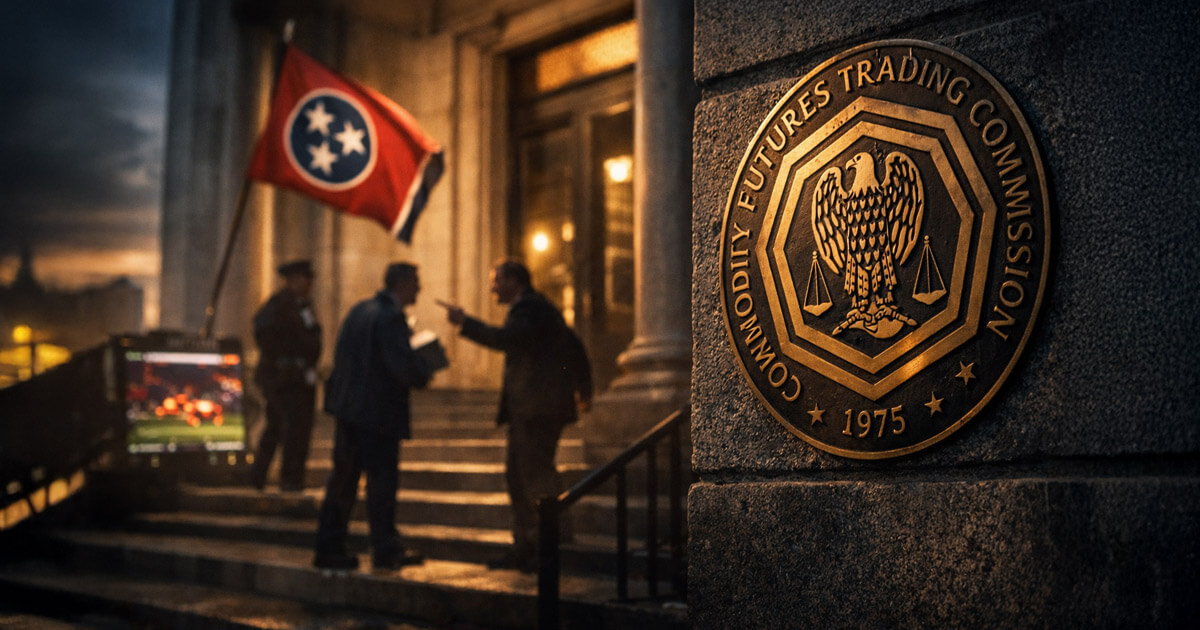
On Jan. 9, Tennessee’s sports betting regulator sent a set of letters that, at first glance, looked like the kind of paperwork most crypto natives scroll past.

The message was blunt: stop offering sports-related event contracts to Tennessee residents, void unsettled positions, and refund customers by Jan. 31.

The recipients, Kalshi, Polymarket, and Crypto.com, sit on the border between finance and gambling.

A “yes/no” trade on a game outcome can be framed either as a federally regulated derivative or as an unlicensed sportsbook.

Within days, the fight moved to federal court.

A US district judge in Nashville, Aleta Trauger, issued a temporary restraining order blocking Tennessee from enforcing its cease-and-desist against Kalshi while the case proceeds. She also set a Jan. 26 hearing on a longer-lasting injunction.

Tennessee says the company is running an illegal gambling operation without a state license and allowing underage betting.

Kalshi says Tennessee is trying to regulate products that fall under the exclusive jurisdiction of the Commodity Futures Trading Commission (CFTC).

The immediate story is a state crackdown and a compliance deadline.

The larger story is a jurisdictional stress test: Can a state sports wagering council fence off contracts that a federally designated exchange claims it has the right to list nationwide?

If states keep pushing, what happens to the most promising new retail funnel crypto has found since memecoins: an interface that turns current events into tradable contracts?

Polymarket seems riddled with insider trading yet a massive Dow Jones partnership just validated prediction markets
Related Reading

Polymarket seems riddled with insider trading yet a massive Dow Jones partnership just validated prediction markets

WSJ, Barron’s, and MarketWatch will run Polymarket probabilities while definitional chaos and resolution drama keep resurfacing.

Jan 8, 2026 · Gino Matos

The jurisdiction fight: who gets to decide what this is?

We need to begin with the uncomfortable fact that both sides have a credible-sounding legal theory.

From Kalshi’s perspective, it’s not a sportsbook. It’s a designated contract market, the CFTC’s term for an exchange regulated under the Commodity Exchange Act, akin to a traditional futures venue that can serve retail participants.

The CFTC has publicly described designated contract markets as exchanges operating under its oversight.

In 2020, the agency announced it had granted KalshiEX an order of designation as a contract market.

Kalshi’s legal argument leans on a powerful clause in federal commodities law: the CFTC “shall have exclusive jurisdiction” over certain derivatives transactions, including those traded on a designated contract market.

That language exists because Congress wanted one national referee for derivatives, rather than 50 state rulebooks.

From Tennessee’s perspective, none of that matters if the product, in substance, is sports wagering.

The Tennessee Sports Wagering Council (SWC) regulates sports betting under state law, including who can bet (the letters and related reporting cite more than 21 requirements), what consumer protections apply, and what taxes licensed operators must pay.

The SWC accused the platforms of offering sports contracts without a license, violating state eligibility rules, and lacking required protections.

It is all language that frames event contracts as a consumer and public-interest problem rather than a financial innovation.

This is where prediction markets collide with America’s peculiar regulatory geography: derivatives are mostly federal, and gambling is mostly state.

See also  Onchain Signals Elevating XRP Rally Odds

Sports betting, in particular, is intensely local.

If a product can plausibly be described as either a derivative or a wager, the question becomes which system is allowed to define it first.

Tennessee’s case arrives after a headline-making loss for Kalshi in Nevada, where a federal judge concluded the platform was subject to state gaming rules, a decision Kalshi appealed.

That Nevada ruling undercuts the clean “federal preemption” story and emboldens states that see sports contracts as a workaround around licensing regimes they fought to build.

At the same time, the CFTC itself has sent mixed signals, partly by design.

On its website, the agency describes event contracts as derivatives whose payoff is based on specified events (economic indicators, weather, damages from a hurricane).

It also emphasizes that CFTC Regulation 40.11 prohibits event contracts that reference terrorism, war, gaming, or activities unlawful under state or federal law, among other categories.

Gaming is the fulcrum. If sports outcome contracts are seen as “gaming,” they’re in the forbidden zone.

If they’re framed as “information contracts” with economic utility, they belong in the tradable universe the CFTC oversees.

In 2025, the CFTC issued an advisory noting that sports-related event contracts listed on designated contract markets had been listed via self-certification.

The advisory said the Commission had not, to date, taken official approval action on listing sports-related event contracts under certain CEA provisions.

While the advisory had little practical impact on the market, its language reads like a regulator leaving itself room to intervene later.

So when Tennessee draws its line, it isn’t just daring Kalshi, Polymarket, or Crypto.com.

It’s testing whether the federal system will defend the premise that a nationally regulated derivatives exchange can list sports-related contracts, and whether the CFTC will tolerate the category becoming a parallel sportsbook industry.

Crypto prediction app Polymarket exploited by a Jellyfish UFO – no really
Related Reading

Crypto prediction app Polymarket exploited by a Jellyfish UFO – no really

A viral “Trump declassifies UFO files” contract surged to 80%+, yet it only pays if actual declassification happens.

Dec 10, 2025 · Gino Matos

Compliance theater: what platforms do when the law is both everywhere and nowhere

The popular version of compliance is a checklist: follow the rules, file the forms, move on.

That works when the rules are clear and the regulator is singular.

But prediction markets don’t have that luxury.

They operate in a jurisdictional overlap, and the overlap produces a distinct kind of compliance behavior.

You might call it compliance theater, not because it’s fake, but because it’s performative.

Every move you make, and every word you say in the compliance theater, sends a message about who you think has authority.

If a platform receives a cease-and-desist letter and immediately geofences the state, refunds users, and voids contracts, it reduces legal exposure and avoids penalties.

But it also concedes, in practice, that the state regulator’s theory is enforceable.

If it refuses, it may preserve its legal position, but it risks escalating enforcement, including civil fines and potential criminal referrals.

See also  Bitcoin remains king with $2.67B inflow in turbulent market

It may also have to spend months in court to keep operating.

Reporting on the Tennessee letters described potential civil penalties of up to $25,000 per violation for noncompliance.

Kalshi chose to litigate.

Reuters reports the company argued Tennessee was unconstitutionally trying to ban contract trading on its platform.

The judge’s temporary restraining order suggests the court thinks Kalshi may have a real case, at least at this early stage.

But even a win has costs. Litigation is slow, and markets are fast.

If an exchange is in court in eight states at once, as Reuters reported Kalshi has been, then operational certainty becomes a scarce resource.

Compliance teams, product roadmaps, and partnerships all get shaped by what the next state might do.

The theater aspect shows up in product design, too.

Platforms can raise minimum ages, add “responsible gambling” tools, improve AML processes, and tighten geo-controls as much as they want.

But each change can be read two ways.

A state regulator may say: You’re admitting this is gambling.

A federal-derivatives advocate may say: You’re acting like a mature market operator, the way brokerages do when they restrict certain risky products.

This is why the Tennessee letters matter beyond Tennessee.

A state-by-state enforcement approach creates market fragmentation.

Liquidity gets chopped into permitted jurisdictions, user experience deteriorates, affiliate distribution becomes harder, and the product category stops looking like a nationwide market.

Instead, it starts to look like an app with 50 different versions.

That fragmentation is exactly what crypto-native distribution was supposed to avoid.

How Polymarket war betting is putting civilians at risk by disrupting humanitarian aid maps
Related Reading

How Polymarket war betting is putting civilians at risk by disrupting humanitarian aid maps

A volunteer war map built to guide evacuations now sits in Polymarket rulebooks as an oracle for gambling on captured cities.

Dec 1, 2025 · Andjela Radmilac

Information market or sports betting: the category identity crisis

In financial regulation, products are often judged by their economic purpose and their market structure.

Futures and options exist not just to speculate but to hedge, discover prices, and transfer risk.

Gambling laws, by contrast, are built around consumer harm, addiction risk, and the integrity of games.

Event contracts can plausibly claim the first angle when the event is economic.

A contract that settles on a CPI print, for example, can be used to hedge inflation exposure or express a view on macro risk.

That framing aligns with how the CFTC describes event contracts on its site, as macroeconomic indicators are one of the examples it provides.

Sports are harder.

What economic risk is being hedged by a binary contract on the outcome of a football game?

TradFi brokers to offer crypto prediction markets, but with sports betting blocked locally
Related Reading

TradFi brokers to offer crypto prediction markets, but with sports betting blocked locally

The next time you open your brokerage app, you might see questions instead of tickers.

Dec 1, 2025 · Andjela Radmilac

Some advocates argue sports markets aggregate dispersed information (injuries, weather, strategy) and can serve as high-signal prediction tools.

Critics counter that the simplest explanation is the correct one: it’s a wager on a game, offered in a wrapper that conveniently avoids sportsbook licensing.

See also  Billionaire Stanley Druckenmiller Pours $290,836,000 Into Two Assets, Exits Exposure To Three Major US Banks

The law anticipates this disagreement.

The CFTC’s 40.11 rule is explicit about restricting event contracts tied to “gaming,” and it also ties prohibition to activities that are unlawful under state or federal law.

That is exactly the lever Tennessee is pulling.

Here is the tricky part for platforms: even if they believe sports contracts are permissible derivatives, the public-policy case for them is weaker than the case for election odds or inflation markets.

That matters because the CFTC’s authority in this area is more than just technical; it’s public-interest flavored.

Reuters reported in 2024 that the CFTC proposed changes to its event contract rule, reflecting legal pressure and the need to better justify why certain categories should be treated as contrary to the public interest.

The underlying theme is that “Can we list it?” isn’t just a statutory question; it’s also a reputational one.

Now add crypto to the mix.

The retail market wants a product that feels intuitive, social, and immediate: a trade you can understand without learning AMMs or reading a whitepaper.

Sports event contracts are that product.

They sit at the intersection of fandom, real-time information, and the dopamine loop of a simple yes/no outcome.

That’s why the Tennessee letters target the exact format that could rebuild crypto’s mainstream attention without asking users to care about blockspace.

Which is also why states are reacting.

Sports betting is a tightly regulated and extremely lucrative ecosystem.

If a federally regulated exchange can offer an adjacent product nationwide without state licensing, it threatens the gatekeeping model that states rely on: taxes, consumer controls, and a controlled operator list.

Even if the “event contracts” on these platforms are smaller in scale today, the precedent is large.

TradFi brokers to offer crypto prediction markets, but with sports betting blocked locally
Related Reading

TradFi brokers to offer crypto prediction markets, but with sports betting blocked locally

The next time you open your brokerage app, you might see questions instead of tickers.

Dec 1, 2025 · Andjela Radmilac

What happens next

If Kalshi wins in Tennessee and similar states, the category gets a shot at legitimacy.

Then the pressure shifts to the CFTC to clarify whether sports contracts are compatible with its public-interest mandate.

If states keep winning, platforms will either retreat into geofenced compliance, turning national liquidity into local pools, or push users toward workarounds that regulators can’t easily monitor.

The most likely near-term outcome is neither a clean federal victory nor a total state shutdown, but a messy middle.

Expect patchwork availability, periodic enforcement flashes, and a constant identity argument in which “information markets” and “sports betting” keep swapping masks depending on the courtroom.

And that, more than the Jan. 31 refund deadline, is what makes Tennessee’s letters a real market-structure story.

They are forcing the industry to answer a question it has tried to postpone: In America, is a tradable yes/no contract on a game a financial instrument, or just gambling with better UX?

Mentioned in this article
face gambling Kalshi market Polymarket probe shut Sports trades void
Share. Facebook Twitter Pinterest LinkedIn Tumblr Email

Related Posts

XRP Price Consolidates Under $1.5 — What Could Drive the Next Move to $2?

March 5, 2026

Israel’s weekly $3B Iran war cost equals over 41,000 Bitcoin

March 5, 2026

Chainlink Price Gains Attention After Visa e-HKD Pilot and LINK Chart Signals Possible Breakout

March 5, 2026

Can the Bulls Push the Price to $1.16 as $1 Resistance is Back in Focus

March 5, 2026
Add A Comment
Leave A Reply Cancel Reply

Top Posts

Top 5 Strategies for Investing in IGOs in 2025

September 25, 2025

‘Bad news for bulls’ – Is Bitcoin’s bear market far from over?

February 19, 2026

Stay ahead with the latest crypto news, market updates, blockchain insights, and trends. Your trusted source for everything happening in the digital asset world.


We're social. Connect with us:

Facebook X (Twitter) Instagram Pinterest YouTube
Top Insights

Crypto leaked by South Korean tax officials stolen a second time

March 6, 2026

Pi Network Co-Founder Unveils Crucial KYC Updates Every Pioneer Needs to Know

March 6, 2026

How Extreme Negative Funding Is Priming XRP For A High-Velocity Trend Reversal

March 6, 2026
Get Informed

Subscribe to Updates

Get the latest creative news From Free.cc directly in your Inbox!

  • Contact
  • Privacy Policy
  • Terms & Conditions
  • Disclosure
© 2026 free.cc - All rights reserved.

Type above and press Enter to search. Press Esc to cancel.