

Bitcoin’s correction from nearly $126,000 to around $60,000 triggered heavy realization activity across the network. However, the Sell-side Risk Ratio has since retreated toward the lower realization band near 0.1%, revealing a different market environment.
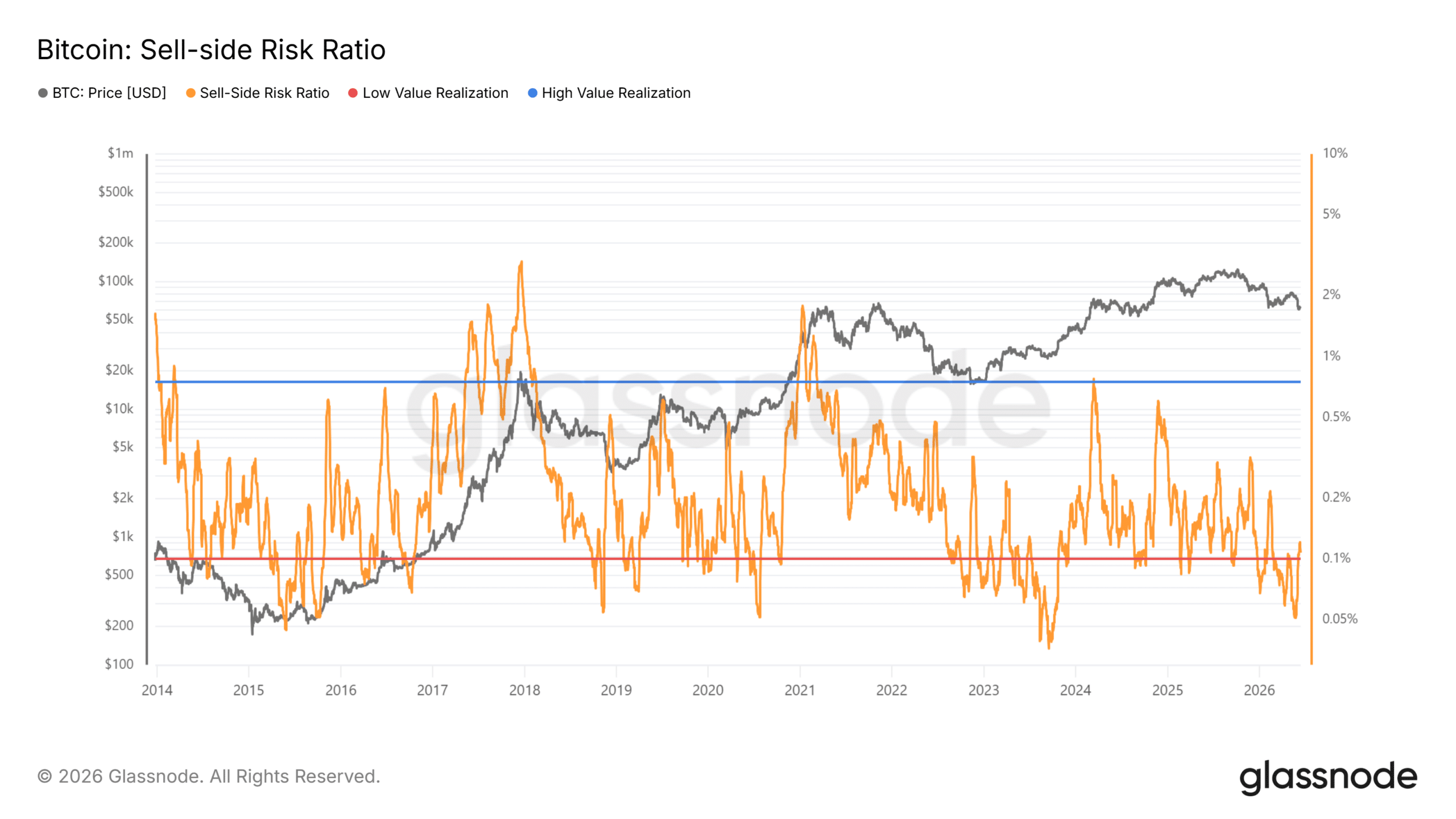
Historically, spikes above 1% accompanied major cycle tops and periods of intense profit-taking, as seen in 2017 and 2021. Since then, the metric has steadily compressed, while Bitcoin continues trading far above previous bear market lows.
This decline suggests investors are realizing fewer significant profits or losses, which points to reduced economic activity rather than renewed distribution.
Open Interest holds near $47 billion, yet leverage rebuilds cautiously. Therefore, Bitcoin [BTC] appears locked in a waiting phase, where stronger spot demand remains necessary to break the current equilibrium.
Historical bear signals meet persistent accumulation
As selling pressure continues to ease and leverage rebuilds gradually, attention is shifting toward Bitcoin’s broader cycle structure.
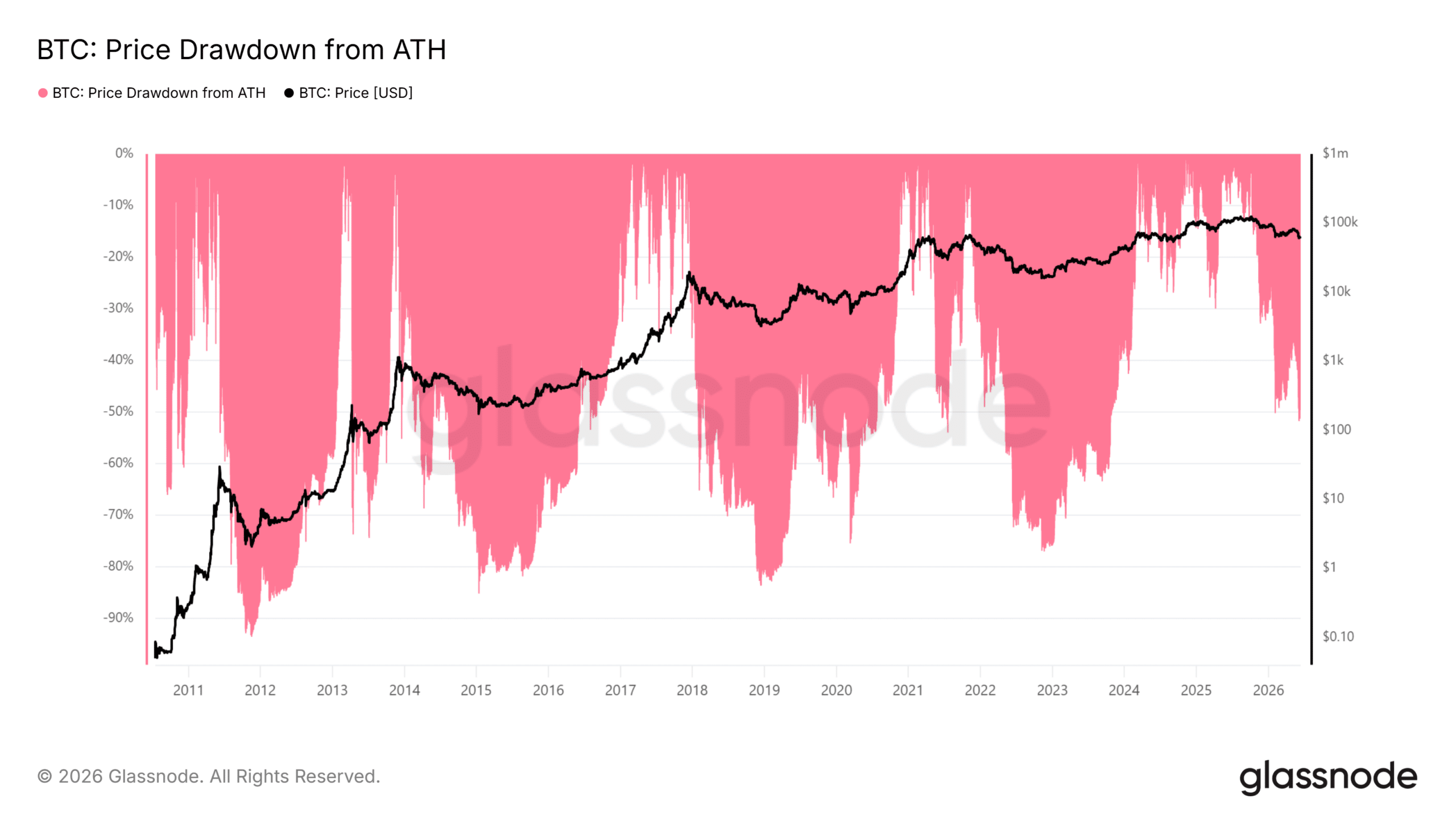
Recent price action increasingly mirrors the recovery phases that followed the 2014, 2018, and 2022 bear markets, where stabilization preceded stronger trends. This resemblance helps explain why sentiment remains cautious despite improving on-chain conditions.
Yet conviction continues strengthening beneath the surface. Long-Term Holder (LTH) supply has risen to 16.46 million BTC worth roughly $961 million, while stablecoin liquidity remains near $315 billion according to DeFiLlama.
Together, these trends suggest patient accumulation persists. Therefore, Bitcoin remains caught between cyclical caution and long-term resilience.
Bitcoin’s selling pressure fades, demand lags yet
Bitcoin’s recent stabilization suggests selling pressure is fading, yet demand remains insufficient to confirm a lasting recovery. Spot Taker CVD shows bearish momentum weakening, although buyers have not seized control.
ETF inflows of $85 million support sentiment; however, earlier outflows continue limiting confidence. Meanwhile, the Coinbase Premium Index remains neutral, reflecting cautious spot participation.
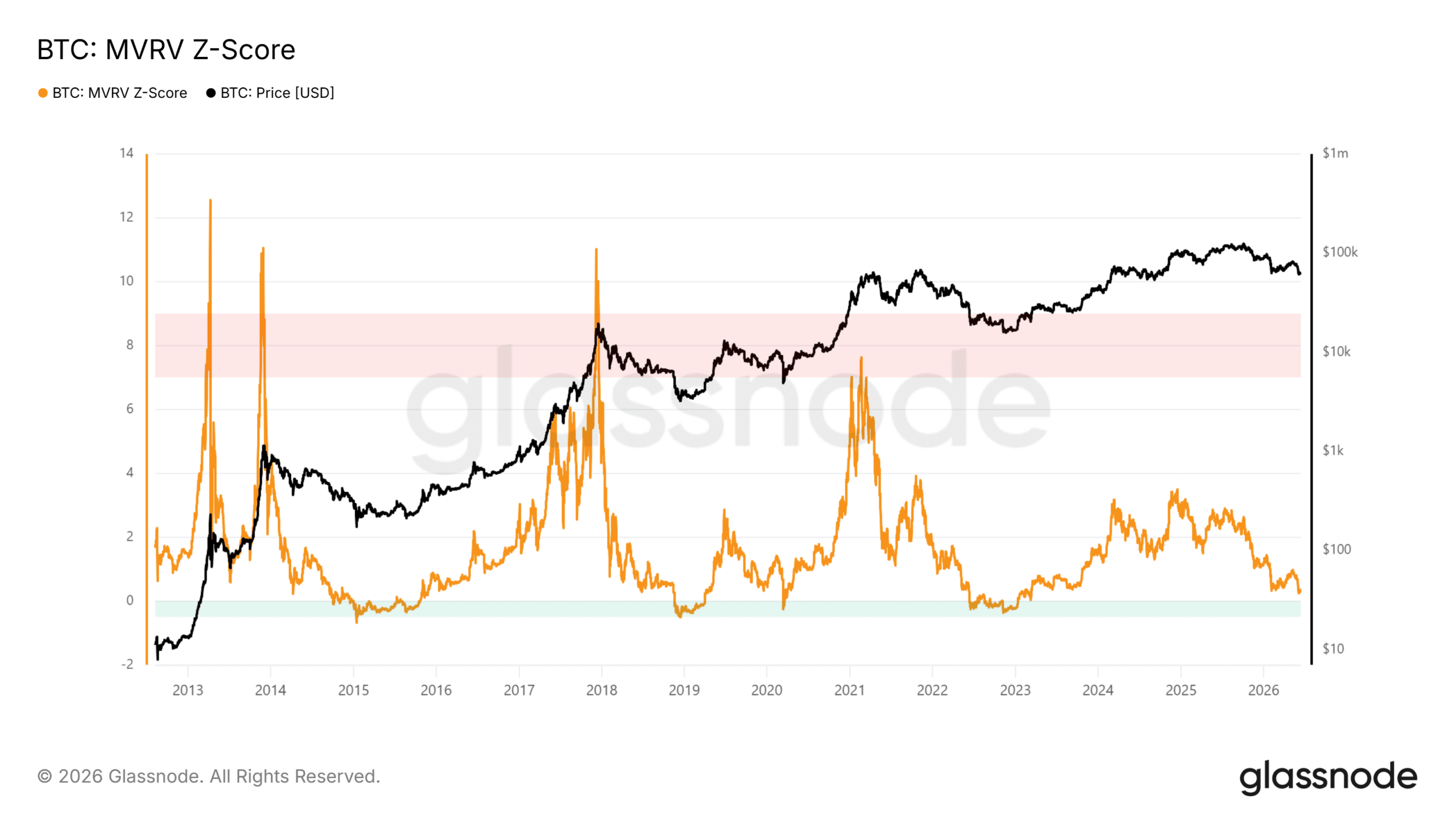
On-chain data reinforces this picture. The MVRV Z-Score near 0.37 approaches historical value zones, while the STH-MVRV at 0.84 shows short-term holders remain under pressure.
Therefore, Bitcoin appears to be shifting from distribution toward stabilization, though stronger demand remains essential.
Final Summary
- Bitcoin [BTC] shows signs of stabilization as selling pressure and realized activity decline, yet sustained spot demand remains absent.
- Bitcoin retains strong long-term conviction through rising holder accumulation, though recovery confirmation still depends on stronger buying participation.